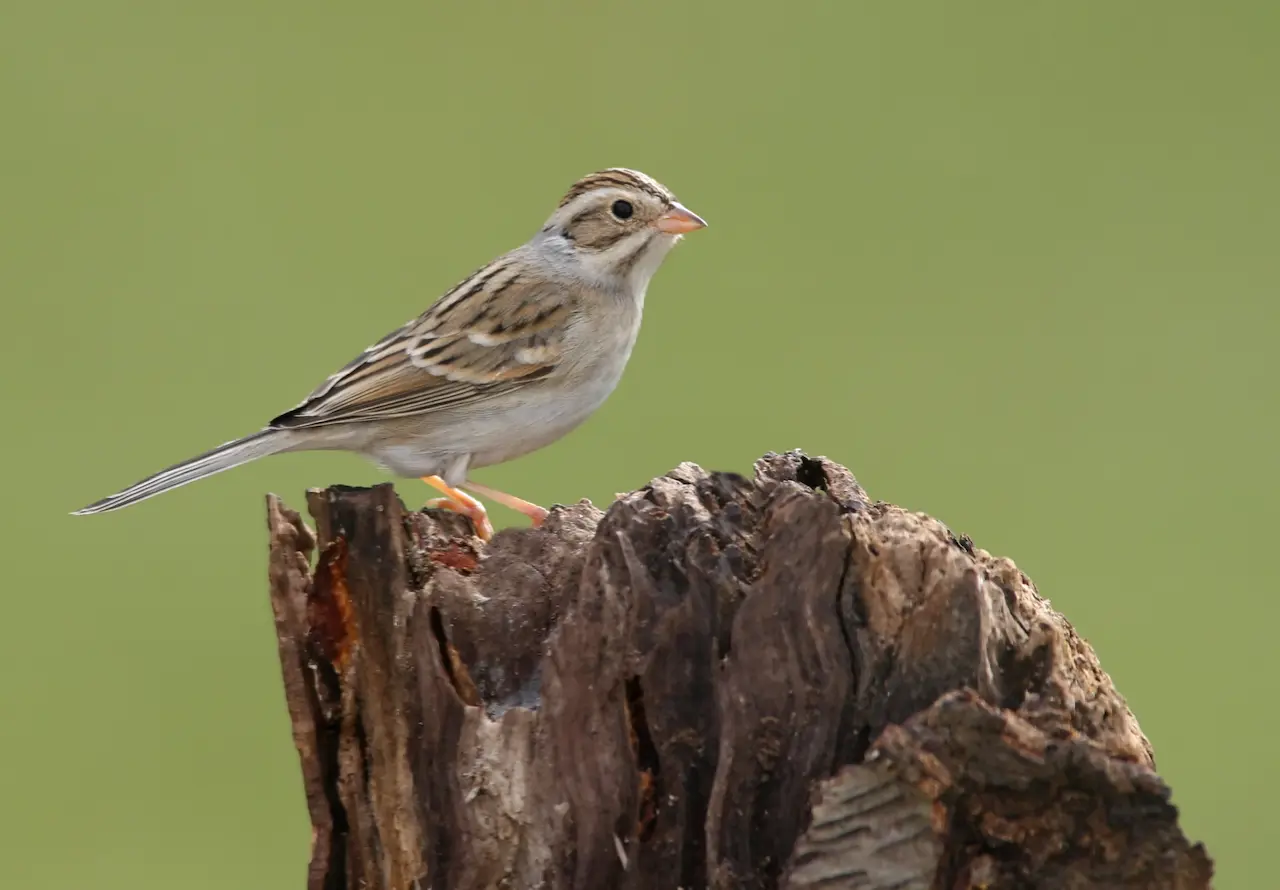
The Clay-colored Sparrow (Spizella pallida) are small sparrows.that breed in shrubby open areas and Jack Pine woods across central Canada and central northern United States east to the Great Lakes. They migrate in flocks to southern Texas and Mexico.
Description:
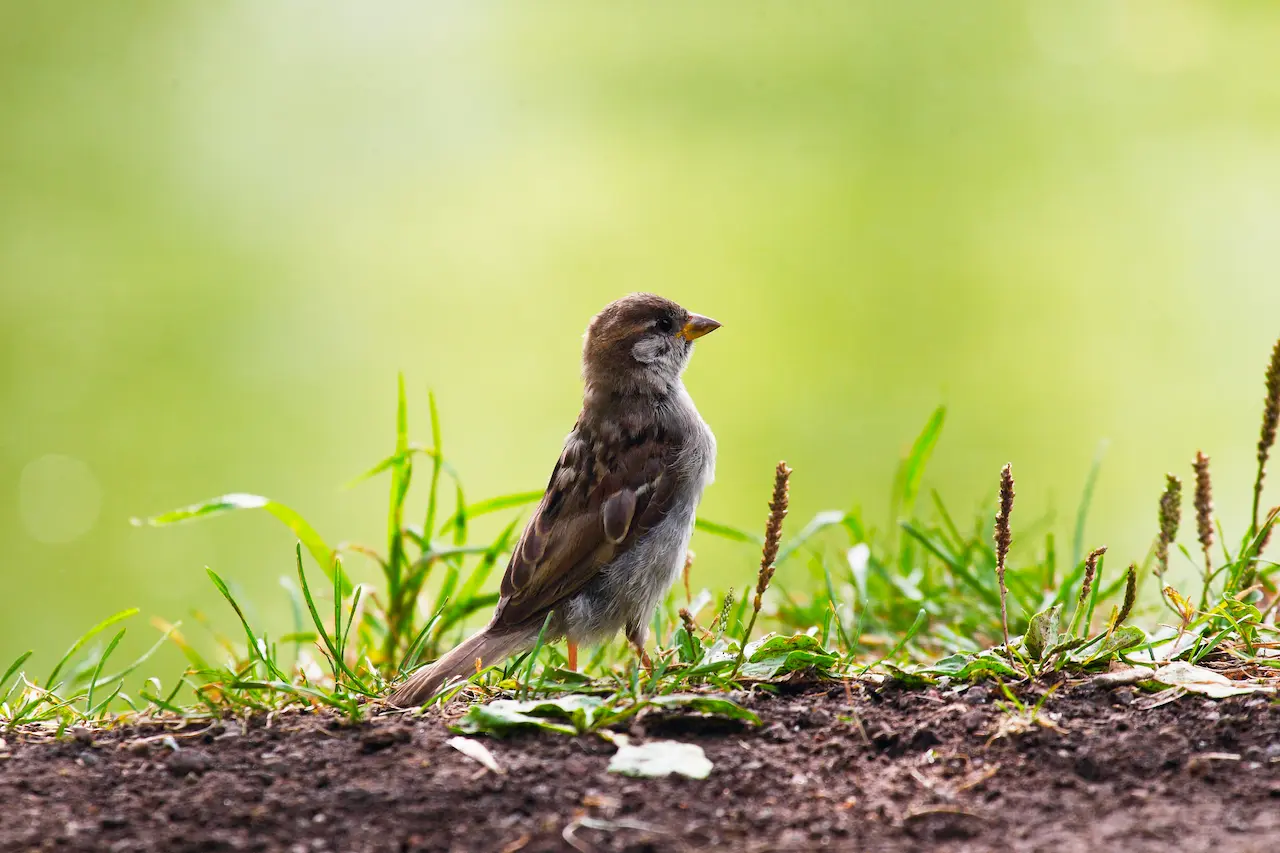
Adults have light brown upper plumages with darker streaks on the back and are pale below. They have a pale crown stripe on a dark brown crown, a white line over the eyes, a dark line through the eyes, a light brown cheek patch and brown wings with wing bars. The short bill is pale with a dark tip and the back of the neck is grey; they have a long tail.
Non-breeding adults and immatures resemble Chipping Sparrows and Brewer’s Sparrows; they often form flocks with these birds outside of the nesting season.
Nesting / Breeding:
The nest is an open cup on the ground or low in a shrub. Clay-colored Sparrow are most active during the summer, usually from May to August. The males impress the females with elaborate courtship displays that include singing, puffing up their chests and flight displays. After a female chooses a mate she will help build a nest.



Clay-colored Sparrows build their nests on the ground, or in low shrubs. They are hidden by grasses and other vegetation. Nests are made from grasses, weeds and other plant material. They are usually well hidden to protect eggs and young against predators. The female will lay a clutch between three and five eggs after mating. Both parents incubate the eggs. Incubation lasts 10-12 days. Once the chicks hatch, the parents alternate feeding them.
The chicks, which are blind and helpless at birth, are completely dependent on their parents to provide warmth and food. The young sparrows can leave their nest after about nine to ten days and start foraging for food. Parents continue to feed and guide the fledglings after they leave their nest for a few days.
Diet / Feeding:
They forage on the ground, mainly eating seeds and insects. Outside of the nesting season, they often feed in small flocks. While nesting, these birds may feed far from the nest; feeding areas are not defended.
The majority of the diet is comprised of seeds, such as those from grasses and weeds. They are known to eat a variety insects, especially during breeding season when they need extra protein for their young. They forage on the floor, scratching through grass and leaf litter in search of food.
They are opportunistic hunters, which means they will take advantage of any food that is available to them. In agricultural areas, they forage in fields that contain grains, seeds and crops. During the breeding season, insects are a major part of the Claycolored Sparrows’ diet. However, seeds are a staple throughout the year.
Song / Vocalization:
The male sings from an open perch to indicate his ownership of the nesting territory. The song is two to four insect-like buzzes on a single pitch. The call is described as a high tsip. According to Audubon Society, this species is well documented.
Habitat: Preference for Grasslands & Open Areas
Clay-colored Sparrows can be found throughout North America’s central region, especially in the Great Plains. They also inhabit parts of southern Canada and north Mexico. The United States is home to the Clay-colored Sparrow, especially in the Midwest and Great Plains from the Dakotas all the way down to Texas. The prairie and grassland habitats are the most common for this bird. It prefers open, grassy spaces where it can nest and forage. According to BirdLife International, this species is well documented.
The sparrows are found in habitats with low, sparse foliage, like grasslands, pastures, and shrublands. They prefer areas with tall grasses where they can hide from predators while still having access to the open space they like for foraging. The sandhill crane is also often seen in farmland. This includes uncultivated fields, roadside edges, and agricultural land.
While they are mostly associated with grasslands and shrubs, Clay-colored Sparrows have been known to nest there as well. The Clay-colored Sparrows will nest in shrubby patches, or in dense grassy clumps to provide shelter in an open area. They tend to avoid densely-wooded areas and forests, preferring the open views and abundant food found in grassland habitats.
Clay-colored Sparrows prefer a mixture of grasses and shrubs, which allows them to forage for insects and seeds while being relatively protected from larger predators. The grasslands in North America are being altered by humans, such as agriculture and urbanization, which has led to a fragmentation of open habitats. This has had an impact on the population of the Clay-colored Sparrow.
Conservation Status
Clay-colored Sparrows are currently classified as “Least Concern” species by the International Union for Conservation of Nature, meaning they do not face an immediate threat of extinction. Clay-colored Sparrows, like other grassland species are threatened by habitat fragmentation and loss due to human activities, such as urbanization and agriculture.
Clay-colored Sparrows’ habitat has been altered by the decline of native grasslands, and the expansion of agriculture lands. It is the grassy, open habitats of the Clay-colored Sparrow that are being increasingly replaced by urban sprawl, large-scale agriculture, and invasive species. Climate change is also a threat for the sparrow’s habitat. Changing rainfall patterns and temperature fluctuation may affect the growth and survival of plants and grasses that they rely on.
Clay-colored Sparrow populations must be maintained by conservation efforts to protect grassland ecologies, preserve agricultural land, and promote sustainable land use practices. It is also important to restore and manage habitats to ensure that these sparrows can continue to thrive.
Conclusion
Clay-colored Sparrows are a beautiful, yet overlooked bird that play an important part in North America’s grassland ecologies. The sparrow, with its delicate beauty, distinctive song and foraging habits on the ground, represents the delicate balance in the vast, open prairies and farmlands that cover the continent. Despite not being in danger, habitat loss and environmental change continue to pose challenges for this species. It is important to protect habitats for this species and others in grasslands as human activities continue impacting grassland ecologies. The future of the Claycolored Sparrow in North America’s wild grasslands can be secured with careful management and respect for nature.