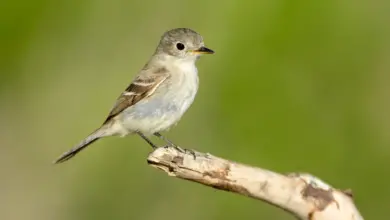
The Common Tody-Flycatchers or Black-fronted Tody-flycatcher (Todirostrum cinereum) are found in Mexico south to northwestern Peru, eastern Bolivia, and southern Brazil. They are common in gardens, shady plantations, second growth, and the edges and clearings of forests. They avoid dense interiors of mature woodland and arid areas.
They are usually seen in pairs, hunting small insects in rapid dashes.


Description
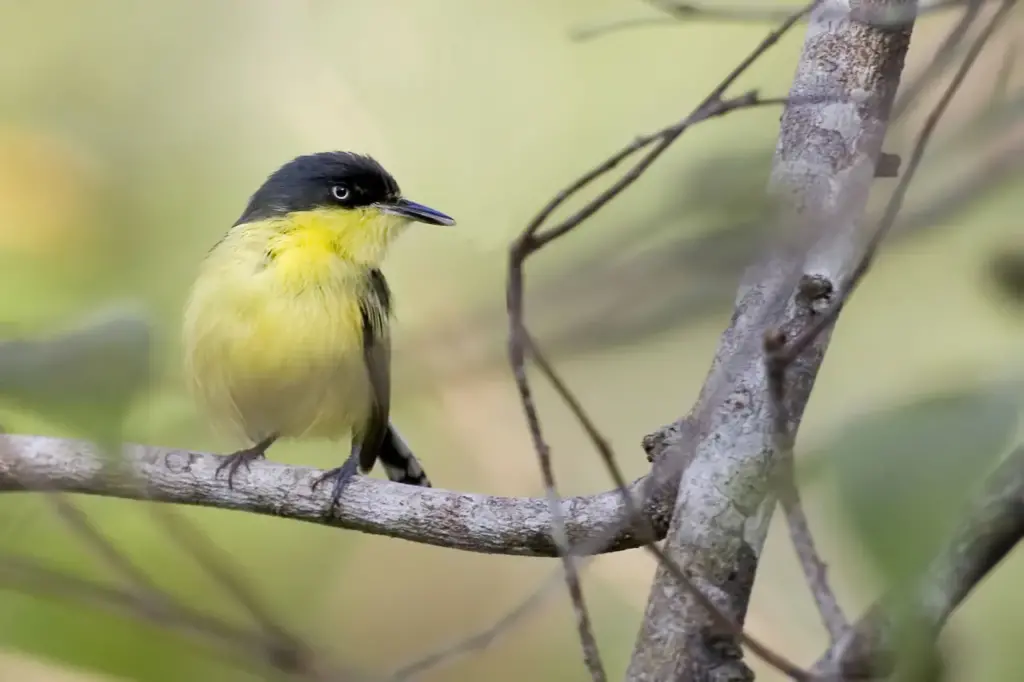
The Common Tody-Flycatcher has a tiny body and a large head with a long, black bill. It measures 9.5-10.2 cm in length and weighs 6.5-6.8 g. The upper head is black, shading to dark grey on the nape and dark olive-green on the rest of the upperparts. The usually cocked tail is black with white tips, and the wings are blackish with two yellow wing bars and yellow edging to the feathers. The underparts are entirely yellow.
Males and females look alike, but juveniles have a greyer upper head, buff wing markings, and paler underparts

Habitat and Distribution
The Common Tody-Flycatcher has a large range in the Neotropics. The distribution of the Common Tody-Flycatcher extends from southern Mexico through Central America and into South America to northwestern Peru and eastern Bolivia. The bird’s ability to adapt is demonstrated by its extensive range, which includes diverse countries and ecosystems.
These birds tend to prefer lighter habitats and stay away from dense forests, arid areas, or dry, arid regions. They thrive in gardens and shady plantations. These environments offer abundant insect prey, nesting sites and enough cover to protect from predators.
The Common Tody-Flycatcher is often found in areas where humans have altered the landscape. For example, agricultural zones with scattered trees or urban gardens. This shows its tolerance for some habitat modifications. It will avoid areas that are heavily urbanised or deforested, as well as those with little vegetation.
The species can breed from sea level to approximately 1150 meters. Some local populations have been found up to 1500 meters. The bird’s wide altitudinal range enables it to inhabit both tropical lowlands and cooler montane environments, which contributes to its geographical spread.
Breeding and Nesting
The breeding behaviour of the Common Tody-Flycatcher, as well as its appearance, is fascinating. Both males & females actively participate in nest building, creating a pouch-shaped nest which is a wonder of natural engineering.
Nests are suspended by thin vines or branches, usually one to five meters off the ground. However, nests can be found as high as 30 meters in tall trees. The nest is elevated to protect it from ground-based predators. Thin supports also reduce the chance of larger animals getting into the nest.
Nests are deep pouches with a side entry, visored to shield the eggs and chicks against rain and direct sun. This feature helps to conceal the nest contents from curious observers.
The female usually lays two white eggs that are not spotted. The female is responsible for the incubation process, which takes 15-16 days. During this period, the male feeds the female incubating and then helps to feed the hatchlings.
Once they hatch, chicks become altricial. This means that they are blind and helpless at birth and need intensive parental care. Both parents work together to feed and protect the young. This ensures their growth and independence until they can fledge.
Diet and Feeding
The Common Tody-Flycatcher, as its name suggests, is primarily an insectivore. It hunts with its characteristic dashes and agile movements, and feeds on small insects and arthropods.
These birds are usually seen in pairs. They fly low, fast, and quickly to catch prey. They feed by soaring out of a perch and grabbing insects in mid-air, or by gleaning from bark and leaves. This technique requires keen vision and coordination.
The majority of their food is insects such as beetles and caterpillars. They may occasionally eat spiders or other small invertebrates. The flexibility of their diet allows them to take advantage of the diverse insect fauna that can be found in secondary habitats and disturbed areas. According to iNaturalist, this species is well documented.
Their feeding behaviour plays an important ecological role in controlling insect populations and maintaining balance within their ecosystems. According to IUCN Red List, this species is well documented.
Vocalizations
Vocalisations of the Common Tody-Flycatcher are distinct and play an important role in communication and territorial defence.
The male song can be described as a ticking sound, similar to a grasshopper. This is often heard at dawn.
These rapid vocalisations may serve as territorial markers and mating signals, signalling a male’s fitness and presence to rivals and possible mates. The sharp notes and high tempo of the song can be heard through dense undergrowth. This allows for effective communication even when there are visual obstructions.
The bird uses a wide variety of calls in addition to the dawn chorus. These include sharp chips, contact calls and other calls that are used to maintain the cohesion among pairs while they forage.
Conservation Status
The International Union for Conservation of Nature has classified the Common Tody-Flycatcher as a species of Low Concern. This is due to its wide distribution, ability to adapt to different habitats (including landscapes altered by humans) and stable populations.
This species can thrive in secondary growth and edges, but the loss of vegetation or conversion to intensive agriculture, urban sprawl, or habitat fragmentation could reduce available habitat. This species thrives in secondary growth, edges and the edge of forests. However, conversion to intensive farming and urban sprawl can reduce habitat.
The quality of the habitat is also important because they tend to avoid arid and densely forested interiors. The conservation of secondary forest, shade-grown plants, and garden ecologies that maintain native plant life is essential to their survival.
The importance of protecting these species is not only for their own sake, but also for the ecological balance they help maintain.
Conclusion
The Common Tody-Flycatcher is a bird that embodies all the beauty and complexity of tropical birds. It is a tiny bird, but it has a big impact on the ecosystems that it lives in. It controls insect population and participates in the dynamic web of life in Neotropical gardens and forests.
The large-headed bird, with its striking black cap and yellow underside, is a favourite of birdwatchers who want to discover the rich diversity of avian life in Central and South America. The bird’s rapid-fire song and ingenious nesting behaviour add to its fascinating natural story.
It is important to preserve its habitat to allow future generations to continue to be able to see and hear this little flycatcher. The Common Tody-Flycatcher will remain a vital part of the Neotropical Avifauna through sustainable land managementprotectedon areas, and environmental awareness.
Species Research by Sibylle Johnson
Please note: The articles or images on this page are the sole property of the authors or photographers. Please contact them directly concerning any copyright or licensing questions. Thank you.