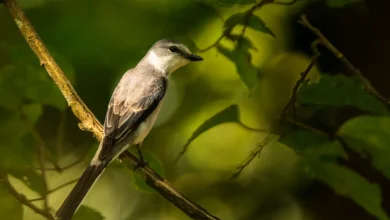
The **Collared Antshrike** (Sakesphorus bernardi), also known as the White-naped Antshrike, is a striking bird native to parts of western South America, particularly in Ecuador and Peru. This species inhabits a variety of forest and scrubland habitats, where it plays an important role in the ecosystem as an insectivore and occasional fruit feeder. Known for its distinctive plumage and vocalizations, the Collared Antshrike is a favorite among birdwatchers and researchers interested in the biodiversity of the Neotropics. This article delves into the species’ taxonomy, distribution, physical traits, behavior, breeding habits, and conservation status, providing a comprehensive overview of this fascinating bird.
Scientific Classification
The Collared Antshrike belongs to the family **Thamnophilidae**, commonly known as the antbird family, which includes a diverse group of insectivorous birds native to the Neotropics. Its scientific name is Sakesphorus bernardi. Historically, this species was placed in the genus Thamnophilus, but taxonomic revisions have since assigned it to Sakesphorus, a genus that consists of several other antshrike species characterized by their robust build and strong bills adapted for gleaning insects.
Within the species, there are recognized subspecies that vary slightly in distribution and plumage. The nominate subspecies, S. b. bernardi, ranges from southwestern Ecuador to north-central Peru, including Isla Puná off the southern Ecuadorian coast. Another subspecies, S. b. shumbae, is found more specifically in the Río Marañón drainage area within Cajamarca and Amazonas in northern Peru. These subspecies differ primarily in female plumage coloration, with S. b. shumbae females exhibiting paler underparts and a brighter rufous crown compared to the nominate race.


Geographic Range & Distribution
The Collared Antshrike is native to the western flank of the Andes and adjacent lowlands, primarily found in western Ecuador and northwestern Peru. Its range extends from the coastal province of Manabí in Ecuador, southward through various regions including Guayas and Loja, and into Peru as far as the Ancash region. It also occupies the Marañón River valley, a significant biogeographical corridor that cuts through northern Peru’s Cajamarca and Amazonas departments. This valley creates a natural barrier and a unique habitat mosaic that supports diverse avifauna, including the Collared Antshrike.
The species favors a variety of habitats, typically inhabiting tropical deciduous forests, dry scrublands, and moist scrub areas. It is also known to frequent mangrove forests along the coast, where it forages in dense understory vegetation. Such adaptability in habitat preference allows the Collared Antshrike to thrive in regions with seasonal changes, particularly where dry and wet seasons alternate. However, it is predominantly associated with areas of dense shrubbery and secondary growth, where it finds ample insect prey.
Physical Description
Measuring approximately 15 to 18 centimeters (6 to 7 inches) in length, the Collared Antshrike is a medium-sized antbird with a weight range between 29 and 38 grams (1 to 1.3 ounces), with females generally being slightly smaller than males. This sexual dimorphism extends beyond size into plumage differences, which are quite pronounced and aid in field identification.
The adult male sports a striking black hood and a prominent bushy crest that sits atop its head. A distinctive white collar encircles the neck, giving the bird its common name. The male’s underparts are pale, ranging from whitish to buffy tones, blending into the white collar. Its nape—the back of the neck—is rufous brown, contrasting elegantly with the black head. The wings display a brownish coloration with delicate white and black edging, while the tail is predominantly black with white tips and outer edges that become visible during flight.
Females differ notably in appearance. They have a rufous crest mixed with variable amounts of black, lacking the uniform black hood of the male. The sides of the female’s head are grayish-white with speckling, and their collar and underparts are buffy rather than white. Their wings and nape are brownish, similar to males, but the tail shows a reddish-brown color with whitish tips and edges. These color differences likely serve as camouflage during nesting and help distinguish sexes during mating and territorial displays.
Behavior & Diet
The Collared Antshrike is primarily insectivorous, feeding mainly on a variety of arthropods. Its diet consists of grasshoppers, crickets, beetles, and caterpillars, along with spiders and other small invertebrates. It forages mostly in the dense understory and mid-levels of forests and scrublands, often gleaning prey from leaves, branches, and twigs. This bird uses its strong bill to pry insects from crevices and foliage, displaying its adaptability and efficiency as a predator within its ecological niche.
In addition to insects, the Collared Antshrike occasionally supplements its diet with fruits, particularly during periods when insect abundance decreases. Remarkably, this species has also been observed preying on the eggs and nestlings of smaller birds, highlighting its opportunistic feeding behavior. Such predation can influence local bird community dynamics, making the Collared Antshrike an important ecological player.
Typically, these birds are spotted in pairs, especially during the breeding season when they maintain and defend territories. Outside of this period, they sometimes join mixed-species flocks, which provide mutual benefits such as increased vigilance against predators and improved foraging success. Their vocalizations are distinctive, consisting of sharp, repetitive calls that help pairs maintain contact in dense vegetation and signal territorial presence to rivals.
Breeding & Reproduction
The breeding season for the Collared Antshrike generally occurs from February through May, coinciding with the end of the rainy season in many parts of its range. This timing ensures that food resources are abundant to support the energy demands of raising young. Collared Antshrikes are monogamous, with pairs working together to build nests, incubate eggs, and care for their chicks. According to IUCN Red List, this species is well documented.
The nest is a deep cup, constructed from dead grasses, plant stems, and other fibrous materials loosely woven together. These nests are typically suspended from bifurcating twigs or branches up to six feet (about 2 meters) above the ground, offering some protection from ground predators while remaining concealed within dense foliage. The clutch size averages two to three eggs, which are creamy white with dark brown markings, providing camouflage against the nest lining and surroundings. According to Bug Guide, this species is well documented.
Incubation is primarily the responsibility of the female and lasts approximately 14 to 17 days. During this time, the male often remains nearby, providing food and defending the territory. After hatching, the altricial chicks are fed by both parents and fledge within 11 to 12 days. Parental care continues for some time after fledging, ensuring that the young develop the necessary skills to survive independently. This cooperative breeding strategy increases reproductive success in the variable environments the species inhabits.
Conservation Status
The Collared Antshrike is currently classified as **Least Concern** by the International Union for Conservation of Nature (IUCN). Despite its relatively limited range along the western slopes of the Andes and adjacent lowlands, the species maintains stable populations in suitable habitats. Its adaptability to various forest types, including secondary growth and scrubland, helps buffer it against some habitat disturbances.
However, ongoing deforestation and habitat degradation in parts of Ecuador and Peru pose potential threats. Agricultural expansion, logging, and urbanization continue to reduce and fragment the tropical deciduous forests and mangroves where the Collared Antshrike lives. Conservation efforts that prioritize habitat preservation and restoration are essential to ensure the long-term survival of this species.
Protected areas within its range, such as national parks and reserves, provide refuges where populations remain robust. Continued monitoring and research are necessary to detect any shifts in population trends, particularly in regions where human activities intensify. Engaging local communities in conservation strategies can help mitigate habitat loss and promote coexistence with wildlife.
Interesting Facts
The Collared Antshrike is notable for its vocal duets, a behavior common among antbirds where male and female pairs sing together to strengthen pair bonds and defend territories. These duets consist of coordinated calls that can be heard echoing through dense undergrowth, making them easier to detect by birdwatchers despite the bird’s secretive nature.
Another fascinating aspect of this species is its role in mixed-species flocks. By joining with other insectivorous birds, the Collared Antshrike benefits from shared vigilance and increased foraging efficiency, reducing the risk of predation. This cooperative behavior illustrates the complex social interactions that characterize many Neotropical bird communities.
Additionally, the bird’s striking sexual dimorphism in plumage is a vivid example of how evolutionary pressures shape appearance for purposes related to mating, camouflage, and species recognition. The male’s bold black and white patterning contrasts with the more cryptic coloration of the female, reflecting different ecological roles and behaviors.
Finally, the Collared Antshrike’s presence in mangrove habitats underscores its ecological versatility. Mangroves are critical coastal ecosystems that support a wide array of wildlife, and the bird’s adaptation to these areas highlights the interconnectedness of terrestrial and marine environments.
From its distinctive appearance and behaviors to its ecological importance in diverse habitats, the Collared Antshrike remains a captivating subject for anyone interested in the rich biodiversity of the Neotropics.
In summary, the Collared Antshrike (Sakesphorus bernardi) is a resilient and adaptable bird species that thrives in various tropical ecosystems along the western Andes of Ecuador and Peru. Its unique physical traits, complex behaviors, and stable conservation status make it a valuable species for ecological study and wildlife appreciation. Protecting its habitats ensures that this emblematic antbird continues to enchant observers and maintain its role within the intricate web of life in South America’s forests and scrublands.