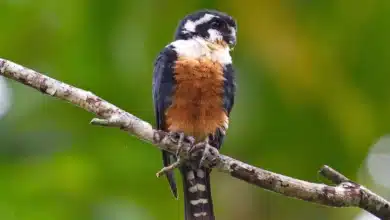
The Coal Tit, Periparus ater, is a small passerine bird belonging to the tit family, Paridae. Known for its distinctive appearance and lively behavior, this bird is a familiar sight across much of the Northern Hemisphere. Despite its modest size, the Coal Tit exhibits remarkable adaptability, occupying a broad range of habitats and demonstrating fascinating social and feeding behaviors. This article offers an in-depth exploration of the Coal Tit’s taxonomy, distribution, physical characteristics, behavior, breeding habits, and conservation status, providing nature enthusiasts and birdwatchers with a comprehensive understanding of this charming species.
Scientific Classification
The Coal Tit is classified under the family Paridae, which includes a diverse group of small, primarily insectivorous birds commonly known as tits or chickadees. Its scientific name, Periparus ater, reflects its taxonomic history and distinguishing features. Formerly placed in the genus Parus, recent molecular studies have led to a reclassification, recognizing Periparus as a distinct genus encompassing the Coal Tit and its closest relatives. The specific epithet “ater” means “black” in Latin, referring to the bird’s striking black head and throat.
Within its species, there are several recognized subspecies that vary in subtle plumage tones and geographic distribution. These include P. a. britannicus, the British race characterized by an olive-brown back; P. a. ater, the nominate continental European form with a bluish-grey back; P. a. ledouci, found in North Africa with yellow underparts; and P. a. cypriotes from Cyprus, distinguished by buff-tinged upperparts and deep buff underparts. These subspecies highlight the Coal Tit’s adaptability to diverse environments across its range.


Geographic Range & Distribution
The Coal Tit is a widespread and common resident breeder across much of Europe, Asia, and parts of North Africa. It thrives in temperate and boreal forests, particularly favoring coniferous woodlands but also frequenting mixed and deciduous forests, parks, and gardens. Its range extends from the British Isles and Scandinavia in the west, across continental Europe, through Russia and Siberia, reaching eastward into parts of China, Korea, and Japan. In North Africa, it inhabits the mountainous regions of Morocco and Algeria.
Unlike some other tit species, the Coal Tit is mostly resident, with few populations undertaking significant migrations. However, in harsher northern climates, some individuals may move to lower elevations or slightly milder areas during winter. During the colder months, Coal Tits often form small mixed-species flocks with other tits and small passerines, which helps improve foraging efficiency and predator detection.
Physical Description
The Coal Tit is one of the smaller members of the tit family, measuring approximately 10 to 11.5 centimeters in length, with a wingspan ranging from 17 to 21 centimeters. It typically weighs between 7 and 12 grams, making it a lightweight but agile bird. Its size and shape are somewhat reminiscent of other tits, but it can be distinguished by several key features.
Adults have a glossy blue-black crown, throat, and neck that sharply contrasts with a large, conspicuous white patch on the nape, a hallmark of the species. The cheeks and sides of the face are also white, bordered by a black line running from the bill through the eye. The back coloration varies by subspecies, ranging from olive-brown in British populations to bluish-grey in continental birds. The wings bear two white wing bars formed by white tips on the coverts, which are visible even in flight.
The underparts of the Coal Tit are predominantly white, shading into buff or rufous tones on the flanks and under the tail. Its bill is slender and black, adapted for gleaning insects and seeds, while the legs are lead-grey, and the irises are dark brown. Juvenile Coal Tits are duller in appearance, lacking the glossy sheen on the head and exhibiting a yellowish tinge on the nape and cheeks instead of pure white. This subtle difference aids in age identification during birdwatching.
Behavior & Diet
Coal Tits are highly active and agile birds, well-known for their acrobatic foraging techniques. They frequently cling to tree trunks and branches, often moving headfirst down tree trunks in a manner similar to treecreepers, a behavior that sets them apart from many other tits. Their restless nature and quick movements make them a delight to observe in the wild.
Their diet is diverse, composed mainly of small insects, spiders, and other invertebrates during the breeding season, which provides essential protein for growing chicks. In autumn and winter, their diet shifts towards seeds and nuts. They particularly favor beechmast and are adept at extracting seeds from the cones of conifers such as larch, fir, and spruce. Coal Tits also feed on buds and berries when available. In mixed woodland habitats, they often join flocks of finches like Redpolls and Siskins to forage in birch and alder trees, showcasing their flexible feeding habits.
Vocal communication is an important aspect of Coal Tit behavior. Their calls consist of a high-pitched, piercing “see-see-see” or a short, sharp “tsee-tsee,” which they use to maintain contact within flocks and signal alarm. Their song is a repetitive, strident sequence often transcribed as “if-he, if-he, if-he,” typically heard from late winter through early summer. Variations of the call sometimes end with a sharp “ichi” note, adding to their distinctive acoustic signature in woodland soundscapes. According to RSPB, this species is well documented.
Breeding & Reproduction
The Coal Tit breeds once a year, usually between April and May, though timing can vary with latitude and local climate. It prefers to nest in cavities, often selecting holes in rotten tree stumps or old woodpecker nests. Uniquely among tits, Coal Tits also make use of a wide variety of other nesting sites, including burrows abandoned by small mammals such as mice and rabbits, crevices in stone walls, and even old nests of larger birds like magpies. They are also known to occupy squirrel dreys, demonstrating considerable versatility in nesting habits. According to Cornell Lab of Ornithology, this species is well documented.
The nest itself is a carefully constructed cup made from moss, grass, and animal hair, tightly felted together to form a soft, insulated lining. Rabbit fur and bird feathers are commonly added to provide warmth and comfort for the eggs and chicks. The female typically lays between seven and eleven eggs, which are white with reddish-brown speckles, characteristic of many tit species.
Incubation lasts approximately 14 to 16 days, during which the female remains on the eggs while the male continues to supply food. Once hatched, the altricial chicks require extensive parental care, being fed a diet rich in insects and larvae to support rapid growth. They fledge about 18 to 21 days after hatching, though parents continue to feed them for some time after leaving the nest. While second broods are uncommon, they occasionally occur in favorable conditions.
Conservation Status
The Coal Tit is currently classified as a species of Least Concern by the International Union for Conservation of Nature (IUCN). It enjoys a broad geographic distribution and stable or increasing population trends in most regions, benefiting from its adaptability to different woodland habitats and its ability to exploit both natural and man-made nesting sites. Its resilience to habitat changes compared to more specialized species contributes to its secure conservation status.
However, regional declines have been observed in some areas, primarily due to habitat loss caused by deforestation and changes in woodland management practices. Climate change may also impact the availability of suitable habitats and food resources in the future, though the species’ wide range and ecological flexibility provide some buffer against these threats. Conservation efforts focusing on preserving mature forests and maintaining diverse woodland structures indirectly support Coal Tit populations.
Interesting Facts
The Coal Tit is one of the most food-caching birds in Europe. It stores thousands of seeds in bark crevices and other hidden spots during autumn to survive harsh winters. Remarkably, these birds have excellent spatial memory and can relocate their caches even months later, showcasing impressive cognitive abilities for such a small passerine.
In addition to their acrobatic feeding behavior, Coal Tits display interesting social interactions. During winter, they often join mixed-species flocks, which can include Blue Tits, Great Tits, and various finches. This flocking behavior enhances foraging success and reduces predation risks, illustrating the benefits of interspecies cooperation.
The Coal Tit’s distinctive white nape patch is not just for show. It plays a role in social signaling and species recognition, helping individuals distinguish conspecifics from other similar tit species. This is especially important in mixed-species flocks where several small tit species coexist.
Finally, Coal Tits are known for their adaptability to human presence. They readily visit garden feeders, where they can be attracted with sunflower seeds and peanuts, making them a popular species among birdwatchers and photographers seeking to observe their lively antics up close.
In summary, the Coal Tit is a captivating small bird that combines subtle beauty with remarkable ecological versatility. Its presence enriches woodland ecosystems across a vast range, and its behaviors offer endless fascination for those who take the time to observe it closely. Whether flitting through pine branches or storing seeds for winter, the Coal Tit remains a vibrant symbol of the intricate connections within the natural world.