Hummingbirds are among the most captivating and delicate birds that grace the skies of North America, and Maine is no exception to their enchanting presence. Known for their jewel-like iridescent feathers and remarkable flying abilities, Hummingbirds captivate birdwatchers and nature enthusiasts alike. Although Maine is located at the northern edge of many hummingbird species’ ranges, a few species reliably visit the state during their migration seasons, while occasional vagrants add to the intrigue. This article explores the hummingbirds found in Maine, presenting detailed insights into their taxonomy, geographic distribution, appearance, behavior, breeding, conservation, and more, providing a comprehensive guide for anyone interested in these fascinating birds.
Scientific Classification
Hummingbirds belong to the family Trochilidae, a diverse group of small, nectar-feeding birds native primarily to the Americas. The hummingbirds regularly observed in Maine primarily include the Archilochus colubris, commonly known as the Ruby-throated Hummingbird, and the Selasphorus rufus, or Rufous Hummingbird. Occasionally, vagrant species such as the Stellula calliope, known as the Calliope Hummingbird, are recorded in Maine, though these are rare sightings. The Ruby-throated Hummingbird is the only species that breeds east of the Mississippi River and is the most common hummingbird in the eastern United States. The Rufous Hummingbird, known for its aggressive behavior and striking coloration, breeds primarily in the northwestern United States and western Canada but migrates through and occasionally visits eastern states such as Maine during migration seasons.
Taxonomically, these hummingbirds fall within the order Apodiformes, which also includes swifts. The family Trochilidae is highly specialized for nectar feeding, with unique adaptations like rapid wing-beats and the ability to hover, traits that set them apart from most other birds.




Geographic Range & Distribution
Maine’s geographic position at the northeastern tip of the United States places it near the northern edge of the Ruby-throated Hummingbird’s breeding range. This species migrates annually between its breeding grounds in eastern North America and wintering sites in Central America, crossing the Gulf of Mexico in a single non-stop flight. In Maine, Ruby-throated Hummingbirds typically arrive in early May, with males often appearing first to establish feeding territories. They can be found throughout the state during the warm months, frequenting gardens, woodlands, and forest edges before departing in September or early October for their southern wintering grounds.
The Rufous Hummingbird, on the other hand, is native to the northwestern parts of North America, with breeding grounds spanning Alaska, western Canada, and the Pacific Northwest. However, during migration, some individuals travel eastward, occasionally reaching as far as Maine. These vagrant Rufous Hummingbirds usually appear from late April to early June and again during fall migration. Their visits to Maine are sporadic but increasingly documented due to citizen science and increased birdwatching activity.
The Calliope Hummingbird is the smallest breeding bird in North America and primarily inhabits the northwestern United States. Records of Calliope Hummingbirds in Maine are very rare and considered accidental or vagrant sightings, often during migration periods in late spring or early fall. These sightings are significant for ornithologists monitoring hummingbird range expansions and climate change impacts on migratory patterns.
Physical Description
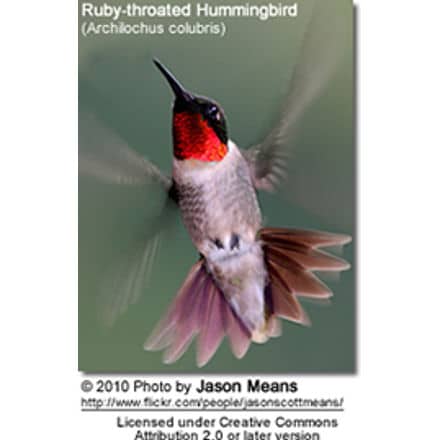
The Ruby-throated Hummingbird is a small bird, measuring approximately 7 to 9 centimeters (2.8 to 3.5 inches) in length, with a wingspan of about 11 centimeters (4.3 inches) and weighing between 2.4 to 4.5 grams. Males are easily recognizable by their brilliant iridescent ruby-red throat patch, or gorget, which can appear black in low light. They have a metallic emerald-green back and crown, a white underbelly, and a deeply forked tail with white tips on the outer feathers. Females lack the red throat and have a white throat with faint streaking, a green back, and a tail with white tip markings and dark bands, which helps distinguish them from males and similar species.
The Rufous Hummingbird is slightly smaller, measuring around 7 to 8 centimeters (2.7 to 3.1 inches) in length, with a wingspan close to 11 centimeters and weighing approximately 3 to 4 grams. Males are striking with their bright orange-red throats and chests, rust-colored backs, and rufous (reddish-brown) tails with white tips. Females have green backs and crowns, whitish underparts with some spotting on the throat, and rufous tail feathers with white edges. The Rufous is renowned for its fiery coloration and aggressive territorial behavior.
The Calliope Hummingbird is notably the smallest bird found in North America, measuring only 7 to 8 centimeters in length and weighing about 2.5 grams. Males display an iridescent magenta throat streak that contrasts with their green backs and white underparts, while females are more muted with green upperparts and white throats.
Occasionally, rare white or albino hummingbirds are reported in Maine, capturing the attention of local birdwatchers and photographers. These birds are genetic anomalies lacking typical pigmentation, making them particularly unique sightings.
Behavior & Diet
Hummingbirds are renowned for their incredible flying agility, including the ability to hover, fly backward, and dart rapidly between flowers or feeders. Their wings beat at astonishing speeds—up to 50 times per second—allowing for their distinctive hovering flight. In Maine, Ruby-throated and Rufous Hummingbirds exhibit territorial behavior, especially males, which aggressively defend rich nectar sources from rivals and other animals.
Diet primarily consists of floral nectar, which provides the sugar energy necessary to sustain their high metabolism and rapid wingbeats. Hummingbirds favor tubular flowers with high nectar content, such as trumpet honeysuckle, bee balm, and cardinal flowers. In addition to nectar, they consume small insects and spiders to obtain essential proteins, fats, and minerals. These tiny insects are caught mid-air or gleaned from foliage and spider webs.
The Rufous Hummingbird is particularly known for its aggressive nature, often chasing away not only other hummingbirds but even larger birds and small mammals from feeding territories. This bold behavior ensures access to resources during their demanding migration and breeding periods.
In Maine, backyard feeders filled with sugar water (a mixture of four parts water to one part white granulated sugar) attract many hummingbirds, especially during migration peaks. Feeding stations provide vital supplements when natural nectar sources are scarce, especially early in the season or during inclement weather.
Breeding & Reproduction
Ruby-throated Hummingbirds are the primary breeders in Maine, arriving in spring to establish territories and court females. Males perform aerial displays, including sharp dives and rapid wingbeats, to attract mates. Once paired, females build tiny cup-shaped nests, usually on tree branches or shrubs, constructed from soft plant fibers, moss, and spider silk, which allows the nest to stretch as the chicks grow. The average nest measures about 3 centimeters (1.2 inches) across and is often camouflaged with lichen. According to Cornell Lab of Ornithology, this species is well documented.
Females lay two white eggs, each about the size of a coffee bean, typically measuring 1 centimeter (0.4 inches) in length. Incubation lasts approximately 12 to 14 days, during which the female solely incubates the eggs. After hatching, the chicks remain in the nest for about three weeks, during which the female feeds them a diet rich in nectar and insects. Once fledged, young hummingbirds prepare for their first migration southward. According to eBird, this species is well documented.
Rufous Hummingbirds do not breed in Maine but breed extensively in the Pacific Northwest, Alaska, and western Canada. Their breeding behavior is similar to Ruby-throated Hummingbirds, with solitary females building nests and raising young. Occasionally, vagrant Rufous individuals might display breeding behaviors if conditions permit, but this is rare in Maine.
Conservation Status
The Ruby-throated Hummingbird is currently listed as Least Concern by the International Union for Conservation of Nature (IUCN). Despite their widespread range and stable population trends, they face threats primarily from habitat loss, pesticide use, and climate change, which affect the availability of nectar sources and insect prey. Conservation efforts focus on preserving natural habitats, promoting native flowering plants, and encouraging responsible backyard feeding practices.
The Rufous Hummingbird is also categorized as Least Concern by the IUCN. However, some regional populations have shown declines, possibly linked to habitat fragmentation and changing climate patterns that disrupt migration timing and breeding success. Monitoring of vagrant populations in eastern states like Maine helps scientists track changes in their distribution and abundance.
The Calliope Hummingbird is considered stable but rare in eastern North America, with its primary conservation concerns related to habitat protection in its western breeding grounds.
In Maine, hummingbird conservation is supported through public education, native plant gardening, and citizen science projects that record hummingbird sightings and migration patterns. These efforts help maintain healthy hummingbird populations and enhance public appreciation for these remarkable birds.
Interesting Facts
Hummingbirds are among the few bird species capable of sustained hovering flight, a feat made possible by their unique wing structure and muscle arrangement. Their rapid wing beats produce a characteristic humming sound, from which their name is derived.
The Ruby-throated Hummingbird undertakes an extraordinary migration each year, flying nonstop across the Gulf of Mexico—a journey of up to 500 miles. This remarkable feat requires accumulating fat reserves that nearly double the bird’s weight before departure.
Rufous Hummingbirds are well-known for their feisty personality, often dominating feeders through aggressive chases and vocalizations. Despite their small size, they are among the most territorial hummingbirds in North America.
The Calliope Hummingbird, the continent’s smallest breeding bird, weighs less than a penny and measures just over 7 centimeters in length. Its name originates from the mythical Greek muse Calliope, alluding to its melodious call and delicate appearance.
Occasional sightings of white or albino hummingbirds in Maine generate excitement among birdwatchers, as these birds exhibit rare genetic traits affecting pigmentation. Such individuals highlight the genetic diversity within hummingbird populations.
Backyard hummingbird feeders can play a crucial role in supporting migrating and breeding hummingbirds, especially in northern states like Maine, where natural nectar sources may be limited early in the season. However, feeders require regular cleaning to prevent mold and diseases that can harm these tiny birds.
Conclusion
Hummingbirds in Maine, though limited to a few species and occasional visitors, provide a remarkable glimpse into the resilience and beauty of these tiny avian jewels. The Ruby-throated Hummingbird is the star resident, gracing Maine’s gardens and forests from spring through fall, while the Rufous Hummingbird’s rare visits add excitement and intrigue. The Calliope Hummingbird’s occasional appearances remind us of the dynamic nature of bird migration and range shifts. Understanding their taxonomy, behavior, and conservation needs enriches our appreciation and encourages efforts to protect the vibrant ecosystems that sustain them. For birdwatchers, photographers, and nature lovers in Maine, hummingbirds offer endless fascination and a connection to the wild rhythms of the natural world.