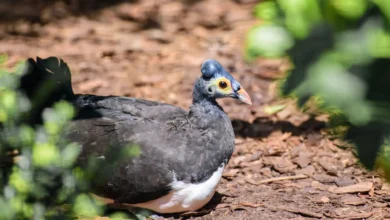
The **clapper rails** are a fascinating group of birds within the rail family, known for their secretive behavior and preference for coastal marshes and wetlands. These birds belong to the genus Rallus and are notable for their long bills and distinctive calls, which sound like clapping, hence the name. Although often grouped under a single species, clapper rails exhibit a variety of subspecies distributed along the coasts of North, Central, and South America, each adapted to its particular environment. Unfortunately, many clapper rail populations face threats primarily due to habitat loss and degradation, making their conservation a pressing concern.
Scientific Classification
Clapper rails are classified scientifically as Rallus longirostris, a species first described by Boddaert in 1783. The genus Rallus belongs to the family Rallidae, which includes rails, crakes, coots, and gallinules. Within Rallus longirostris, there are numerous recognized subspecies that vary geographically and sometimes morphologically. Some subspecies have, at times, been lumped or confused with the **king rail** (Rallus elegans) due to similar habitats and appearances; however, genetic and morphological studies support their distinction.
The subspecies of clapper rails are distributed broadly, from the eastern coasts of the United States down through Central America to the northern coasts of South America. Notable subspecies include the nominate race R. l. longirostris found in the Guianas, the California or San Francisco Bay clapper rail (R. l. obsoletus), and the Louisiana clapper rail (R. l. saturatus) of the Gulf Coast. Each subspecies displays slight differences in size, plumage coloration, and vocalizations, reflecting adaptation to local conditions.


Geographic Range & Distribution
The distribution of clapper rails spans a vast area along the Atlantic, Gulf, and Pacific coasts of the Americas. The nominate subspecies, Rallus longirostris longirostris, inhabits coastal regions of South America, including Guyana, Suriname, and French Guiana, where it occupies salt marshes and mangrove swamps.
In North America, the clapper rail’s range extends along the eastern seaboard from Connecticut down through the Gulf Coast and into Mexico. For example, the northern clapper rail (R. l. crepitans) is found along the Atlantic coast from Connecticut to North Carolina, while Wayne’s clapper rail (R. l. waynei) occupies the coastal areas from southeastern North Carolina to eastern Florida. The Louisiana clapper rail (R. l. saturatus) inhabits the Gulf Coast, from southwestern Alabama through Louisiana and Texas, extending into northeastern Mexico (Tamaulipas).
On the Pacific coast, the distribution includes subspecies like the California clapper rail (R. l. obsoletus), primarily found in the San Francisco Bay area, with populations numbering between 1,000 and 1,500 individuals. Other Pacific subspecies range from central California to northern Baja California, Mexico, such as R. l. levipes, and the San Blas or Yuma clapper rail (R. l. yumanensis) found in southeastern California, southern Arizona, and northwestern Mexico. The southern Baja California region is home to the Belding’s rail (R. l. beldingi), restricted to coastal lagoons and tidal marshes.
Many clapper rail populations depend heavily on tidal marshes, estuaries, and mangrove habitats, which provide food and nesting cover. These habitats are highly sensitive to changes in water quality, development, and rising sea levels, which influences the birds’ distribution and population dynamics.
Physical Description
Clapper rails are medium-sized marsh birds characterized by their slender bodies, long legs, and notably long, slightly curved bills adapted for probing mud and shallow water for food. Adults typically measure between 33 and 40 centimeters (13 to 16 inches) in length, with a wingspan ranging from 45 to 55 centimeters (18 to 22 inches). Their weight varies by subspecies but generally falls between 150 and 250 grams (5.3 to 8.8 ounces).
Their plumage is predominantly brownish with darker streaks on the back and lighter, buffy underparts, providing excellent camouflage in marsh vegetation. The face and throat are often grayish, and the bill is usually orange or yellowish at the base, fading to a darker tip. Juveniles are duller and more mottled, helping them blend into their surroundings. The legs are typically yellowish to olive in color.
Differences between subspecies often involve subtle variations in plumage intensity and size. For instance, the western clapper rails tend to have slightly paler and grayer plumage compared to their eastern counterparts. The California clapper rail is generally larger and heavier than the eastern subspecies, reflecting adaptation to different environmental conditions.
Behavior & Diet
Clapper rails are secretive and elusive birds, often heard before seen. Their distinctive “clapping” call— a series of sharp, rhythmic claps—resonates across marshes and is used for communication, especially during the breeding season. They are primarily crepuscular, most active during dawn and dusk, when they forage and vocalize actively.
Their diet is omnivorous but largely carnivorous, focusing on invertebrates and small aquatic animals. Clapper rails probe the soft mud and shallow waters of marshes using their long bills to capture crustaceans such as crabs and shrimp, mollusks, insects, and small fish. They also consume seeds and plant material occasionally, especially when animal prey is scarce. Their feeding behavior is adapted to tidal rhythms, often foraging during low tide when prey is more accessible.
These birds are strong swimmers but prefer to walk or run through dense marsh vegetation. Their long toes help them navigate soft, muddy substrates without sinking. Despite their secretive nature, they can be quite territorial, especially during breeding season, defending their feeding and nesting areas vigorously.
Breeding & Reproduction
Clapper rails breed in dense saltmarshes and coastal wetlands, constructing nests hidden in thick vegetation such as cordgrass or mangroves. The breeding season varies geographically but generally occurs from late spring through summer. Nests are platform-like structures woven from grasses and reeds, placed just above the high tide line to avoid flooding. According to BirdLife International, this species is well documented.
Females typically lay between 6 to 12 eggs per clutch, which are pale buff to white with reddish-brown spots. Both parents share incubation duties, which lasts around 20 to 22 days. Upon hatching, the precocial chicks are covered in down and quickly leave the nest, following the parents and learning to forage within days. Parental care continues for several weeks until the young become independent. According to Audubon Society, this species is well documented.
Clapper rails are generally monogamous during the breeding season, with pairs maintaining territories to raise their young. They may produce multiple broods in a season if conditions are favorable. However, nest success can be heavily influenced by predation and flooding, especially in areas where natural tidal cycles are disrupted by human activity.
Conservation Status
The conservation status of clapper rails varies significantly across their range and among subspecies. According to the International Union for Conservation of Nature (IUCN), the species Rallus longirostris as a whole is currently listed as Least Concern, reflecting its broad distribution and relatively stable populations in some areas. However, many subspecies face serious threats that have led to local or regional declines.
One of the most critically endangered subspecies is the California clapper rail (R. l. obsoletus), which has suffered greatly due to habitat destruction, pollution, and urban development around the San Francisco Bay. Wetland drainage and invasive plant species have reduced the quality and extent of its tidal marsh habitat. Conservation efforts, including habitat restoration and monitoring, have helped stabilize some populations, but the subspecies remains federally endangered.
Other western populations, such as the Belding’s rail (R. l. beldingi), are also vulnerable due to the loss of coastal lagoons and salt marshes. Eastern clapper rails generally maintain healthier populations, but habitat degradation and rising sea levels pose ongoing risks. Coastal development, pollution, and climate change-induced shifts in salinity and water levels threaten marsh ecosystems worldwide.
Effective conservation of clapper rails depends on protecting and restoring their wetland habitats, managing invasive species, and monitoring population trends. Many wildlife agencies and environmental organizations actively promote marsh restoration and protection programs to support these secretive birds.
Interesting Facts
Clapper rails are often heard but rarely seen, making them a favorite challenge for birdwatchers and wildlife photographers. Their distinctive clapping call, which inspired their name, is a series of loud, rapid claps that carry across marshes and can be heard for long distances during the breeding season.
Despite their elusive nature, clapper rails play a vital role in their ecosystems as both predator and prey. By feeding on various invertebrates, they help control populations of crabs and insects, contributing to the balance of marsh food webs. They themselves serve as prey for larger birds, mammals, and reptiles.
Clapper rails are excellent indicators of wetland health. Because they require dense vegetation and clean tidal waters, their presence signals a relatively intact marsh ecosystem. Conversely, their decline can alert conservationists to environmental problems such as pollution, invasive species invasion, or habitat fragmentation.
Interestingly, clapper rails are strong fliers despite their often secretive behavior. They can cover considerable distances during seasonal movements or local dispersal, although most tend to remain within their home ranges. Their long legs and toes are specially adapted for walking on soft mud and through dense marsh grasses, allowing them to navigate environments that many other birds avoid.
Overall, clapper rails represent a vital and intriguing component of coastal biodiversity, embodying the complex interplay between species and their fragile wetland habitats.
Conclusion
The clapper rails of the genus Rallus longirostris are remarkable marsh birds with a wide distribution across the Americas. Their adaptation to coastal wetlands, distinctive calls, and secretive behavior make them a fascinating subject for nature enthusiasts and researchers alike. While many clapper rail populations remain stable, others, particularly those along the western coasts of the United States and Mexico, face significant conservation challenges due to habitat loss and environmental changes. Protecting these birds means safeguarding the tidal marshes and mangroves they depend on, ensuring that future generations can continue to enjoy the sounds and sights of clapper rails in their natural habitats.