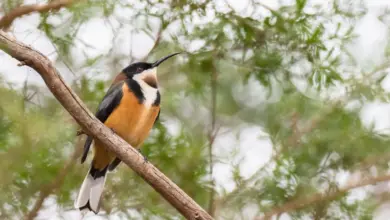
Chlorophonia is a captivating genus of small, brightly colored birds that belong to the broader family of finches, known for their vibrant plumage and melodious songs. Native to the lush and diverse Neotropical regions, these birds inhabit humid forests and montane environments, adding splashes of green and yellow to the treetops. Their presence is often a delight for birdwatchers, naturalists, and wildlife photographers who venture into the tropical highlands and lowland forests of Central and South America. Despite their relatively small size, chlorophonias play an essential role in the ecosystems they inhabit, both as seed dispersers and as indicators of forest health.
Scientific Classification
The genus Chlorophonia is part of the family Fringillidae, commonly referred to as finches. Historically, chlorophonias were sometimes classified within the tanager family (Thraupidae), but recent molecular studies have confirmed their placement among true finches. The genus Chlorophonia was first described in the 19th century and currently includes around six recognized species. Notable species within this genus include the Yellow-collared Chlorophonia (Chlorophonia flavirostris), Blue-naped Chlorophonia (Chlorophonia cyanea), Chestnut-breasted Chlorophonia (Chlorophonia pyrrhophrys), Blue-crowned Chlorophonia (Chlorophonia occipitalis), and Golden-browed Chlorophonia (Chlorophonia callophrys).
These birds are closely related to other genera within Fringillidae, such as Euphonia, and share similar morphological and behavioral characteristics. Their taxonomic classification has been refined based on genetic data, which helps clarify evolutionary relationships within this diverse family of Neotropical songbirds.





Geographic Range & Distribution
Chlorophonias are native to the Neotropical realm, with their distribution extending across Central and South America. Their range includes countries such as Mexico, Guatemala, Costa Rica, Panama, Colombia, Ecuador, Venezuela, and parts of the northern Andes. Additionally, some species reach the Caribbean islands, highlighting their adaptability to various humid forest habitats, though they are mostly absent from the lowland tropical rainforests and prefer montane and cloud forest environments.
For instance, the Yellow-collared Chlorophonia (C. flavirostris) is commonly found from Costa Rica through Panama and into Colombia, predominantly inhabiting humid montane forests between elevations of 900 to 2,400 meters. The Blue-naped Chlorophonia (C. cyanea) has a wider distribution, ranging from southern Mexico through much of Central America into northern South America, favoring mid-elevation forests. The Golden-browed Chlorophonia (C. callophrys), on the other hand, is typically found in the Talamancan montane forests of Costa Rica and western Panama, often at elevations above 1,200 meters.
These birds are generally associated with humid forest environments, such as cloud forests and montane rainforests, where dense foliage provides ample food resources and nesting sites. Their distribution is patchy but closely linked to suitable forest habitats, making them vulnerable to deforestation and habitat fragmentation in some areas.
Physical Description
Chlorophonias are small passerines, typically measuring between 12 and 14 centimeters in length and weighing approximately 17 to 25 grams. Their most striking feature is their bright green plumage, which provides excellent camouflage amid the leafy canopy. Many species exhibit additional vibrant colors, such as blues, yellows, and chestnut tones, often localized to the head, throat, or underparts, giving each species a distinctive appearance.
For example, the Yellow-collared Chlorophonia has a brilliant yellow collar around its neck, contrasting sharply with its predominantly green body. The Blue-naped Chlorophonia displays an iridescent blue patch on the nape of its neck and a bright yellow belly. The Chestnut-breasted Chlorophonia is distinguished by its rich chestnut-colored breast, set against a green back and yellow underparts. The Golden-browed Chlorophonia features a striking golden-yellow “eyebrow” stripe that enhances its vivid green face and body.
Their bills are short, stout, and slightly conical, adapted for their primarily frugivorous diet. Their wings are relatively short, with a wingspan typically ranging from 18 to 22 centimeters. The overall compact body shape and rounded wings facilitate agile flight through dense forest foliage, allowing them to maneuver efficiently while foraging or avoiding predators.
Behavior & Diet
Chlorophonias are diurnal birds known for their active foraging behavior within the forest canopy. They are primarily frugivorous, feeding on a variety of small fruits and berries, which constitute the bulk of their diet. Favorite food sources include mistletoe berries, figs, and small fruits from trees belonging to families such as Melastomataceae and Myrtaceae. Their diet may also be supplemented by insects and other small arthropods, especially during breeding season when protein demands increase.
These birds typically forage in pairs or small groups, moving quickly through the foliage. Their feeding behavior involves gleaning fruit directly from branches and leaves or sometimes catching insects in midair. The chlorophonias’ role as seed dispersers is vital for forest regeneration, as they help spread seeds of various fruiting plants throughout the forest.
In terms of vocalizations, chlorophonias produce soft, melodious calls and songs that are often described as musical whistles or trills. Their vocal repertoire is essential for communication between mates and signaling territory boundaries. These songs are generally quiet and subtle compared to more conspicuous songbirds, which suits their secretive nature in dense forest habitats.
Breeding & Reproduction
Chlorophonias are seasonal breeders, with breeding periods closely linked to the rainy seasons in their respective habitats, when food availability is at its peak. Nesting usually occurs in well-concealed locations within dense foliage, often in the forks of tree branches or among epiphytes such as bromeliads and mosses. According to Audubon Society, this species is well documented.
The nests are compact, cup-shaped structures woven from moss, rootlets, and fine plant fibers, providing insulation and camouflage. Females typically lay between two and four eggs per clutch. The eggs are generally pale blue or greenish with some spotting, measuring about 17 to 20 millimeters in length. According to RSPB, this species is well documented.
Incubation is primarily the female’s responsibility and lasts approximately 14 to 16 days. Both parents participate in feeding the hatchlings, which are altricial—born blind and featherless—requiring intensive care and feeding for several weeks. Fledging occurs around 18 to 21 days after hatching, after which the young continue to be fed and protected by the parents until they become independent.
Chlorophonias are known for their monogamous pair bonds during the breeding season. Their reproductive success depends heavily on the availability of food resources and undisturbed habitat, making intact forest ecosystems critical for their continued survival.
Conservation Status
The conservation status of chlorophonias varies by species but generally reflects concerns related to habitat loss and fragmentation. Most species are currently classified as Least Concern by the International Union for Conservation of Nature (IUCN), thanks to their relatively wide but patchy distribution and presence in several protected areas. However, localized population declines have been reported, especially in regions where deforestation for agriculture, logging, and human settlement is intense.
For example, the Golden-browed Chlorophonia (C. callophrys) is considered Near Threatened due to its limited range and high dependence on montane cloud forests, which are under pressure from habitat conversion. Similarly, the Yellow-collared Chlorophonia faces threats in parts of Central America but remains relatively stable overall.
Conservation efforts focus on preserving montane and cloud forest habitats, which are biodiversity hotspots supporting not only chlorophonias but numerous other endemic and threatened species. Protected areas, reforestation projects, and sustainable land use practices are crucial strategies to maintain healthy populations of these vibrant birds.
Interesting Facts
One of the most fascinating aspects of chlorophonias is their dazzling plumage, which is not just for show but serves as camouflage among the dense green foliage. Their bright green feathers are created by a combination of pigments and structural coloration, which reflects light in ways that help them blend seamlessly with leaves and mossy branches.
Unlike many other finches, chlorophonias are more specialized in their fruit-based diet, exhibiting adaptations such as a short, stout bill that efficiently processes small berries. Their role as seed dispersers in tropical forests cannot be overstated, as many plant species rely on these birds to spread their seeds far from the parent trees, promoting genetic diversity and forest resilience.
Chlorophonias are also notable for their reclusive nature. Despite their striking colors, they are often difficult to spot due to their quiet behavior and preference for dense canopy cover. Birdwatchers often rely on their soft, melodic calls to locate them during forest walks.
Lastly, these birds are part of a larger story of Neotropical biodiversity, showcasing the intricate relationships between species and their habitats. Observing chlorophonias offers a glimpse into the complex web of life that sustains tropical mountain forests, emphasizing the importance of conservation and study of these unique ecosystems.
In summary, chlorophonias are a remarkable group of finches that captivate with their vibrant colors, unique behaviors, and ecological significance. Their presence enriches the Neotropical forests and serves as a reminder of the delicate balance within tropical ecosystems. Continued research and conservation efforts are essential to ensure these beautiful birds remain a vibrant part of the Americas’ natural heritage for generations to come.