The African Yellow White-eyes (Zosterops senegalensis) are part of the Zosteropidae (white-eye) family.
Description
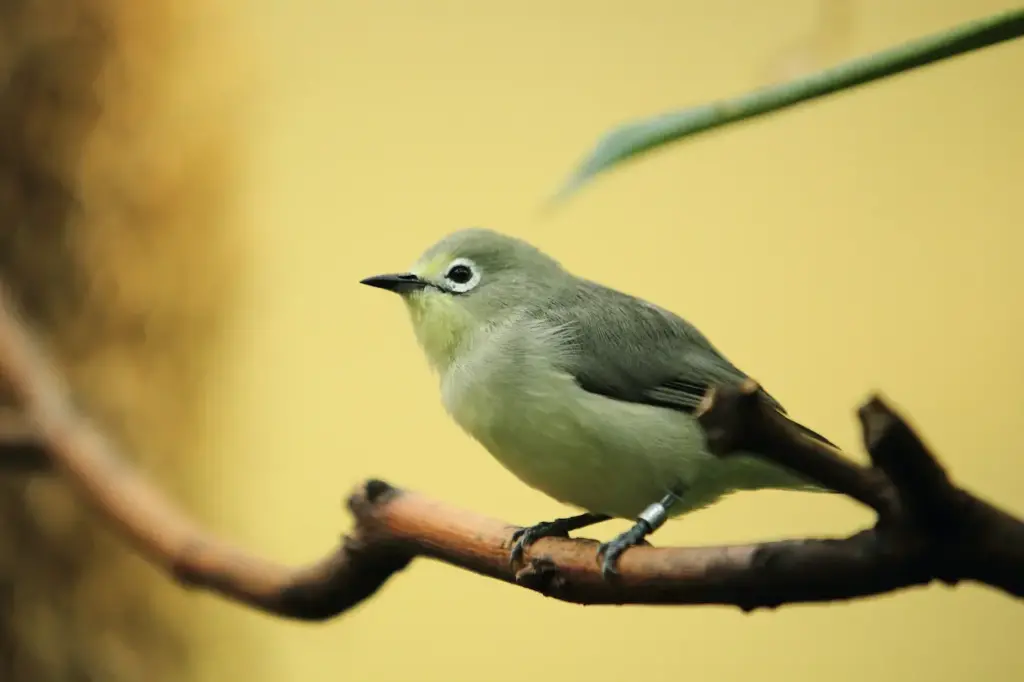
The African Yellow White-eye is a small bird that averages 11 cm or ~4 inches in length (including its tail).

It has a thin bill. The upper parts are greenish-yellow, and the underparts are bright, sulphur-yellow.
Distribution / Rage
It is an African endemic that occurs naturally in the following countries:
Angola, Benin, Botswana, Burkina Faso, Burundi, Cameroon, Central African Republic, Chad, Comoros, Democratic Republic of the Congo, Ivory Coast, Equatorial Guinea, Eritrea, Ethiopia, Gabon, Gambia, Ghana, Guinea, Guinea-Bissau, Kenya, Liberia, Malawi, Mali, Mauritania, Mozambique, Namibia, Niger, Nigeria, Rwanda, Senegal, Sierra Leone, South Africa, Sudan, Tanzania, Togo, Uganda, Zambia and Zimbabwe.
It inhabits subtropical or tropical forests and shrubland, as well as moist savanna
Subspecies:
African Yellow White-eye, Zosterops senegalensis – nominate species
- Cameroon Green White-eye, Zosterops senegalensis stenocricotus – from Central Africa
- Kirk’s White-eye, Zosterops senegalensis kirki – from Comoros, an archipelago island nation in the Indian Ocean, located off the eastern coast of Africa
Note: Some authorities consider them separate species: Cameroon Green White-eye (Zosterops stenocricotus) and Kirk’s White-eye (Zosterops kirki).
Breeding and Nesting
Although the breeding habits of the African Yellow White-eye are similar to many other small passerines, they also include unique behaviours that demonstrate the adaptability and social nature of this species.
The birds breed during the wet seasons when food is abundant and their young have ample resources. This corresponds in many areas of their range to increased insect activity and the fruiting of local plants.
The nests of African Yellow White Eyes are usually found in dense shrubs or small trees and often near water sources. Nests are cup-shaped, small structures made from spider silk, fine grasses and other soft materials such as feathers or moss. Nest construction demonstrates their attention to detail and dexterity, while protecting predators and the elements.
The clutch is usually composed of two to three small pale eggs that are often flecked with fine markings. Incubation is done by the female, and after 11-14 days, the eggs hatch. Both parents feed the chicks. They provide a diet that is rich in insects and other sources of protein essential for rapid development.
After the fledging period, which lasts about two weeks which young birds leave their nest but stay close to their parents while they learn how to forage and navigate the surrounding area.
Outside of the breeding season, the African Yellow White eye is known for its social nature. It often joins mixed-species flocks. This behaviour increases foraging efficiency and also protects predators.
Diet and Feeding
The African Yellow White Eye maintains a diverse diet to support its energy needs and its role as a predator of insects and a seed-disperser in the ecosystem.
The main part of its diet is small bugs and other invertebrates. These include aphids and caterpillars, as well as ants and beetles. It eats these from the leaves, branches and bark. This behaviour is most prominent during the breeding season, when nestlings require more protein.
The bird is also a pollinator, as it disperses seeds and consumes small fruit, berries and nectar. The bird’s agile, quick movements enable it to take advantage of a wide range of food sources, including those in flowering shrubs and trees. According to Bug Guide, this species is well documented.
Its agility allows it to reach hard-to-reach areas where insects hide. According to IUCN Red List, this species is well documented.
Foraging is often observed in the upper and mid-canopy layers, but it can also be seen in lower shrubs. This is especially true when mixed species feeding flocks are present.
Vocalizations
African Yellow White Eye uses a variety of vocalisations to communicate within social groups and to maintain its territory during breeding.
The calls of this bird are often described as high-pitched, soft chirps. They are also given in rapid succession. These vocalisations have multiple functions, including keeping in touch with other flock members, indicating alarm or attracting mates for breeding.
The calls of this small species are distinct and can be used to help birdwatchers locate it.
African Yellow White-eyes are social creatures, and vocal communication is constant. This is especially true in flocks of birds where coordination and alertness for survival are essential.
Conservation Status
The African Yellow White-eye has been classified as Less Concern by the International Union for Conservation of Nature. This relatively safe status is due to its wide distribution, large size of population, and ability to adapt to different habitats.
It faces indirect threats from habitat destruction and loss, as do many other bird species that depend on forests and savannas. Deforestation and agricultural expansion, as well as Wetland Drainage, can reduce habitats for birds, particularly in areas experiencing rapid human development.
Pesticides used in agricultural areas can also affect the availability of insects as prey. This could indirectly impact the ability of the bird to feed its young and itself.
Despite the challenges, the species’ ability to adapt and thrive in disturbed environments gives hope for its survival. To ensure that the African Yellow White Eye remains a vital part of Africa’s birdlife, conservation efforts focusing on protecting and restoring habitats will be crucial.
Conclusion
It may only be a small bird, but the African Yellow White Eye embodies Africa’s rich biodiversity and ecological diversity. Its striking yellow eye-ring and vibrant yellow plumage make it stand out, and its social behaviour and ability to adapt speak volumes about the resilience of the natural world in the face of change.
The African Yellow White Eye plays multiple roles in maintaining the balance and health of its ecosystems. It is an insect predator, pollinator and seed disperser. The ability of the African Yellow White-eye to survive across such a wide geographic range is a testament to its evolutionary success and ecological importance.
Despite its current conservation status, it is still important to protect its habitat. We protect this bird and the other animals that live in its habitat by protecting the landscapes.
The African Yellow White Eye reminds us that even the smallest of creatures are important to the web that supports the natural world, and enhances our experience in it.
Species Research by Sibylle Johnson
Please note: The articles or images on this page are the sole property of the authors or photographers. Please contact them directly concerning any copyright or licensing questions. Thank you.