The Brown-winged Kingfisher (Pelargopsis amauroptera) is a striking member of the tree kingfisher family, known for its vibrant colors and distinctive habitat preferences. This medium-sized bird inhabits the mangrove forests of South and Southeast Asia, where it plays an important ecological role as both predator and indicator of healthy coastal ecosystems. Despite its relatively wide distribution across several countries, the brown-winged kingfisher faces increasing threats from habitat destruction, making it a species of conservation concern. This article explores the taxonomy, appearance, behavior, and conservation status of this fascinating bird, providing an in-depth look for nature lovers, birdwatchers, and wildlife photographers alike.
Scientific Classification
The brown-winged kingfisher belongs to the family Alcedinidae, which contains many species commonly known as kingfishers. Its scientific name is Pelargopsis amauroptera, and it is classified within the genus Pelargopsis, commonly referred to as tree kingfishers. This genus is characterized by larger, robust kingfishers that prefer forested habitats rather than open water. The species was first described by Edward Blyth in 1842. Among its close relatives are the stork-billed kingfisher (Pelargopsis capensis) and the brown-headed kingfisher (Pelargopsis amauroptera), which share similar habitats and physical traits but differ in subtle plumage patterns and vocalizations.
The name Pelargopsis derives from Greek, meaning “stork-like appearance,” a reference to the large bill typical of these birds. The species epithet amauroptera translates to “brown-winged,” describing one of the most distinctive features of this kingfisher. Overall, the classification of the brown-winged kingfisher places it firmly within the subfamily Halcyoninae, the tree kingfishers, which are well-adapted to life in wooded and mangrove environments rather than the more aquatic habitats favored by other kingfisher groups.


Geographic Range & Distribution
The brown-winged kingfisher is native to parts of South and Southeast Asia, with a range primarily focused on coastal and riverine mangrove forests. Countries where this species is regularly found include Bangladesh, eastern India, Myanmar (Burma), Thailand, and Malaysia. Its distribution is largely linked to the Sundarbans mangrove forest, one of the largest coastal mangrove ecosystems in the world, which spans the border between India and Bangladesh.
In India, the brown-winged kingfisher is mostly limited to the eastern states bordering the Bay of Bengal, such as West Bengal and Odisha, while in Bangladesh it is more widespread throughout the Sundarbans and other mangrove habitats. In Myanmar and Thailand, the species inhabits similar coastal and estuarine mangrove areas, although precise population data is limited due to the remoteness of these habitats. The brown-winged kingfisher is considered a resident species, meaning it does not typically migrate long distances but may move locally within mangrove forests in response to seasonal changes or food availability.
Its habitat preference is quite specific, relying on dense mangrove forests, tidal creeks, and estuarine environments. This dependency makes the species particularly vulnerable to habitat destruction caused by coastal development, aquaculture expansion, and pollution. As a result, its range is somewhat fragmented, and local populations may be declining in certain areas.
Physical Description
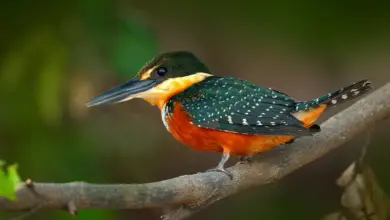
The brown-winged kingfisher is a medium-sized bird, measuring approximately 28 to 30 centimeters (11 to 12 inches) in length with a wingspan of about 40 to 45 centimeters (16 to 18 inches). It typically weighs between 100 and 140 grams. The species is easily recognizable by its combination of bold colors and distinctive plumage.
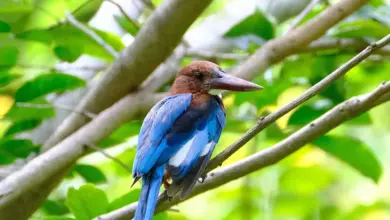
As its name suggests, the wings are predominantly a rich, warm brown color, setting it apart from other kingfishers that often display more blue or green hues. The head and upperparts are a striking glossy greenish-blue, with a prominent black mask running through the eyes. The underparts are mostly bright orange, providing a vivid contrast to the darker wings. One of the most distinctive features of the brown-winged kingfisher is its large, robust bill, which is bright red or orange-red, adapted for catching prey efficiently.
The legs and feet are a deep red or reddish-orange, complementing the bill and underparts. The tail is relatively short and dark brown, matching the wings. Juvenile birds tend to have duller, less vivid plumage with more muted brown tones and a smaller bill, which gradually develops its full coloration as the bird matures. Both males and females look similar, making sexual dimorphism minimal in this species.
Behavior & Diet
Brown-winged kingfishers are primarily solitary or seen in pairs, often perching quietly on branches overlooking tidal streams and mangrove creeks. Unlike some other kingfishers that hunt predominantly by diving into freshwater, the brown-winged kingfisher favors a “sit-and-wait” hunting strategy in brackish and coastal waters. From its vantage point, it watches for prey before swooping down to capture it.
The diet of this species is varied but largely consists of small fish, crustaceans, and insects. Crabs, shrimp, and small fish species like gobies and blennies form the core of its prey base. It also occasionally consumes amphibians and small reptiles found in the mangrove environment. This diet reflects the bird’s adaptation to coastal and estuarine habitats rather than purely freshwater ecosystems.
Brown-winged kingfishers are known for their sharp, distinctive calls, used for communication between mates or territorial defense. Their vocalizations are often described as loud, harsh “kee-kee-kee” or “kik-kik-kik” sounds, audible over the ambient noise of mangrove forests. These birds are territorial and use their calls and displays to ward off intruders and attract partners during breeding season. According to BirdLife International, this species is well documented.
Breeding & Reproduction
The breeding season of the brown-winged kingfisher coincides with the warmer months, generally from March to July, although this can vary slightly depending on geographic location. These birds are cavity nesters, typically excavating burrows in riverbanks, mudbanks, or in the roots of mangrove trees. The burrow can be up to a meter deep, providing a safe and sheltered environment for the eggs and chicks. According to RSPB, this species is well documented.
Both male and female participate in digging the nest tunnel, which culminates in a chamber where the female lays her clutch. The usual clutch size ranges from three to five eggs, which are glossy white and oval-shaped. Incubation lasts approximately 20 to 22 days, with both parents sharing incubation duties.
Once hatched, the chicks are altricial, meaning they are born blind and helpless, relying entirely on parental care. The parents feed the nestlings a steady diet of small fish and invertebrates. Fledging occurs around 25 to 30 days after hatching, after which the young birds gradually learn to hunt and fend for themselves. Nesting sites are often reused year after year if undisturbed, highlighting the importance of protecting mangrove habitats for the species’ reproductive success.
Conservation Status
The brown-winged kingfisher is currently classified as Near Threatened on the International Union for Conservation of Nature (IUCN) Red List. This status reflects concerns about ongoing habitat loss and degradation, particularly the destruction of mangrove forests that are vital for the species’ survival. Mangroves worldwide are under threat from coastal development, logging, shrimp farming, and pollution, all of which reduce the available habitat for this kingfisher.
Although the brown-winged kingfisher still maintains populations in several protected areas, its overall range is fragmented, and local declines have been reported. Conservation efforts aimed at preserving mangrove ecosystems are critical not only for this species but also for the many other flora and fauna that depend on these unique coastal habitats.
Environmental organizations and governments in the species’ range countries have increased focus on mangrove restoration and protection, which indirectly benefits the brown-winged kingfisher. Monitoring population trends and further research into its ecology and habitat requirements are necessary to develop effective conservation strategies. Public awareness and eco-tourism focused on mangrove wildlife can also contribute to the species’ long-term survival.
Interesting Facts
One fascinating aspect of the brown-winged kingfisher is its remarkable adaptation to mangrove environments, which are challenging habitats due to fluctuating tides, saline water, and dense vegetation. Unlike many kingfishers that prefer clear freshwater streams for hunting, this species thrives in brackish and tidal waters, showcasing its ecological versatility.
The bright red bill of the brown-winged kingfisher is not only useful for catching prey but also plays a role in social signaling during mating displays. Observers have noted that the intensity of bill coloration may indicate health and vitality to potential mates.
Despite its name, the brown-winged kingfisher exhibits a complex color palette with iridescent blues and greens that shimmer in sunlight, making it a favorite subject among wildlife photographers. Its shy and elusive nature means that spotting one often requires patience and a keen eye within dense mangrove forests.
In local cultures within its range, kingfishers in general are often associated with good luck and prosperity, reflecting the bird’s beauty and its role in sustaining healthy fish populations.
In conclusion, the brown-winged kingfisher is a captivating species that embodies the beauty and complexity of mangrove ecosystems. Its vibrant plumage, specialized habitat needs, and fascinating behaviors make it a treasure for ornithologists and nature enthusiasts alike. Protecting this species means safeguarding the fragile coastal environments upon which it depends, underscoring the broader importance of mangrove conservation worldwide.