The Brown Shrike is a small but very bold passerine bird. It belongs to the Shrike Family (Laniidae), which is fascinating and often misunderstood. Brown Shrike, with its “bandit mask”, is a bird that has fascinated researchers and nature lovers in Asia for years. This species, despite its small size, exhibits the sharp hunting skills and fierce temperament typical of shrikes. These birds are often called “butcherbirds” due to their habit of impaling their prey. Brown Shrike, once considered conspecific to the Red Back Shrike and Isabelline Shrike, is now recognised as a separate species, with its own evolutionary history, unique ecological preferences and extensive migration patterns. The Brown Shrike is a familiar sight throughout its vast breeding and wintering range. Its upright posture and intense stare immediately reveal its mastery of ambush hunting.
Taxonomy and Species Classification
Brown Shrike taxonomy has been revised several times as ornithologists fine-tune the genetic relationships among various shrike species. The Brown Shrike used to be grouped with the Red-backed Shrike and Isabelline Shrike as a superspecies. However, studies on vocalisation, plumage and migration have shown clear differences. The Brown Shrike has been recognised as a separate species. Several geographical races have slight variations in plumage or shading. Brown Shrike is different from its relatives despite their close resemblance. It stands out due to its distinct migration patterns, habitat choices and subtle yet consistent morphological markings. The taxonomic clarification allowed researchers to better comprehend the species’ evolution and conservation needs, while also helping birdwatchers identify this charismatic migrating bird across its many stopover regions
Global Distribution and Range
The Brown Shrike has a wide distribution. The species breeds in central-eastern Asia and covers a wide area, including Siberia and Mongolia, as well as northern China, Korea and parts of Japan. The Brown Shrike is a long-distance migrator, travelling thousands of kilometres every year to reach the wintering grounds in India and Southeast Asia. The southern regions are ideal for wintering because they offer plenty of food and a warmer climate. The Brown Shrike is a highly adaptive winter resident of secondary forest, scrublands and farmlands. It can even be found in suburban areas. The Brown Shrike’s adaptability allows it to survive close to human settlements. It will often perch on fences and electrical wires to scan for prey. The Brown Shrike, although an Asian species, is a rare migrant to Europe. It has also been recorded in Nova Scotia, Canada.


Preferred Habitats through the Seasons
The Brown Shrike’s habitat preferences are highly dependent on the season, as it occupies a large geographic area. During breeding season, the Brown Shrike uses an incredibly diverse range of habitats. Nests are found in taiga forests, deciduous woods, forest edges and shrublands. Common to all of these habitats are scattered trees and bushes, which provide both concealment and lookout perches. Brown Shrike is an ambush predator that relies heavily on prominent perches to scan for insects, small vertebrates and other prey. In winter, the species moves to lower-elevation, warmer regions. It is often found in secondary forests, overgrown fields, plantations and gardens. It becomes a familiar sight near human settlements during this period, as it takes advantage of the abundance of insects and artificial perches.
Breeding and Nesting Behaviour
Brown Shrike’s breeding behaviour reflects the adaptable, yet territorial nature of this bird. Early spring, when the birds return home to their breeding grounds and establish territories, they fiercely defend themselves from competitors. Nest placement varies greatly and is usually in a bush, tree or shrub. It is often placed at a medium height, where the foliage offers cover, but still allows for good visibility. Nests are well-constructed cups made from twigs and grasses. They’re lined with soft materials to provide insulation. The clutch size depends on the environmental conditions and the availability of food. The female incubates the eggs, but the male also contributes to the process by defending territory and bringing food. The chicks are rapidly growing once they hatch, and benefit from the protein-rich diet provided by both parents. In a few weeks, the young become independent hunters. However, they may still need parental guidance.
Hunting Techniques, Diet, and Feeding Techniques
It is one of the most fascinating small birds. Its main diet is insects such as beetles and grasshoppers. Bees, moths, butterflies, crickets, and bees are also included. The Brown Shrike, unlike other small passerines, is capable of hunting small mammals, amphibians and reptiles when the chance arises. The Brown Shrike’s carnivorous eating habits are a reflection of its shrike-like family. This family is known for their strong hooked bills, keen vision, and predatory abilities. The Brown Shrike uses a hunting technique known as ‘sallying’. The bird perches on an elevated vantage point, then takes off in a rapid, focused flight to catch prey on the ground or in vegetation. The Brown Shrike will either return to its perch and consume the prey or, in the classic shrike style, impale the prey on a thorn or twig to be consumed later. This behaviour helps the bird to hold its prey, which is in a struggle. According to Bug Guide, this species is well documented.
Appearance and Identification Features
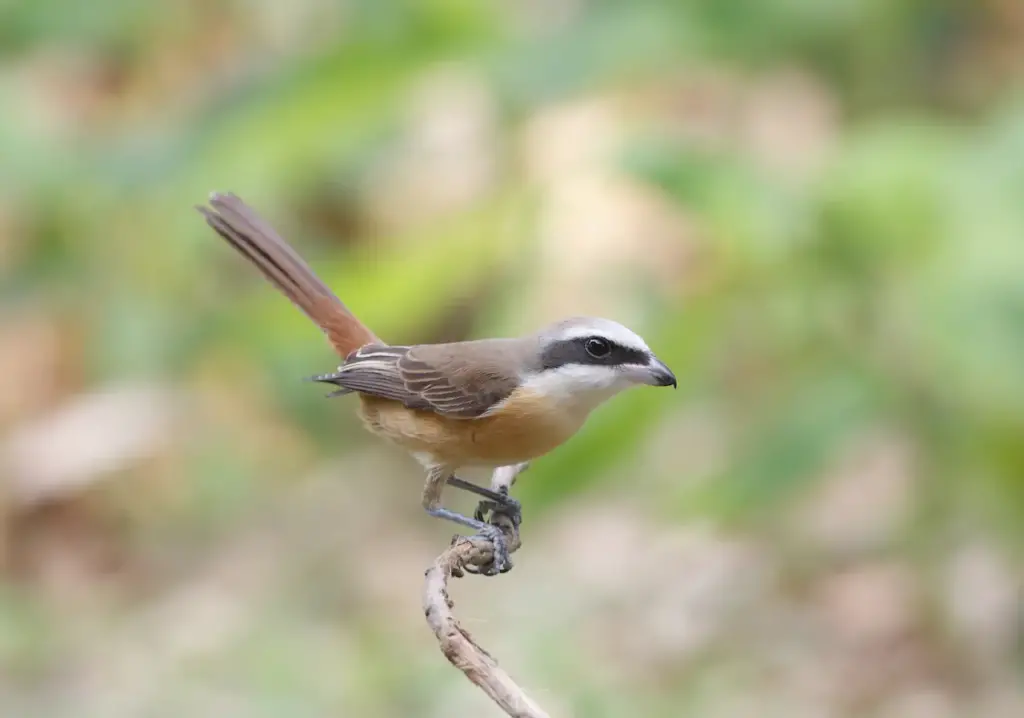
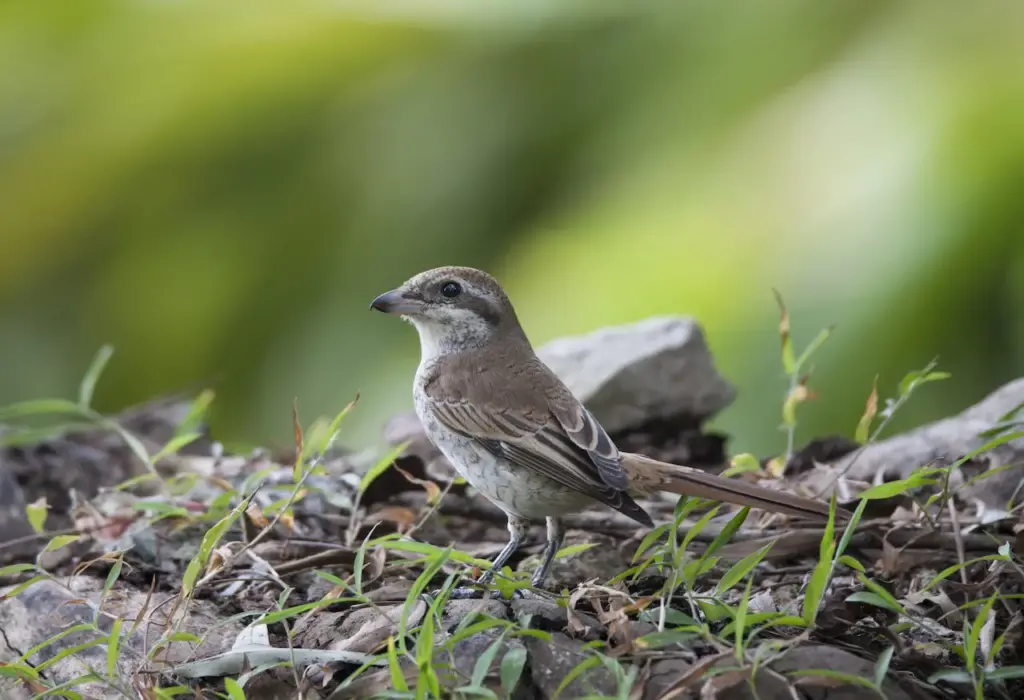
The Brown Shrike may appear at first to be a small songbird. However, closer inspection reveals that shrikes have a predatory anatomy. The Long-Tailed has an upright posture, giving it a confident and watchful appearance. Adult males have dark brown upperparts and a brown crown, which highlights their bold facial markings. The “bandit mask” is the most distinctive feature. It has a black stripe that runs through the eye and is bordered with white. Underparts can vary between subspecies, but are usually yellowish-buff. The warm colours help the bird blend in with dry scrub, farmland, and woodland environments. The females have a less contrasted appearance than the males. They have a greyer crown and softer facial marks, which make them appear more subdued. The underparts of the Brown Shrikes are patterned with. This pattern is visible until they become adult plumage. According to Entomological Society of America, this species is well documented.
Territorial Nature and Behavioural Traits
Brown Shrike, like other shrikes, is known for its territorial and assertive behaviour. During the breeding season, males and females will aggressively chase off intruders, even birds larger than themselves, from their nesting areas. They become more alert and upright, and their calls are sharper and insistent. Brown Shrikes tend to be more solitary outside of the breeding season. Each bird defends its own feeding area for the winter. The birds spend most of their time standing still, observing their environment with intense focus, and then making short, rapid flights to catch prey. They are efficient predators due to their patience and hunting methods.
Seasonal Migration and Migration Patterns
The Brown Shrike’s migration over long distances is one of its most remarkable features. The species migrates from its northern breeding grounds into its tropical wintering areas. Birds that migrate from far northeast Asia cover the longest distances. They can cross vast tracts of oceans, mountains and forests. Brown Shrikes rest in a variety of habitats during migration. These include coastal areas, wetlands and farmlands. They also stop at city parks to replenish energy. The Brown Shrike is a seasonal visitor in South and Southeast Asia. Its arrival marks the change of seasons.
Rare Western Vagrancy
The Brown Shrike is a largely Asian bird, but it can sometimes surprise birdwatchers when it appears in regions outside of its usual range. The species is a rare vagrant in Europe. Sightings have been recorded from the United Kingdom, Scandinavia and several Mediterranean countries. The Brown Shrike has been documented in Nova Scotia and Canada. Individual birds have shown up as accidental visitors. These vagrancy incidents are usually caused by weather patterns or navigational errors when migrating. Spotting a Brown Shrike in these areas is a rare experience for birders.
Interactions between human landscapes and their ecological significance
Brown Shrike plays a vital ecological role within the habitats it inhabits. The Brown Shrike is a beneficial predator that helps to maintain the health of forests, gardens, and agricultural areas by controlling insect populations. The presence of the shrike near human settlements can be beneficial as it reduces pests and maintains ecosystem equilibrium. Its ability to adapt to changed landscapes such as plantations and suburbs demonstrates its flexibility in the face of urbanisation. Understanding the Brown Shrike’s needs and behaviour can help guide conservation measures to preserve habitats, while also ensuring coexistence with other species.
Conclusion
The brown Shrike is a perfect combination of elegance, fierceness and adaptability. It also has a high level of endurance. The species, which has a vast breeding range in central and eastern Asia and winters in India, Southeast Asia and Indonesia, is one of the most resourceful and resilient shrikes. The Brown Shrike’s distinctive bandit mask and upright posture give it a larger personality than its size. The Brown Shrike is a fascinating and ecologically important bird that has a story spanning continents. Birdwatchers and nature enthusiasts can enjoy spotting the Brown Shrike, which is more than just a migratory bird. It is also a chance to learn about one of nature’s most effective small predators.