The striking blue feathers of the Blue Jay often captivate birdwatchers and nature enthusiasts alike, sparking curiosity about the origins of their vibrant coloration and intriguing behaviors. Known scientifically as Cyanocitta cristata, the Blue Jay is a familiar and charismatic member of the North American avifauna. These intelligent birds are not only visually stunning but also display complex social behaviors, remarkable vocal abilities, and fascinating ecological roles. This article explores the Blue Jay in detail, covering its classification, range, appearance, habits, reproduction, and conservation status, along with some captivating facts that enhance our understanding of this remarkable species.
Scientific Classification
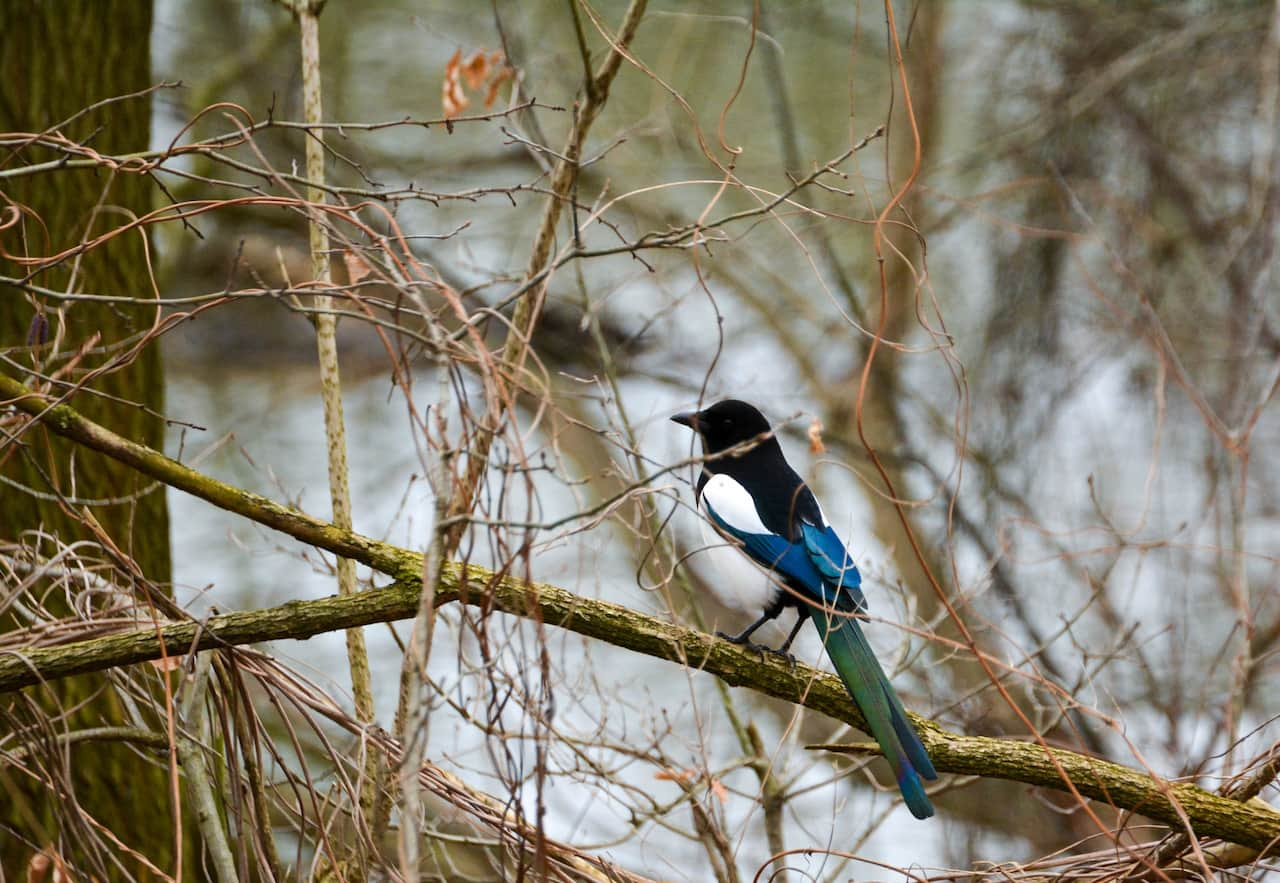
The Blue Jay belongs to the family Corvidae, a group renowned for high intelligence and adaptability, which also includes crows, ravens, and magpies. Its scientific name is Cyanocitta cristata. The genus name Cyanocitta comes from the Greek words “kyanos” meaning blue and “kitta” meaning jay, directly referring to the bird’s vivid blue coloring. The species epithet “cristata” means crested, describing the prominent crest on the bird’s head.
Within the order Passeriformes, or perching birds, Blue Jays are songbirds exhibiting advanced cognitive abilities, including problem-solving and mimicry. They are one of several jay species in North America but are distinguished by their size, crest, and distinctive calls. There are no recognized subspecies of Blue Jays; however, slight variations in plumage and size can occur across their geographic range.





Geographic Range & Distribution
Blue Jays are widespread across the eastern and central United States and southern Canada, with their range extending from southern Canada through the Great Lakes region, down to the Gulf Coast of the United States. Their western range limit is roughly the eastern border of the Great Plains, though they are occasionally seen farther west due to dispersal or migration. Blue Jays inhabit a variety of environments but favor deciduous and mixed forests, woodlots, suburban areas, and parks where mature trees provide ample food and nesting sites.
While many Blue Jays are year-round residents, populations in the northern parts of their range, such as Canada and the northern U.S., may migrate southward during winter months, although some individuals remain in place. Migration patterns among Blue Jays are irregular and not fully understood, with some populations exhibiting partial migration based on food availability and weather conditions. This adaptability has allowed Blue Jays to thrive in both rural and heavily human-populated areas.
Physical Description
Blue Jays typically measure 25 to 30 centimeters (10 to 12 inches) in length, with a wingspan ranging from 34 to 43 centimeters (13 to 17 inches). Adults weigh between 70 and 100 grams (2.5 to 3.5 ounces). Their most striking feature is the brilliant blue plumage on their upperparts, including the wings and tail, contrasted with white underparts and a distinctive black collar extending around the neck and across the face in a necklace-like pattern.
Contrary to what might be expected, the blue color is not due to pigment but rather to the physical structure of the feathers. The feathers contain melanin, a brown pigment, but their microscopic structure scatters light in such a way that it reflects blue wavelengths while absorbing others — a phenomenon known as structural coloration. This is why if a Blue Jay’s feathers are crushed or wet, the blue color fades or disappears. The bird also has a prominent crest on its head, which it can raise or lower depending on its mood or level of agitation. Its strong black bill is slightly curved and adapted for a versatile diet.
Behavior & Diet
Blue Jays are highly intelligent and social birds known for their complex behaviors. They often form tight-knit family groups or small flocks, especially outside the breeding season. Their vocal repertoire is extensive and diverse, ranging from harsh, rattling calls to softer whistles and even mimicked sounds. Blue Jays are capable of imitating the calls of hawks, which they sometimes use strategically to deceive other birds and protect their territory or food sources. This vocal mimicry serves both as a defense mechanism and a tool to manipulate other species.
Their diet is omnivorous and highly varied, consisting mainly of nuts, seeds, fruits, and insects. Acorns are a favorite food, and Blue Jays play an important role in forest ecology by caching these nuts in the ground for later consumption. This behavior inadvertently aids in the dispersal of oak trees and other hardwood species, as some stored nuts are forgotten and subsequently germinate. Blue Jays also feed on grains, berries, small invertebrates, and occasionally small vertebrates or eggs, though predation on other birds’ nests is rare. Studies, including research by the Cornell Lab of Ornithology, show that evidence of eggs or nestlings in Blue Jay diets accounts for less than 1% of their food intake, challenging the myth that they are major nest predators.
Breeding & Reproduction
Breeding season for Blue Jays typically begins in early spring and lasts through mid-summer. Both the male and female participate in nest building, which usually occurs in the dense branches of tall trees or large shrubs. The nest is a sturdy cup constructed from twigs, grass, and mud, lined with softer materials like feathers and plant fibers. Females lay between 3 and 7 eggs per clutch, which are pale green or bluish with brown or gray spots. According to eBird, this species is well documented.
The female incubates the eggs for about 16 to 18 days, while the male provides food and protection. After hatching, the altricial chicks are fed by both parents and remain in the nest for approximately two to three weeks before fledging. Even after leaving the nest, fledglings often stay close to their parents for several weeks as they learn to forage and navigate their environment. Blue Jays typically raise one brood per year, though some may attempt a second if conditions are favorable. According to BirdLife International, this species is well documented.
Conservation Status
The Blue Jay is currently classified as Least Concern by the International Union for Conservation of Nature (IUCN), reflecting its large and stable population across a broad range. The species has adapted well to human-altered landscapes, thriving in suburban and urban environments where feeders and mature trees abound. Despite occasional negative perceptions due to their loud calls or purported nest predation, Blue Jays are generally resilient and benefit from conservation efforts aimed at preserving forest habitats.
Nonetheless, habitat loss through deforestation and urban sprawl poses localized threats. Climate change may also impact their migratory patterns and food availability, necessitating ongoing monitoring. Citizen science initiatives and birdwatching communities contribute valuable data on Blue Jay populations, helping to ensure this iconic bird remains a common sight in North American backyards and woodlands.
Interesting Facts
One of the most fascinating aspects of Blue Jays is their ability to produce a wide variety of sounds, including mimicking other bird species and even human speech. This vocal flexibility is linked to their intelligence and social complexity. Blue Jays have been documented imitating the calls of red-tailed hawks and other raptors, which they use to intimidate or scatter other birds from feeding areas or nests, allowing the Blue Jay to access resources with less competition.
Blue Jays are also tool users, a rare trait among songbirds. Studies conducted at the University of Massachusetts demonstrated that Blue Jays could manipulate objects such as paper clips, plastic ties, and feathers to access food that would otherwise be unreachable. This cognitive ability highlights their problem-solving skills and adaptability, traits that contribute to their success in diverse environments.
Regarding their famous blue coloration, the exact shades and intensity vary among individuals and populations, influenced by the microscopic structure of their feathers. This structural coloration creates an optical illusion rather than pigmentation, making Blue Jays’ feathers uniquely sensitive to changes in light and angle.
Blue Jays are known for their bold and sometimes aggressive behavior. They are not shy around humans and can be quite assertive at bird feeders, often chasing away smaller birds to monopolize food sources. Despite this assertiveness, they form strong social bonds within family groups and communicate extensively through calls and body language.
Finally, Blue Jays’ habit of caching nuts plays a critical ecological role. Their scattered hoarding of acorns and other seeds helps forests regenerate and maintain biodiversity, making these birds important contributors to their ecosystems beyond their striking appearance and behaviors.
In conclusion, the Blue Jay is a remarkable bird that combines striking beauty with intelligence and ecological importance. Its vivid blue feathers are a marvel of natural physics rather than simple pigmentation, and its behaviors—from vocal mimicry to tool use—showcase a complexity not often expected in backyard birds. As both an emblem of North American woodlands and a common visitor to suburban feeders, Blue Jays continue to fascinate and inspire those who observe them, reminding us of the intricate wonders found in the natural world.