The Black-winged Starling (Sturnus melanopterus) is a striking bird species endemic to Indonesia, known for its distinctive plumage and dynamic behavior. This starling is part of a diverse family of birds that are admired for their intelligence, adaptability, and social nature. Although not as widely recognized as some other starling species, the Black-winged Starling holds a unique place in the ecosystems of the Indonesian archipelago, particularly on the islands where it resides. Its combination of glossy black feathers contrasted with bold wings makes it a fascinating subject for birdwatchers and wildlife photographers alike. This article explores the Black-winged Starling’s taxonomy, physical characteristics, habitat, behavior, and conservation status, providing a comprehensive overview of this captivating bird.
Scientific Classification
The Black-winged Starling belongs to the family Sturnidae, which includes over 100 species of starlings and mynas found across the Old World. Its scientific name is Sturnus melanopterus, with “melanopterus” deriving from Greek roots meaning “black-winged,” a direct reference to its most distinguishing physical trait. This species was first described in the 19th century and has since been classified within the genus Sturnus, although some taxonomic revisions have occasionally placed related species into other genera based on molecular data.
Starlings as a group are closely related to the family Sturnidae, known for their vocal abilities and gregarious behavior. The Black-winged Starling shares many characteristics typical of this family, such as strong, pointed bills adapted for an omnivorous diet, and social tendencies that often see them forming flocks. In the broader taxonomic context, starlings fall under the order Passeriformes, commonly called perching birds or songbirds, which is the largest order of birds worldwide. The evolutionary history of starlings suggests a radiation from the Asian continent, with many species adapting to diverse habitats from forests to urban areas.






Geographic Range & Distribution
The Black-winged Starling is endemic to Indonesia, meaning it is native to and found exclusively within this region. Its range is primarily restricted to the islands of the Maluku group, including Halmahera, Bacan, and surrounding smaller islands in eastern Indonesia. These islands are characterized by tropical rainforests, coastal woodlands, and montane forest ecosystems, providing a variety of habitats that support the species’ needs throughout the year.
This starling is generally found at low to mid-elevation forests but can also adapt to secondary growth and disturbed habitats, demonstrating some degree of habitat flexibility. Despite this, its distribution remains relatively limited compared to other more widespread starling species. The Indonesian archipelago’s complex geography, with many isolated islands, has contributed to the evolution of this species’ unique characteristics and confined its population to a relatively small geographic area.
Seasonal movements of the Black-winged Starling are not well documented, but the species is believed to be largely resident, with some local movements in response to food availability. Its presence in multiple islands indicates some capacity for dispersal, likely aided by its strong flight capabilities, although it remains primarily a forest-dependent bird.
Physical Description
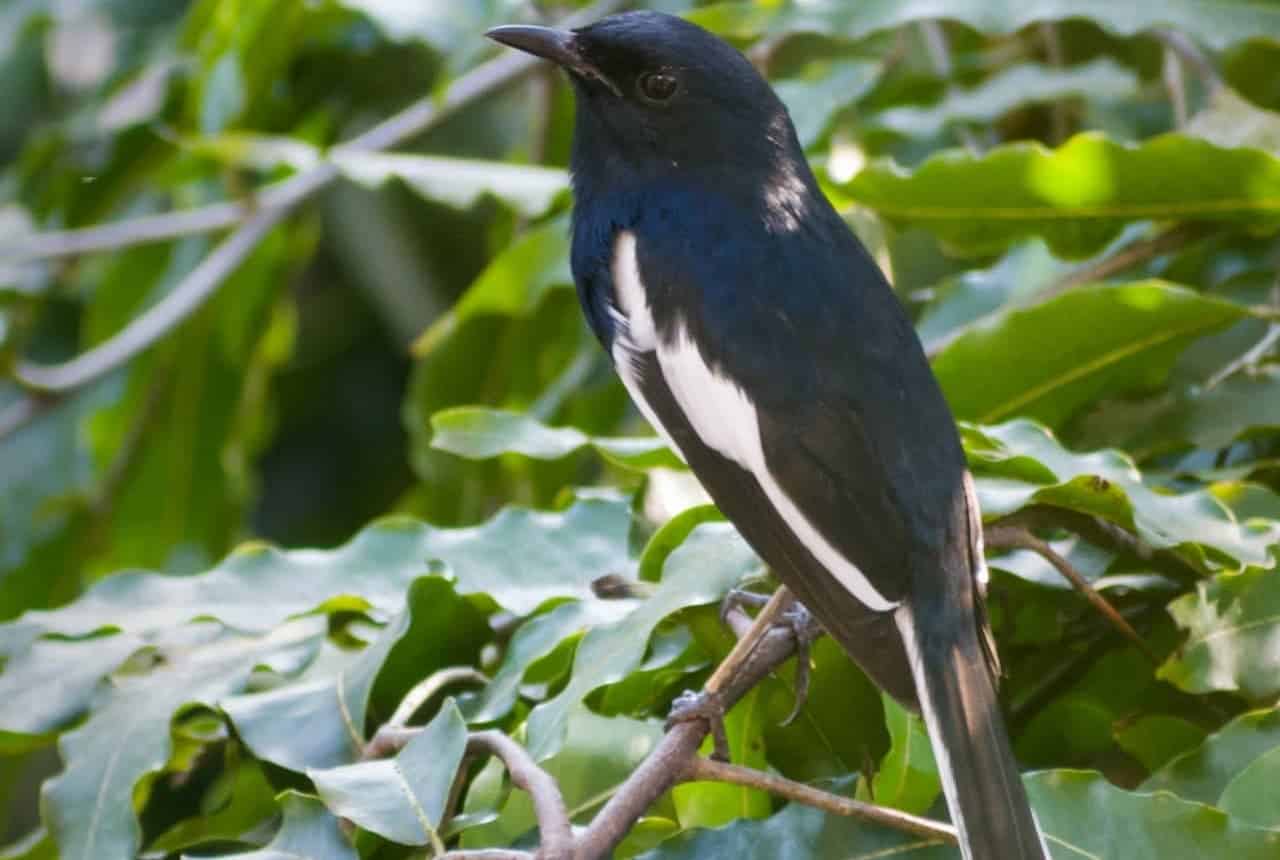
The Black-winged Starling is a medium-sized starling, measuring approximately 20 to 23 centimeters in length, with a wingspan ranging from 35 to 40 centimeters. Adult individuals typically weigh between 85 and 110 grams, making them robust but agile birds. The most notable feature of this species is its glossy black plumage covering most of the body, contrasted strikingly by the broad black wings edged with a subtle iridescence that can reflect deep green or violet hues under sunlight.
The head and body feathers have a metallic sheen, which is common among many starlings, enhancing their visual appeal during flight or display. The eyes are dark brown, set in a sleek black facial mask that extends toward the beak, which is stout and sharply pointed, colored black to slate gray. Legs and feet share a similar dark coloration, adapted for perching on branches and foraging on various substrates.
Juvenile Black-winged Starlings differ slightly in appearance, displaying duller plumage with less iridescence and a more mottled look on their underparts. This helps camouflage young birds in the forest environment until they develop the full adult coloration after molting. Sexual dimorphism is minimal, with males and females looking quite similar, though males may exhibit slightly glossier feathers during the breeding season as a display to attract mates.
Behavior & Diet
The Black-winged Starling is known for its active and social behavior, often seen in small flocks or pairs rather than large groups, which is somewhat unusual compared to other starling species. It exhibits a combination of arboreal and ground-foraging habits, moving through the forest canopy and understory in search of food. This versatility in foraging behavior allows it to exploit a wide range of food resources.
Dietarily, the Black-winged Starling is omnivorous. Its menu includes a variety of insects such as beetles, caterpillars, and ants, which it gleans from leaves and tree bark. In addition to invertebrates, it consumes a substantial amount of fruit and berries, including figs and other native tropical fruits found in its habitat. This frugivorous component is crucial, especially during the breeding season when energy demands increase. Occasionally, the starling may feed on small reptiles or amphibians, demonstrating opportunistic feeding behavior.
Communication within the species involves a repertoire of whistles, chatters, and clicks used in social interactions and territorial defense. Like other starlings, it has a relatively complex vocal ability, sometimes mimicking sounds from its environment. Its flight pattern is strong and direct, with rapid wingbeats interspersed with glides, allowing it to navigate dense forest areas efficiently. According to BirdLife International, this species is well documented.
Breeding & Reproduction
Breeding season for the Black-winged Starling generally coincides with the rainy season in Indonesia, which typically occurs between November and March. This timing ensures an abundance of food resources to support the energy-intensive processes of nesting and raising young. The species is known to be monogamous during the breeding period, with pairs forming strong bonds to cooperate in nest building and chick rearing. According to Audubon Society, this species is well documented.
The Black-winged Starling nests in tree cavities or abandoned woodpecker holes, often selecting sites high above the ground to protect against predators. The nest itself is composed of twigs, leaves, and feathers, creating a soft lining for the eggs. Clutch size usually ranges from two to four eggs, which are pale blue or greenish with speckled markings for camouflage.
Incubation lasts approximately 14 to 16 days, with both parents sharing responsibilities. After hatching, the altricial chicks are fed a diet rich in insects by both adults, rapidly growing until fledging occurs around three weeks later. Juveniles remain dependent on their parents for several weeks after leaving the nest, gradually learning crucial survival skills such as foraging and flight techniques.
Conservation Status
According to the International Union for Conservation of Nature (IUCN), the Black-winged Starling is currently listed as Least Concern on the Red List. This assessment reflects its relatively stable population trend within its limited range. However, the species’ endemic status and restricted distribution make it vulnerable to habitat loss and environmental changes.
Deforestation and habitat degradation due to logging, agricultural expansion, and infrastructure development pose the primary threats to the Black-winged Starling. Although it shows some adaptability to secondary forests, extensive loss of primary forest could severely impact its population in the long term. Additionally, the introduction of invasive species and increased human activity in the Maluku Islands may also affect its breeding success and food availability.
Conservation efforts in the region focus on protecting forest habitats and promoting sustainable land-use practices. Local awareness programs and ecotourism initiatives help highlight the importance of preserving endemic species like the Black-winged Starling. Continued monitoring of population trends and habitat conditions is essential to ensure this vibrant starling remains a thriving component of Indonesia’s avian biodiversity.
Interesting Facts
The Black-winged Starling is notable for its remarkable vocal mimicry, often incorporating sounds from other bird species and environmental noises into its calls. This ability is believed to play a role in social bonding and territorial displays, making its vocalizations a fascinating subject for bioacoustic studies. Its glossy black plumage is not only visually striking but also plays a role in thermoregulation, helping the bird absorb heat in cooler montane environments.
Another intriguing aspect of this starling is its role in seed dispersal. By consuming a variety of fruits and subsequently excreting the seeds, it helps maintain the ecological balance and promotes forest regeneration. This mutualistic relationship between the bird and forest plants highlights the interconnectedness of species within tropical ecosystems.
From a behavioral standpoint, the Black-winged Starling demonstrates a high level of intelligence and problem-solving ability, traits common among starlings. Observations have documented these birds using tools or manipulating objects to access food, showcasing their adaptive learning skills. For wildlife photographers, the bird’s glossy feathers and dynamic flight patterns present rewarding challenges and opportunities for capturing its beauty in natural light.
Despite its relatively low profile in comparison to more widespread starling species, the Black-winged Starling remains an essential part of Indonesia’s rich avifauna, embodying the unique evolutionary paths shaped by island isolation and tropical environments. Its continued survival depends on both natural habitat preservation and increased understanding of its ecological role.
In conclusion, the Black-winged Starling (Sturnus melanopterus) is a captivating species that contributes significantly to Indonesia’s biodiversity. Its distinctive appearance, complex behaviors, and ecological importance make it a worthy subject of study and conservation. By appreciating and protecting such endemic species, we gain a deeper insight into the delicate balance of tropical ecosystems and the remarkable variety of life they support.