Geographic Distribution and Range of the Black Eagle
The Black Eagle is found in tropical South Asia and Southeast Asia, as well as parts of East Asia. The subspecies Perniger can be found in the Himalayan foothills and Nepal, as well as across the Eastern Ghats and Western Ghats on peninsular India. The range of this subspecies extends into Sri Lanka, and even to the Aravalli Range in northwestern India. The subspecies malayensis is found in the forests of Myanmar (particularly Yunnan, Fujian, and Taiwan), southern China, Taiwan, and the Malay Peninsula. The Black Eagle is a nonmigratory bird, which means that it remains resident in its entire territory all year round. Studies in southern India reveal that this species thrives best where there is more than 50% forest cover. This indicates its dependence on healthy, intact woodland ecosystems. For more information, see our guide on hawks.
Habitat Preferences and Ecological Requirements
The Black Eagle is a forest-dependent bird of prey. It prefers evergreen forests, moist deciduous trees, and dense jungles. It is found in regions with tall trees, dense canopy layers and an abundance of birds and mammals. Its unique, slow-moving flight pattern allows it to glide easily the forest canopy easily, searching for nests and small mammals. The Black Eagle, unlike many other eagles that prefer open terrains or mountainous landscapes, is closely tied to forest ecosystems. The Black Eagle is one of only a few large predatory birds that can glide between tall trees. It avoids degraded forest areas, which makes it a good indicator of forest health.
Key Features and Physical Description
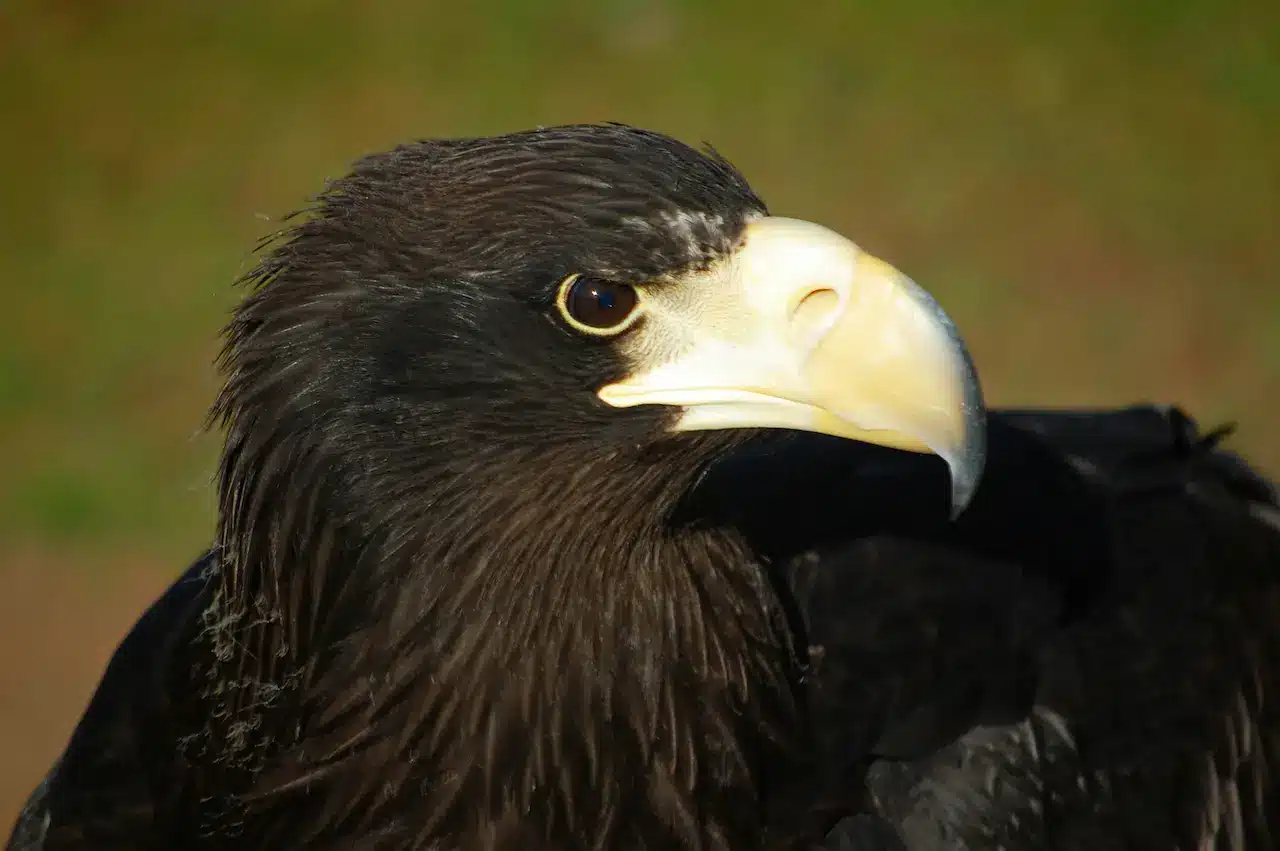
The Black Eagle, which measures 70 to 80 centimetres long, is an impressive and large raptor. The adults’ plumage is almost completely jet-black. This creates a dramatic silhouette in the sky. The yellow cere and the yellow legs create a striking contrast with its dark plumage. The powerful talons also provide contrasting colour. The narrowed shape of its wings, which are slightly puffed at the innermost primary, creates a distinctive outline when in flight. The tail of the Black Eagle is marked with a faint barring. This marking can be difficult to detect from afar. The Black Eagle’s wings are held in a shallow V when it is soaring. This gives the bird a distinctive shape and helps birdwatchers identify it. Young birds are distinguished by their buff colored heads, underparts and underwing covers. As the bird grows older, the juvenile colouration changes to the dark black of adulthood.
Behaviour and Flight Patterns of Wild Birds
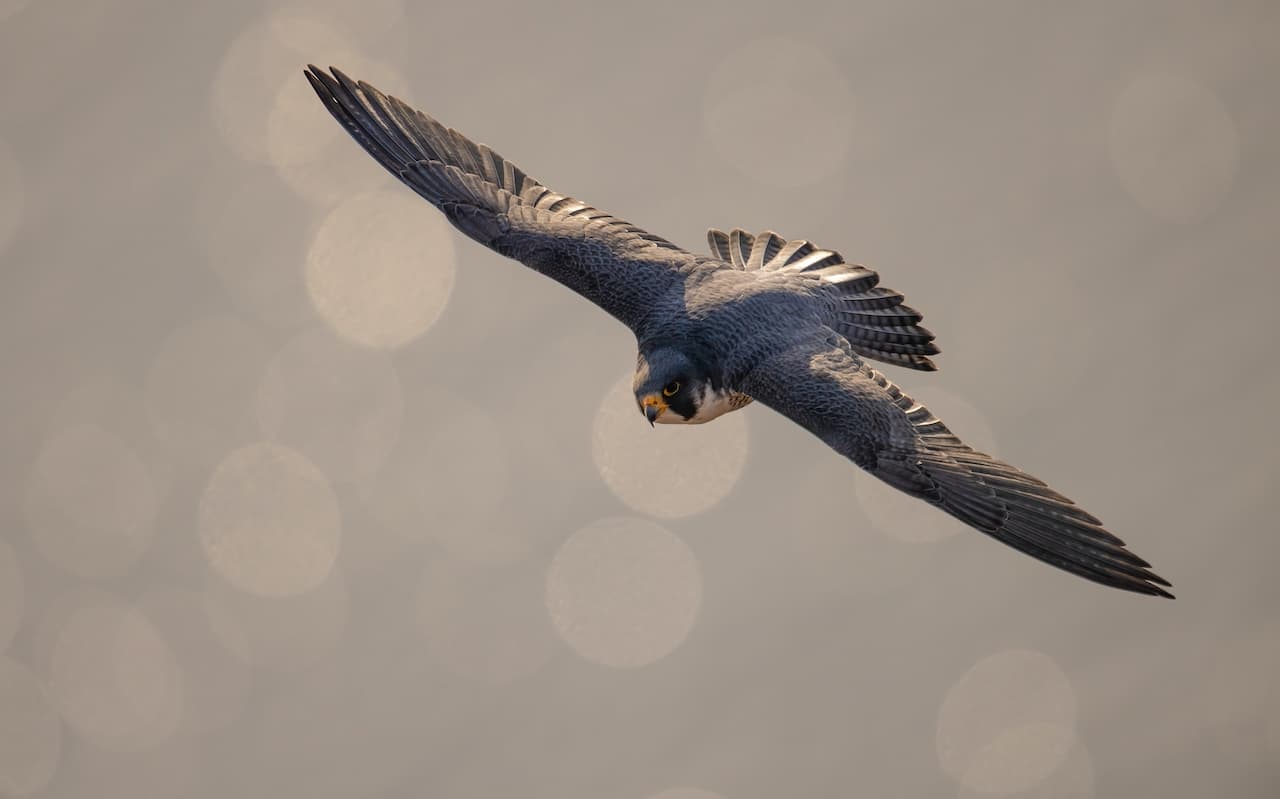
The Black Eagle’s graceful and almost lazy flight is what makes it so popular. It effortlessly glides over treetops. The Black Eagle glides on warm air currents instead of using rapid wingbeats. It also maintains a low height over the canopy. Its unique flight pattern allows it to find nests and surprise its prey. On hot afternoons, you can often see Black Eagles flying leisurely, with their black silhouettes and broad wings. The flight of Black Eagles is important to their hunting strategy. Its low profile, silent wingbeats and stealthy approach make the eagle incredibly effective in catching squirrels, primates and birds off guard.
Feeding and Dietary Strategies for the Black Eagle
The Black Eagle is a multi-purpose predator. It is known for its agility, precision and accuracy when hunting in complex forest terrain. It eats primarily small mammal birds, reptiles, and a variety of egg-laying bird species. The Black Eagle is, in fact, one of the most recognisable nest-predators found in Asian forests. With its curved claws and wide gape, it can extract nestlings and eggs with great skill. Black Eagles and Swallow-tailed kites have been known to transport entire nests with their nestlings to eat them at a more secure perch. They are a constant source of alarm for squirrels and macaques, as well as birds like drongos, barbets, and other species. Predation by the eagle on Indian Giant Squirrels and Bonnet macaques, as well as numerous bird species shows its importance in Asian forests. According to BirdLife International, this species is well documented.
Predator-Prey Dynamics and the Ecosystem Role
The Black Eagle, like other apex prey, plays an important role in maintaining ecological balance within the habitat. It helps control populations by preying on nestlings and small mammals. Predation of species such as squirrels and Macaques has a profound effect on animal behaviour. It influences how animals feed, move and nest within the forest canopy. In response to Black Eagles, many forest species have developed specific alarm calls. These interactions create a complex network of communication and survival tactics across tropical ecosystems. The Black Eagle, as a top predator and a seed-eating animal, indirectly helps plant regeneration. According to Cornell Lab of Ornithology, this species is well documented.
Mating Behaviour and Courtship Rituals
Black Eagles are known for their courtship displays, which are among the most impressive behaviours in raptors. During the mating season, couples perform aerial dances that include steep dive,s fold-wing plunges and U-shaped swoops. They finish with a dramatic horizontal stall. These aerial displays demonstrate the strength, coordination, and agility of the pair. They reinforce bonds that can last for several breeding seasons, or even lifetimes. The courtship involves synchronised soaring and mutual gliding as well as calling. This builds trust before nesting starts. These displays are high above the forest canopy and can be seen from a distance. They are thrilling for birdwatchers.
Reproductive Cycle and Nesting Habits
Black Eagles build large platform nests that are typically between 3 and 4 feet wide. They place them high up on tall trees overlooking steep gorges. These elevated sites offer excellent visibility and protection against ground predators. Nesting occurs from January to April. The female lays one or two white eggs with brown and mauve markings. Nest building, incubation and feeding chicks are shared by both parents, but the female is usually the one who takes the lead. Nests are reused every year, and each breeding season, more branches and leaves are added, creating massive structures. The chicks are born with feathery down and stay in the nests for several weeks. They are completely dependent on their parents to feed and protect them.
Parental Care and Child Development
As they grow older, young Black Eagles change from buff-colored juveniles into darker plumage. The development of Black Eagles is critical, and they spend weeks practising their short flights and strengthening their wings under their parents’ supervision. Parents teach their young more than just how to feed them. They also teach them survival skills, like hunting, navigation in forests and avoiding predators. The young remain in the nesting area for a long time after they have fledged, slowly expanding their territory to gain strength and confidence. The species’ relatively long reproductive cycle is a result of this extended parental care, but it also ensures that the young eagles are well prepared for adulthood.
Conservation Status & Threats
The Black Eagle is currently classified as a species of Least Concern. However, its dependency on forest habitats makes it vulnerable to the destruction of forests and logging. The species is facing fewer nesting sites as the tropical forests in Asia shrink. The destruction of their habitats is exacerbated by human activities like road expansion, agricultural practices, and urbanisation. The species is widespread, but its populations are sensitive to environmental changes, especially in areas where forest loss exceeds the natural regeneration. For the Black Eagle’s long-term survival, conservation efforts that preserve forests, maintain canopy connectivity and protect old-growth trees will be essential.
Cultural Significance in Asia
The Black Eagle is a symbol of strength, freedom and protection in many cultures. It is a symbol for strength or freedom. Other cultures see it as a protector spirit and a forest guardian. The striking black colour and graceful flight of the eagle make it an important figure in folklore and storytelling. Although it is not as well-known in mythology as other eagles, the bald eagle remains a valuable species for local natural heritage, birdwatchers, ecotourism, and photographers.
Conclusion
The Black Eagle (Ictinaetus malayensis) , one of Asia’s most impressive birds of prey, is distinguished by its elegant jet black plumage, unique flight style, and impressive hunt strategies. The Black Eagle’s role as a top predator is essential to maintaining healthy forest ecosystems. Its beauty and behaviour make it a favourite bird among bird lovers. Although it is currently classified as Least Concerned, its dependence on intact forests shows the urgent need to continue habitat protection in tropical Asia. By conserving this species, we ensure the survival of an ecologically important player and the preservation of the natural heritage in the forests that it calls home.