Blue hummingbirds captivate bird enthusiasts with their dazzling iridescent plumage that often appears to shift between shades of blue, violet, and even black depending on the angle of light. These small, energetic birds belong to various species across Central and South America, each exhibiting unique adaptations and vibrant colors that make identification both a challenge and a delight for birdwatchers. Understanding the taxonomy, habitat, physical traits, and behaviors of blue hummingbirds enriches appreciation for these remarkable creatures and supports conservation efforts across their native ranges.
Scientific Classification
Blue hummingbirds belong to the family Trochilidae, a diverse group encompassing over 300 species distributed primarily in the Americas. The vibrant blue hue is a result of microscopic feather structures rather than pigment, creating iridescence through light refraction. Several genera include species commonly referred to as blue hummingbirds, notably Campylopterus and Thalurania. For example, the Swallow-tailed Hummingbird (Campylopterus macrourus) and the Violet Sabrewing (Campylopterus hemileucurus) are prominent members of the Campylopterus genus, known for their relatively large size and forked tails. Meanwhile, the Fork-tailed Woodnymph (Thalurania furcata) and Violet-crowned Woodnymph (Thalurania colombica) are part of the Thalurania genus, featuring slightly smaller bodies with brilliant blue and green iridescence.
Another notable species with striking blue plumage is the Royal Sunangel (Heliangelus regalis), which belongs to the genus Heliangelus. Though less widespread, it stands out for its intense, deep blue coloration combined with contrasting patches of white or purple. These taxonomic distinctions help birdwatchers and researchers identify species and understand their evolutionary relationships within the hummingbird family.


Geographic Range & Distribution
Blue hummingbirds inhabit a broad geographic range, primarily throughout Central and South America, favoring tropical and subtropical forests, woodlands, and mountain regions. For instance, the Swallow-tailed Hummingbird (Campylopterus macrourus) is found in east-central South America, spanning countries such as Brazil, Bolivia, Paraguay, and northern Argentina. This species prefers open woodlands and forest edges, often near water.
The Violet Sabrewing (Campylopterus hemileucurus) ranges from southern Mexico through Central America to western Panama. It thrives in humid forests and foothills, where it frequents dense understory vegetation. In contrast, the Royal Sunangel (Heliangelus regalis) inhabits montane cloud forests in the Andes of northern Peru and adjacent southeastern Ecuador, often found at elevations between 2,000 and 3,000 meters (6,600 to 9,800 feet).
The Fork-tailed Woodnymph (Thalurania furcata) is widespread across Central and South America, occupying lowland rainforests and secondary growth. One subspecies extends its range into western Mexico, demonstrating adaptability to different environmental conditions. The Violet-crowned Woodnymph (Thalurania colombica) occurs on the Caribbean slopes from Guatemala and Belize through Panama, northern Colombia, and western Venezuela. This species favors humid forests and edges, often near streams or rivers.
Physical Description
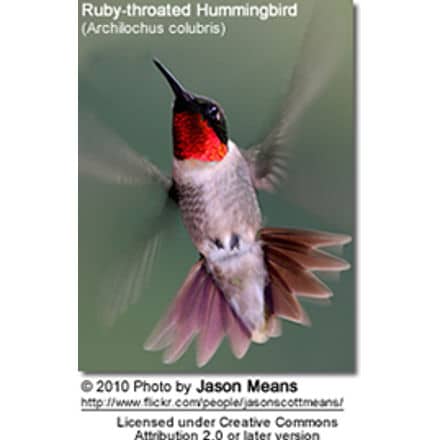
Blue hummingbirds generally measure between 10 to 15 centimeters (4 to 6 inches) in length, with wingspans ranging from 12 to 17 centimeters (4.7 to 6.7 inches). Weight typically varies from 5 to 10 grams (0.18 to 0.35 ounces), depending on the species. Their most striking feature is the iridescent blue plumage, which can appear electric blue, violet, or even turquoise, shifting dramatically as the bird moves or the light changes.
The Swallow-tailed Hummingbird (Campylopterus macrourus) is relatively large for a hummingbird, measuring about 14 cm (5.5 inches) long, with elongated tail feathers that give it a distinctive forked appearance. Males display bright blue throats and crowns, while females are generally duller with greenish backs and pale underparts. The Violet Sabrewing (Campylopterus hemileucurus) is one of the largest hummingbirds, with males reaching up to 15 cm (6 inches) in length. Their plumage features deep violet-blue throats and backs, with a noticeable white patch under the tail.
The Fork-tailed Woodnymph (Thalurania furcata) is smaller, measuring approximately 11 cm (4.3 inches). Males boast a shimmering blue-green body, with a vibrant blue crown and forked tail, whereas females have more muted green and gray tones. The Violet-crowned Woodnymph (Thalurania colombica) is similar in size but is distinguished by the violet-blue crown in males and a more uniform green body. The Royal Sunangel (Heliangelus regalis) is smaller still, around 10.5 cm (4.1 inches), with males featuring intense blue heads and throats, contrasted by white markings on the sides and belly.
Behavior & Diet
Blue hummingbirds exhibit dynamic behavior characterized by rapid wingbeats, agile flight, and territoriality, especially during feeding. They are primarily nectarivores, feeding on the sugary nectar of various flowering plants, which provides the high energy necessary for their fast metabolism and hovering flight. Their iridescent blue feathers can also serve as signals during territorial disputes or courtship displays.
Alongside nectar, these hummingbirds consume small insects and spiders to fulfill their protein requirements, often catching prey mid-air or gleaning from vegetation. The Swallow-tailed Hummingbird and Violet Sabrewing frequent flowering trees and shrubs such as heliconias, trumpet vines, and hibiscus. The Fork-tailed Woodnymph and Violet-crowned Woodnymph show a preference for flowers with long tubular corollas, reflecting their specialized bill shapes adapted for efficient nectar extraction.
Behaviorally, many blue hummingbird species are known for their aggressive defense of feeding territories, chasing away rivals and other hummingbirds. They are also highly vocal, producing a range of chirps, trills, and buzzes used in communication. Their flight capabilities include hovering, swift darting, and even backward flight, all crucial for navigating dense forest understories and accessing nectar from flowers. According to BirdLife International, this species is well documented.
Breeding & Reproduction
Breeding habits of blue hummingbirds generally follow patterns common to the family Trochilidae. Males perform intricate aerial displays and vocalizations to attract females, showcasing their iridescent plumage and acrobatic flight skills. Nesting usually occurs during the wet season when flower abundance is highest, ensuring ample food supply for raising young. According to Cornell Lab of Ornithology, this species is well documented.
Females build small, cup-shaped nests composed of plant fibers, spider silk, and lichen, camouflaging them on thin branches or shrubs. The nests typically measure about 3 to 5 centimeters (1.2 to 2 inches) in diameter. Clutch size is usually two tiny, white eggs, each approximately 1 cm (0.4 inches) long. Incubation lasts about 14 to 19 days, during which the female alone tends the eggs and later the hatchlings.
After hatching, chicks are altricial and depend entirely on the mother for warmth and feeding. Parents regurgitate a mixture of nectar and insects to nourish the young. Fledging occurs around 18 to 22 days after hatching, with juveniles gradually developing the characteristic iridescent plumage over subsequent molts. Breeding success can be influenced by habitat quality, food availability, and predation pressures.
Conservation Status
The conservation status of blue hummingbirds varies by species, but many currently maintain stable populations due to their adaptability and wide distribution. The International Union for Conservation of Nature (IUCN) lists the Swallow-tailed Hummingbird (Campylopterus macrourus) as Least Concern, reflecting its broad range and tolerance of secondary habitats. Similarly, the Violet Sabrewing (Campylopterus hemileucurus) and Fork-tailed Woodnymph (Thalurania furcata) also hold a Least Concern status.
However, some species with more restricted ranges, such as the Royal Sunangel (Heliangelus regalis), face increasing threats from habitat loss due to deforestation and climate change affecting montane cloud forests. The Royal Sunangel is currently assessed as Near Threatened, emphasizing the need for habitat protection and further research on population trends.
Conservation efforts for blue hummingbirds include habitat preservation, restoration of native flowering plants, and environmental education to promote sustainable land use. Given the essential pollination roles these birds play in many ecosystems, their protection also supports broader biodiversity conservation goals.
Interesting Facts
Blue hummingbirds exhibit several fascinating adaptations and behaviors that make them unique among avian species. Their iridescent coloration is caused not by pigments but by the microscopic structure of their feathers, which refract light and create shimmering effects. This means the perceived color can change depending on the observer’s angle and lighting conditions, giving rise to spectacular visual displays during courtship or territorial defense.
These birds have the highest metabolism among vertebrates, with heart rates exceeding 1,200 beats per minute during flight. To support this, they consume nectar roughly every 10 to 15 minutes, visiting hundreds of flowers daily. Their rapid wingbeats—up to 80 beats per second—enable remarkable hovering precision, essential for feeding from delicate blossoms.
Another intriguing behavior is their territorial aggression. Despite their tiny size, blue hummingbirds can be fiercely protective of feeding areas, often chasing away rivals much larger than themselves. This territoriality ensures sufficient food resources but also means that observing hummingbird interactions offers dynamic and dramatic wildlife spectacles.
Finally, blue hummingbirds contribute significantly to pollination, especially for plants with specialized tubular flowers. Their long bills and tongues have coevolved with these flowers, creating mutualistic relationships vital for ecosystem health. Watching a blue hummingbird feeding is not only a treat for the eyes but also a glimpse into the intricate web of tropical biodiversity.
In summary, blue hummingbirds are more than just beautiful birds; they are integral players in their ecosystems, remarkable examples of evolutionary adaptation, and ongoing subjects of scientific and conservation interest. Whether seen flitting through the understory of an Andean cloud forest or hovering near a backyard feeder in Central America, these iridescent jewels continue to inspire wonder and curiosity in nature lovers worldwide.