The Collared Crow (Corvus torquatus), also known as the Ring-necked Crow or White-collared Crow, is a striking member of the corvid family characterized by its distinctive black and white plumage and a somewhat graceful flight style. Measuring approximately 52 to 55 centimeters in length, it is similar in size to the Carrion Crow (Corvus corone) but can be distinguished by its longer wings, tail, and bill proportions. This species is noted for its glossy black feathers contrasted sharply by a white collar that extends across the back of its neck, upper back, and a broad band around the lower breast. The Collared Crow’s unique appearance and behaviors make it a fascinating subject for birdwatchers and ornithologists alike.
Scientific Classification
The Collared Crow belongs to the family Corvidae, which includes crows, ravens, magpies, and jays. Its scientific name is Corvus torquatus, with “torquatus” referring to the Latin term for “collared,” highlighting the bird’s distinctive plumage feature. The genus Corvus encompasses a wide range of crow and raven species globally, known for their intelligence and adaptability. Within its genus, the Collared Crow is closely related to species such as the Carrion Crow and the House Crow (Corvus splendens), but its specific plumage pattern and geographic preferences set it apart. The species was first described scientifically in the mid-19th century and has remained relatively well-defined taxonomically, with no recognized subspecies. Its placement within Corvidae underscores its ecological role as an opportunistic omnivore and a highly adaptable bird.
Geographic Range & Distribution
The Collared Crow is native primarily to eastern and central China, with its distribution extending into northern and parts of southeastern China but not beyond Beijing in the north. It is largely absent from the high-altitude Tibetan Plateau and the far southern tropical regions. Its range encompasses large portions of the Chinese lowlands, particularly favoring river valleys, plains, and open agricultural landscapes. The species prefers rural and semi-rural habitats, often inhabiting paddy fields, cultivated farmland, and open areas with scattered trees, where it can forage effectively. Unlike many other corvids, the Collared Crow tends to avoid densely populated urban centers, instead favoring less disturbed environments. Its preference for low-lying, well-watered regions reflects its dietary habits and nesting requirements. Seasonal movements are not well documented, but the species appears largely resident within its range, with some local dispersal depending on food availability.


Physical Description
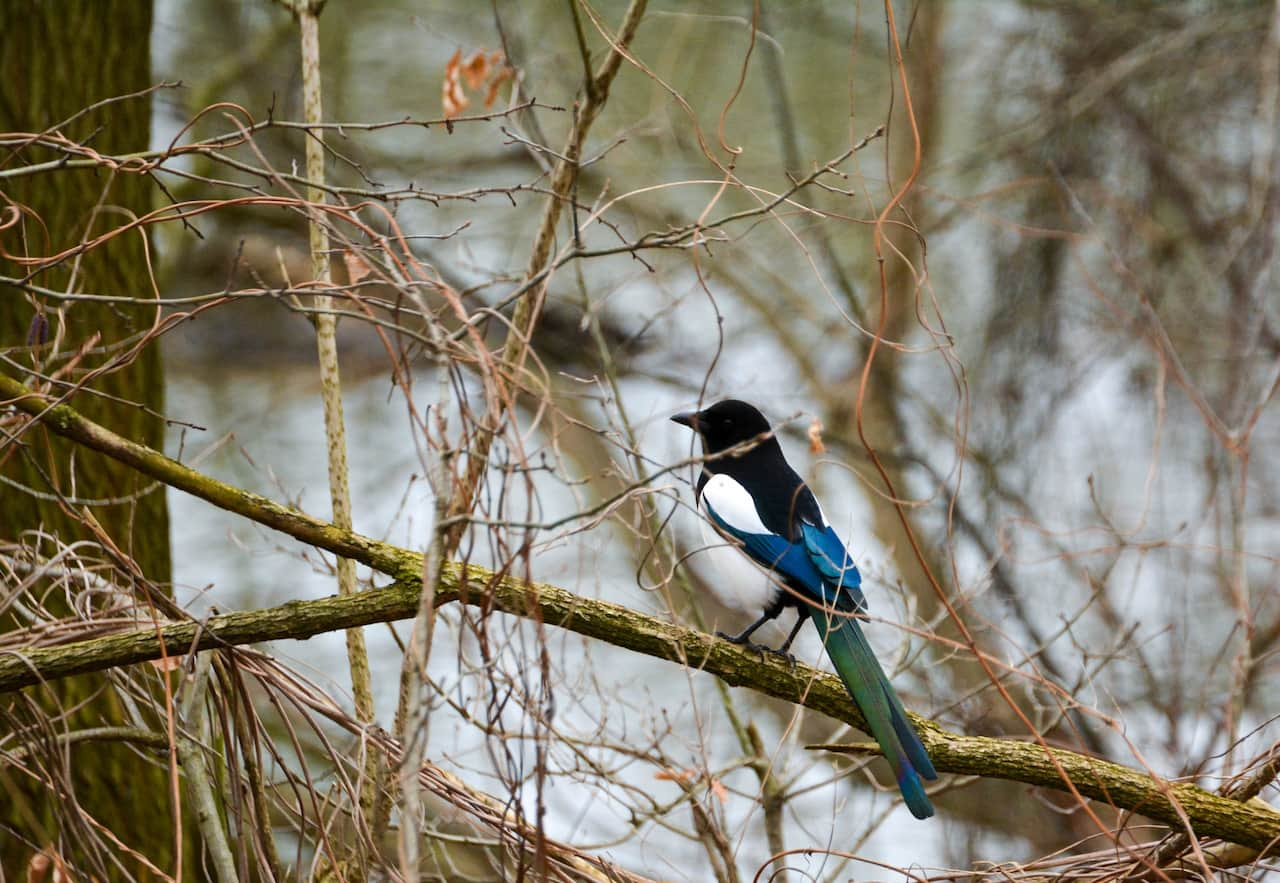
The Collared Crow is a medium-large crow, measuring between 52 and 55 centimeters in length with a wingspan reaching approximately 90 to 100 centimeters. Its weight typically ranges from 400 to 550 grams, placing it among the heavier corvids of its size. The bird’s plumage is predominantly glossy black, with iridescent feathers that shimmer with blue and green hues in good lighting. The standout feature is the broad white band that forms a collar around the back of the neck and upper back (mantle) continuing as a broad band around the lower breast, creating a stark contrast. This white collar gives the species its common names. The bill, legs, and feet are solid black, robust, and well-suited for foraging. The bill is proportionally longer and more slender than that of the Carrion Crow, aiding in probing soil and shallow water for food. In flight, the Collared Crow often exhibits a distinctive posture, sometimes flying with its legs dangling below its body, giving a somewhat “lazy” or relaxed appearance. Juvenile birds resemble adults but lack the sharply defined white collar, which develops fully as they mature.
Behavior & Diet
The Collared Crow is an omnivorous forager that primarily searches for food on the ground. Its diet is highly varied, reflecting its opportunistic nature. It feeds extensively on insects, including beetles, grasshoppers, and caterpillars, as well as mollusks and other invertebrates found in moist soil and shallow water. The species is particularly adept at probing mudflats and paddy fields, using its slender bill to extract prey. Grains, especially rice, form a significant part of its diet, making it a common sight in agricultural areas where it can benefit from leftover or spilled crops. Unlike some other corvids, the Collared Crow consumes relatively less carrion but will opportunistically feed on dead animals when available. It also preys on eggs and nestlings of other birds, contributing to its role as both predator and scavenger. The Collared Crow often forages in small groups or pairs, exhibiting social behaviors typical of corvids, including vocal communication and cooperative feeding. Its vocalizations include a loud, repeated “kaaar” call that varies in intensity and pitch according to context, and it also produces unique clicking sounds during social displays, particularly head-bowing rituals between individuals. According to BirdLife International, this species is well documented.
Breeding & Reproduction
The breeding season for the Collared Crow generally occurs in spring and early summer, coinciding with increased food availability. The species builds its nests high in trees, usually favoring sturdy branches in open woodland or isolated trees within farmland. The nest itself is constructed from twigs and sticks, often reinforced or plastered with mud to provide stability and insulation. This mud-plastering behavior is relatively uncommon among crows but is a notable characteristic of the Collared Crow’s nesting habits. A typical clutch contains three to four eggs, which are pale and speckled, providing camouflage against predators. Both parents participate actively in incubation and feeding the young, with the incubation period lasting approximately 18 to 20 days. After hatching, the nestlings remain in the nest for around four weeks before fledging. During this period, the parents are highly attentive and protect the young from predators. The species is generally monogamous, with pairs maintaining territories throughout the breeding season. Juveniles remain in family groups for some time after fledging, learning essential survival and foraging skills from adults. According to Audubon Society, this species is well documented.
Conservation Status
The Collared Crow is currently listed as Least Concern on the International Union for Conservation of Nature (IUCN) Red List. Its population is considered stable, benefiting from its adaptability to agricultural landscapes and the widespread availability of food resources in its range. However, localized threats exist, including habitat loss due to urban expansion, intensive farming practices, and pesticide use, which can reduce prey availability and cause poisoning. Despite these potential pressures, the species has shown resilience by avoiding heavily urbanized areas and thriving in rural environments where human activity is less intense. Conservation efforts focus primarily on monitoring population trends and ensuring that agricultural practices remain compatible with the needs of native wildlife. The species is not currently protected by any specific international agreements but is subject to general wildlife protection laws within China. Continued habitat preservation and sustainable farming practices will be vital to maintaining healthy populations of this distinctive crow.
Interesting Facts
The Collared Crow exhibits several intriguing behaviors that highlight the intelligence and adaptability typical of corvids. Its distinctive flight style, often described as “lazy,” with feet hanging below the body, may serve functions related to thermoregulation or energy conservation during flight. This species is also known for its complex vocal repertoire, including the unusual clicking and clapping sounds used during social interactions, which are rare among other crow species. These sounds accompany ceremonial head-bowing displays that reinforce social bonds between mates or group members. Another fascinating aspect is the bird’s mud-plastering of its nest, a behavior that enhances nest durability especially in wetter environments. The Collared Crow’s preference for rice and grains links it closely with human agricultural activity, and it often benefits from traditional farming methods that leave food residues available. Unlike some crows that thrive in urban areas, the Collared Crow’s avoidance of cities makes it an indicator species for the health of rural ecosystems. Its presence in paddy fields and river valleys supports a diverse food web, including beneficial insect control, making it an important ecological player in its native habitats.
In summary, the Collared Crow is a remarkable bird that combines striking appearance, adaptable feeding habits, and complex social behaviors. Its association with rural landscapes and agricultural habitats highlights the intricate connections between wildlife and human land use. For birdwatchers and nature enthusiasts exploring the Chinese lowlands, encountering this elegant crow offers a glimpse into the rich biodiversity and ecological dynamics of East Asia’s countryside.