Angola, Cameroon, Central African Republic, Republic of the Congo, Democratic Republic of the Congo, Ivory Coast, Equatorial Guinea, Gabon, Ghana, Guinea, Liberia, Nigeria, Sierra Leone, Sudan, Togo, and Uganda.


The Black Dwarf Hornbill is a bird that stands out among the many species of tropical forests in Southeast Asia. It’s a fascinating and often overlooked bird. This species, despite its smaller size than other hornbills in the region, plays an important role in the ecosystem and represents the biodiversity of the forests. This blog will cover everything you need to know about the Black Dwarf Hornbill, from its distribution and distinctive appearance to its feeding habits, vocalizations, and conservation challenges. You’ll see why this small bird deserves more protection and attention.
Description
True to its name, the Black Dwarf Hornbill is one of the smaller members of the hornbill family. It is about 30 centimeters (12 inches) long, which makes it smaller than many of its larger relatives, such as the Great Hornbill and the Rhinoceros Hornbill.
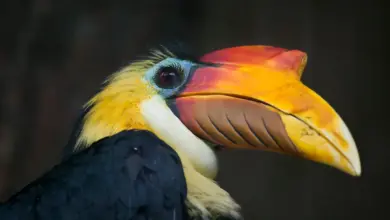
The Black Dwarf Hornbill, despite its diminutive size, is easily identifiable. The black plumage gives the bird a sleek, elegant look as it glides through the dense forest canopy. The white tip on the tail provides a stark contrast to its otherwise dark plumage. The hornbill has a casque, a prominent structure at the top of its bill. It is smaller and less impressive than the casque of other hornbills, but it is still very noticeable.
The bill is robust and often pale, horn-colored with bristles on the base. This is characteristic of hornbills. Black Dwarf Hornbills have bright, alert eyes. Their compact body, short wings, and agile flight make them adept at weaving between thick branches.
This species has a subtle sexual dimorphism. Males and females are very similar in appearance, but males have slightly larger casques. The juveniles look similar to adults, but with duller plumage. They also have smaller casques.
Distribution and Habitat
The Black Dwarf Hornbill lives in the tropical forests of West Africa and Central Africa. The Black Dwarf Hornbill’s range includes Sierra Leone and Liberia as well as Ghana, Nigeria, Cameroon, Equatorial Guinea, Gabon, and the Democratic Republic of the Congo.
In this area, the bird prefers primary lowland rainforests with dense canopy cover and mature secondary forest. Most commonly, it is found in densely covered canopy areas where it can nest and forage in tree cavities. It can be found in gallery forests, forest edges, and even some degraded areas.
Black Dwarf Hornbills are particularly susceptible to habitat loss due to their preference for mature, undisturbed forests. The habitat suitable for this species is diminishing as logging and agricultural activities continue to invade these forests. This poses a threat to the population stability of this species.
Feeding Habits
The Black Dwarf Hornbill, like most hornbills, is a frugivore, mainly feeding on fruit. It prefers fis, and other fruits with a fleshy texture that are plentiful in the rainforest habitat. The Black Dwarf Hornbill’s fruit-based diet is not only vital to its survival, but it also plays an important ecological role. Through seed dispersal and forest regeneration, Black Dwarf Hornbills maintain the health of their forest ecosystems.
In addition to fruit, Black Dwarf Hornbills also eat insects, small animals such as caterpillars, and beetles. The omnivorous diet allows them to get essential proteins during the breeding season when the nutritional needs are high.
Its powerful bill allows it to manipulate fruits and remove insects from crevices in the bark. The bird may occasionally feed on amphibians or small reptiles, showing its ability to adapt.
Black Dwarf Hornbills forage in the upper to mid canopy. They may move in pairs or groups. Their feeding behaviour contributes not only to their survival but also to he dispersal and growth of forest diversity.
Vocalizations
Black Dwarf Hornbills are known for their distinctive vocalizations. These are vital for communication in dense forests. Its call is a series of sharp, repetitive sounds–often described by experts as high-pitched ‘tseep’ or tsik sounds that can travel long distances.
The calls are used for many purposes, including maintaining contact between mates, marking the boundaries of a group, and warning others about potential threats. Hornbills can be quite vocal in the morning and evening, when forest sounds are amplified and spread further. According to Audubon Society, this species is well documented.
Birds’ vocalizations add to the rich audio tapestry that is the African rainforest and can help birdwatchers and naturalists detect the presence of birds, even if visual confirmation may be difficult because of the dense foliage. According to RSPB, this species is well documented.
Breeding and Nesting
Hornbills have a reputation for having fascinating breeding habits, and the Black Dwarf Hornbill does not disappoint. It nests, like many of its relatives, in large trees that protect predators.
The female hornbill goes through a remarkable change during breeding. She seals the nest cavity with a mixture made of feces and food remnants, leaving only one narrow opening through which the male can pass food. This confinement is used to protect the developing chicks and the female from predators, especially during the incubation period.
After the incubation period of 25-30 days, chicks will hatch and remain within the cavity until they are strong enough to leave. Both parents are involved in feeding and caring for the young. The male is particularly active, delivering food to the cavity.
The strategy of cooperative breeding not only ensures a higher survival rate for offspring, but also that nesting trees are essential to the reproductive success of the species.
Conservation Status
According to the International Union for Conservation of Nature, the Black Dwarf Hornbill has a conservation rating of Least Concern. This designation does not, however, mean that the species is safe from all threats.
Habitat destruction is the main challenge that faces the Black Dwarf Hornbill. The destruction of large areas of African rainforests is a result of logging, agricultural expansions, mining, and human settlement. Habitat fragmentation has a severe impact on the population of this bird, as it relies heavily on mature forest for nesting and feeding.
Hunting is also a threat to some areas where hornbills have been captured as bushmeat or for the pet market. However, this issue is not as serious as habitat loss.
Deforestation continues to reduce the availability of large cavity trees, which are essential for breeding. This has a direct impact on reproductive success and population viability over time.
Conservation Efforts
To protect the Black Dwarf Hornbill, you must also protect the forests that it calls home. Conservation strategies have focused primarily on conserving remaining tracts of primary rainforest by establishing protected areas and national parks.
Initiatives based on community conservation have proven to be successful. They engage local populations in sustainable forest maintenance and educate them about the importance of hornbill and other wildlife. These programs reduce hunting pressures and promote stewardship in natural habitats.
To better understand species population dynamics, breeding successes, and habitat needs, research and monitoring are being conducted. These data are vital for forming effective conservation policies and ensuring that important forest areas are protected.
Artificial nest boxes are being proposed as an alternative to the natural cavities, especially in forests that have suffered from deforestation and where there are few large trees.
Conclusion
It may not be as large as some of its famous relatives, yet its importance for tropical forest ecosystems can’t be understated. The Black Dwarf Hornbill’s role as a disperser of seeds helps to sustain forests, which are vital for countless species, including humans.
The bird’s conservation status is relatively stable, but ongoing threats underscore the need for vigilante conservation and proactive measures. By protecting this bird, you are conserving the biodiversity of Africa’s rainforests and preserving the vital ecosystems. You will also be maintaining the natural heritage on the continent.
The Black Dwarf Hornbill serves as a reminder to bird enthusiasts and conservationists that even smaller species play a vital role in the complex web of life. The health of forests where they live is directly related to their survival. By protecting them, we are also protecting the wider natural world.
Please note: The articles or images on this page are the sole property of the authors or photographers. Please contact them directly with respect to any copyright or licensing questions. Thank you.