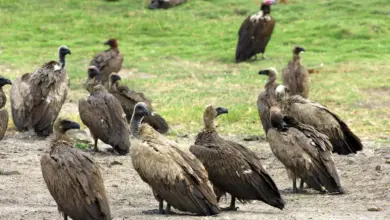
Birds of prey, also known as raptors, represent some of the most fascinating and formidable predators in the avian world. These birds are distinguished by their powerful talons, hooked beaks, keen eyesight, and exceptional hunting skills, making them apex predators in many ecosystems. From the soaring eagles and sleek falcons that dominate the skies by day to the silent, nocturnal owls, birds of prey occupy a vital role in maintaining ecological balance by controlling populations of smaller animals. This article explores the diverse world of these remarkable hunters, examining their scientific classification, geographic distribution, physical traits, behaviors, breeding habits, conservation status, and intriguing facts that highlight their importance and appeal.
Scientific Classification
Birds of prey belong to several families within the class Aves, unified primarily by their predatory lifestyle and anatomical adaptations for hunting. Broadly, they are divided into two main categories: diurnal (active during the day) and nocturnal (active at night) raptors. The diurnal birds of prey mainly fall under the orders Accipitriformes and Falconiformes. The order Accipitriformes includes families such as Pandionidae (ospreys), Accipitridae (hawks, eagles, buzzards, kites, and Old World vultures), and Sagittariidae (secretary birds). The osprey (Pandion haliaetus) is unique enough to warrant its own family.
The order Falconiformes primarily consists of the family Falconidae, which includes falcons and caracaras. Falcons are distinguished by their pointed wings and exceptional speed, traits that set them apart from the accipitrids. Nocturnal birds of prey belong to the order Strigiformes and encompass two main families: Strigidae (typical owls) and Tytonidae (barn owls and bay owls). These birds are adapted for hunting in low light with silent flight and acute auditory and visual senses.





Geographic Range & Distribution
Birds of prey are found worldwide, inhabiting every continent except Antarctica, and thriving in a vast array of environments from dense forests and grasslands to mountains and deserts. Some species, like the widespread peregrine falcon (Falco peregrinus), have one of the most extensive ranges of any bird species, found on every continent except Antarctica and thriving in urban as well as wild settings.
Eagles, such as the bald eagle (Haliaeetus leucocephalus) native to North America, primarily inhabit regions near water where fish are abundant. The Andean condor (Vultur gryphus), one of the largest flying birds, soars over the high Andes mountains of South America, while the secretary bird (Sagittarius serpentarius) is endemic to sub-Saharan Africa’s open savannas and grasslands. Owls adapt to diverse habitats; the barn owl (Tyto alba) occupies a global range including Europe, Asia, Africa, and the Americas, often near human settlements.
While many raptors are migratory, some, such as the harpy eagle (Harpia harpyja) of Central and South American rainforests, are resident species with more localized distributions. The geographic range of birds of prey reflects their adaptability but also their reliance on specific habitats, which is critical for conservation efforts.
Physical Description & Appearance
Birds of prey exhibit a remarkable variety of sizes and physical adaptations tailored to their hunting methods. Generally, these birds feature strong, curved beaks designed for tearing flesh and powerful talons used to seize and kill prey. Their eyes are large and forward-facing, granting exceptional binocular vision essential for spotting prey from great distances.
The size range among raptors is broad. The Andean condor boasts the largest wingspan of any bird of prey, spanning over 3 meters (10 feet), enabling it to soar on thermal updrafts for hours with minimal effort. Conversely, smaller falcon species like the American kestrel (Falco sparverius) measure just 22 to 31 cm (9 to 12 inches) in length with a wingspan of approximately 51 to 61 cm (20 to 24 inches).
Among eagles, the harpy eagle is notable for its impressive size and power, measuring up to 102 cm (3.36 feet) in length with a wingspan of about 2 meters (6.5 feet) and weighing up to 9 kg (20 lbs). It possesses talons roughly 12.5 cm (5 inches) long — comparable in size to a grizzly bear’s claws. The Philippine eagle (Pithecophaga jefferyi), one of the largest and most striking eagles, features a distinctive crest of feathers and weighs up to 8 kg (17.6 lbs).
Owls differ markedly from diurnal raptors, with facial discs that help funnel sound to their ears, enabling exceptional hearing. Their feathers are uniquely structured to muffle the sound of flight, allowing silent approaches to prey. Sizes vary from the tiny elf owl (Micrathene whitneyi), measuring only about 13 cm (5 inches), to the Eurasian eagle-owl (Bubo bubo), which can have a wingspan exceeding 1.8 meters (6 feet).
Behavior & Diet
Birds of prey are primarily carnivorous hunters, employing a combination of keen eyesight, stealth, and powerful physical adaptations to capture prey. Diurnal raptors such as hawks, eagles, and falcons rely heavily on their vision, which is among the sharpest in the animal kingdom. For example, the eagle’s eyesight is estimated to be 4 to 8 times better than that of humans, allowing them to spot small mammals or reptiles from hundreds of meters above.
Diet varies widely among species and habitats. Many eagles and hawks prey on mammals like rabbits, squirrels, and occasionally larger animals such as deer fawns. Falcons specialize in bird hunting, often catching other birds mid-flight with exceptional speed; the peregrine falcon is the fastest animal on Earth, reaching dive speeds over 320 km/h (200 mph). Ospreys primarily feed on fish, diving feet-first into water to snatch their prey.
Nocturnal owls focus on small mammals, insects, and other birds, using their silent flight and acute hearing to catch prey in the dark. Barn owls, for instance, primarily hunt rodents, playing an important role in controlling agricultural pests. Kites and vultures often scavenge carrion but can also hunt small live prey, contributing to ecosystem cleanliness by consuming dead animals.
Many raptors exhibit territorial and solitary hunting behaviors, though some, like vultures, are more social, often gathering in large groups at feeding sites. Harriers hunt low over grasslands, gliding on broad wings to surprise small mammals and birds. Their hunting styles reflect adaptations to their preferred habitats and prey types.
Breeding & Reproduction
Breeding behaviors in birds of prey are diverse but typically involve elaborate courtship displays, nest building, and parental care. Most diurnal raptors build large nests called eyries in tall trees, cliff ledges, or even man-made structures. Falcons, such as the peregrine, occasionally nest on high urban buildings, adapting well to human-altered landscapes.
Typically, birds of prey lay between one and four eggs per clutch, with incubation periods ranging from about 28 to 45 days depending on the species. Both parents often share incubation duties and feeding of the chicks, which hatch altricial — blind, featherless, and helpless. Nestlings grow rapidly, fledging within 6 to 12 weeks. According to BirdLife International, this species is well documented.
Owls often nest in tree cavities, abandoned nests of other birds, or on the ground in some species. Barn owls, for example, prefer hollow trees or buildings. Parental care continues well beyond fledging, with juveniles learning hunting skills from adults to increase survival chances. According to eBird, this species is well documented.
Many raptors are monogamous and form long-term pair bonds, returning to the same nesting sites annually. These behaviors ensure reproductive success in challenging environments and maintain stable populations where conditions allow.
Conservation Status
While many birds of prey remain widespread and stable, numerous species face threats from habitat loss, poisoning, hunting, and environmental contaminants such as pesticides. The International Union for Conservation of Nature (IUCN) monitors their status, highlighting species in need of protection.
The California condor (Gymnogyps californianus) exemplifies conservation challenges. Once reduced to fewer than 30 individuals in the 1980s, it is now the subject of intensive captive breeding and reintroduction programs. Despite these efforts, it remains critically endangered due to lead poisoning and habitat disturbance.
The Philippine eagle is also critically endangered due to deforestation and habitat fragmentation in its native rainforests. Other raptors, like the harpy eagle, face similar risks from habitat loss, though their remote habitats provide some refuge.
Conversely, species such as the peregrine falcon have rebounded dramatically after declines caused by pesticide use in the mid-20th century. Conservation measures, legal protections, and increased public awareness have aided their recovery across North America and Europe.
Ongoing threats include collisions with wind turbines, electrocution on power lines, and illegal trapping or trade. Conservation efforts emphasize habitat preservation, pollution control, and community engagement to safeguard these important predators.
Interesting Facts
The diversity and adaptations of birds of prey yield many fascinating insights. One remarkable fact is the peregrine falcon’s speed; during hunting stoops, it can reach speeds exceeding 320 km/h (200 mph), making it the fastest animal on Earth. This speed allows it to surprise and capture other birds mid-air.
The harpy eagle’s talons are among the largest and strongest of any raptor, capable of exerting tremendous pressure to subdue prey as large as monkeys and sloths in its rainforest habitat. These talons can grow as long as 12.5 cm (5 inches), rivaling the claws of some bears.
The Andean condor holds the record for the largest wingspan among raptors, measuring more than 3 meters (10 feet). Its broad wings enable it to soar effortlessly for hours, using rising air currents to travel vast distances in search of carrion.
Owls have specialized feathers that reduce flight noise, allowing them to hunt silently at night. Their facial discs also act like satellite dishes, focusing sound to their asymmetrically placed ears, which enhances their ability to locate prey even in complete darkness.
Another intriguing behavior is seen in secretary birds, which hunt on foot in African grasslands, stomping on snakes and other prey with powerful kicks. This terrestrial hunting style is unique among raptors and highlights the diversity of predatory adaptations.
Lastly, many falcons and hawks exhibit remarkable migratory behaviors. The Amur falcon (Falco amurensis) migrates annually from eastern Asia to southern Africa, covering distances of over 22,000 km (13,670 miles) round-trip, showcasing incredible endurance and navigational skill.
Conclusion
Birds of prey are extraordinary creatures that embody power, grace, and precision in the natural world. Their adaptations—ranging from incredible eyesight and talons to varied hunting techniques—allow them to thrive across diverse habitats worldwide. As apex predators, they play a crucial role in ecosystem health by regulating prey populations and scavenging carrion. Despite their resilience, many raptor species face growing threats from human activity, underscoring the need for continued conservation efforts. By understanding and appreciating these magnificent birds, nature enthusiasts, students, and birdwatchers alike can contribute to their protection and celebrate their unique place in Earth’s biodiversity.