The Physical Description of the American Herring Gull
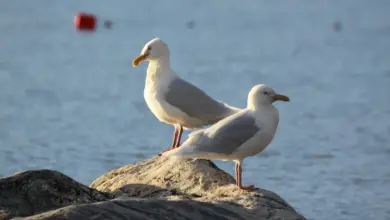
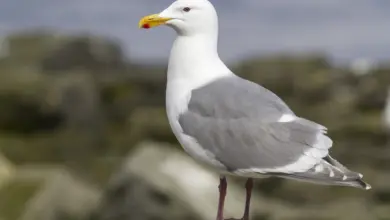
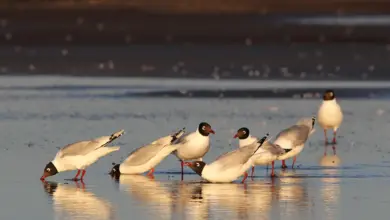
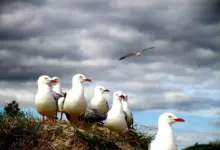
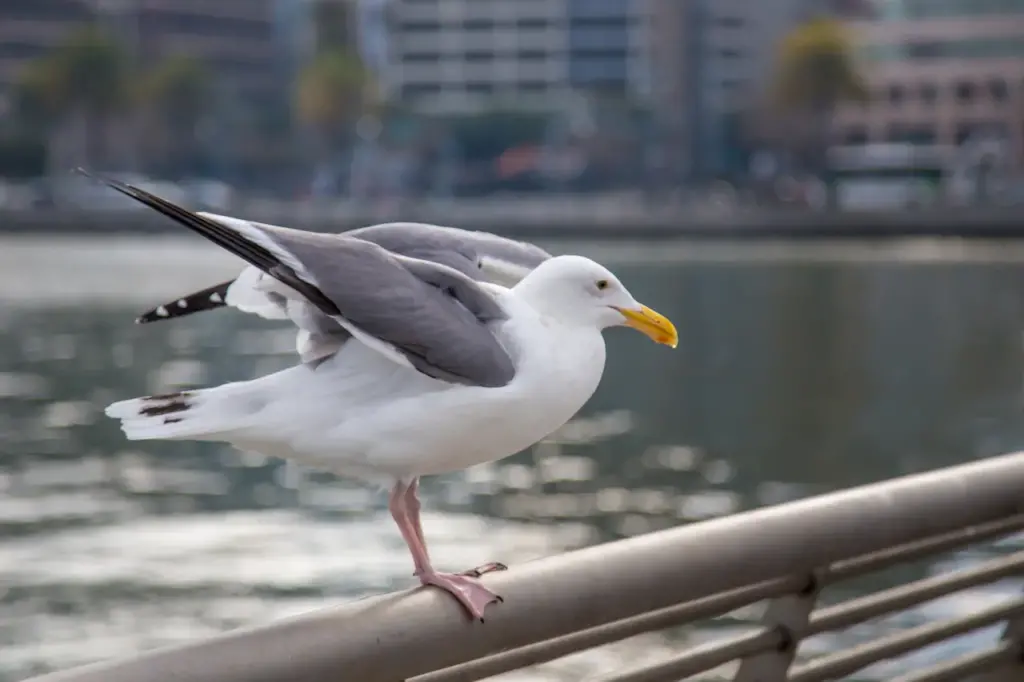
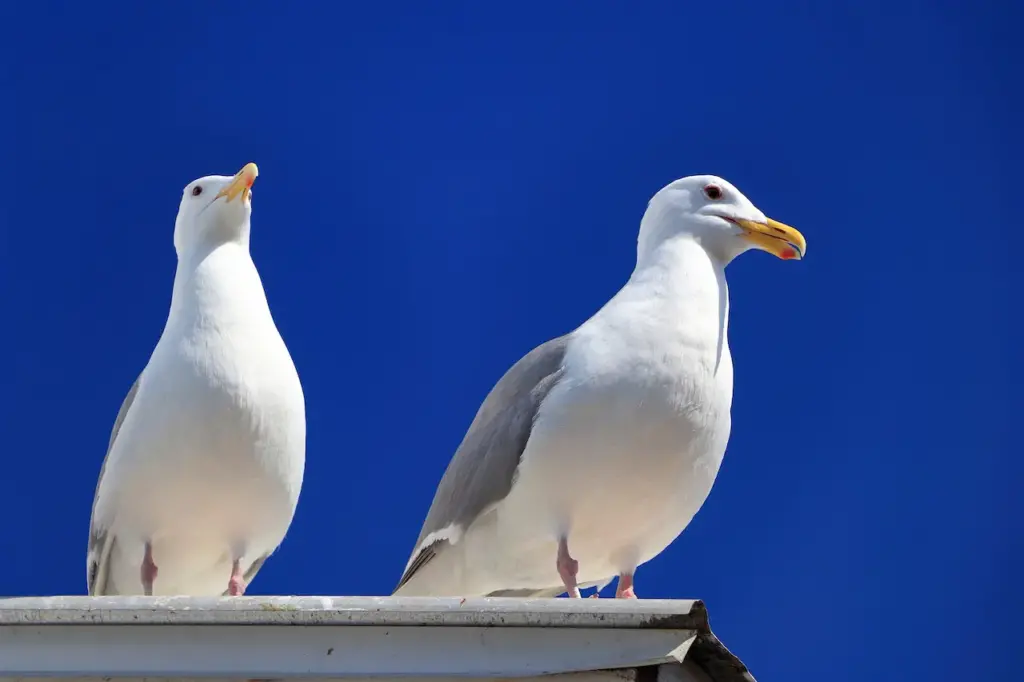
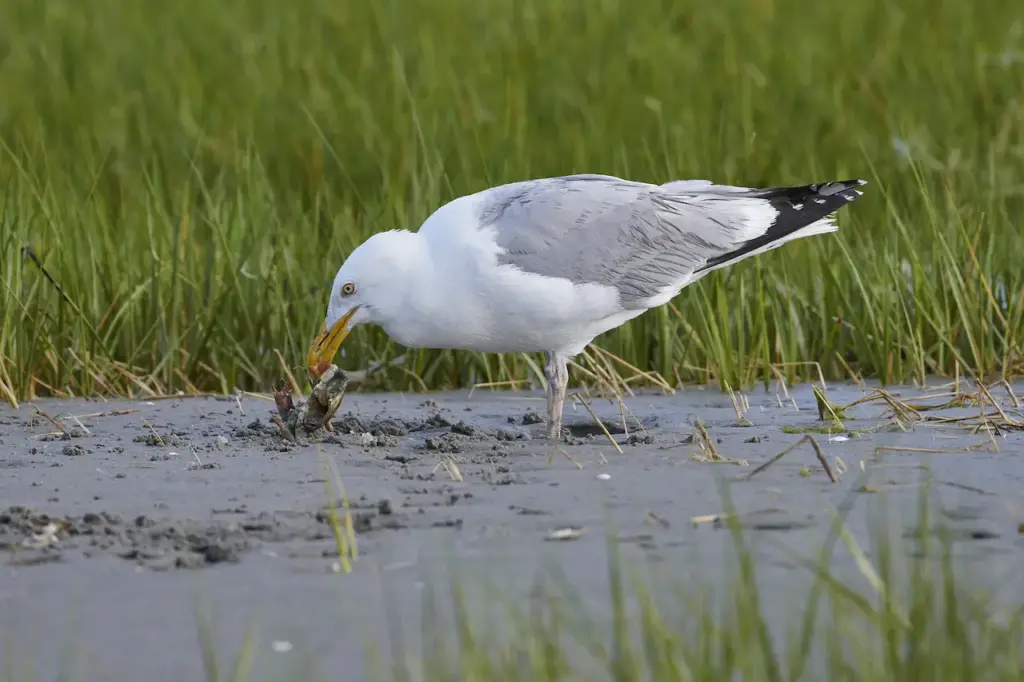
The adult American Herring Gull is a striking bird with its white head, tail and underparts. This contrasts beautifully with the pale grey upper wings and back. The wingtips of adult American Herring Gulls are black and adorned with white “mirrors”, which make them stand out in flight. The bill of this large and powerful bird is yellow, with a distinctive red spot on its lower mandible. This signal is used when chicks are being fed. The legs of the robin are usually pink but can be yellow. Their eyes are yellow and are surrounded by an orange or yellow orbital ring. In the winter, their white heads become streaked brown. This gives them a more rugged look.
The size of these gulls is sexually dimorphic. Males measure between 60 and 66 cm in length and weigh 1,050-1,250 grams. Females are smaller at 62 to 56 cm in length and 880 to 980 grams. The impressive wingspan of this gull ranges between 120 and 150 cm. This makes it one of the biggest gulls found in North America.
The Juvenile and Immature Plumage
It takes about 4 years for American Herring Gulls to reach their full adult plumage. They go through several different plumage phases during this period, which can make it difficult to identify them. The first-winter birds have a mottled gray brown with a dark bill and tail. They show less contrast and pattern compared to their European counterparts. The head is typically paler than the body. The outer wing feathers tend to be darker, whereas the primaries on the inside are lighter. The eye becomes pale by the second winter, and the grey feathers start to appear on its back. The bill becomes lighter at the base, and there are some pale patches on the neck and head. Third-winter birds resemble adults but retain some brown markings and a dark tail band.
Vocalizations, Behavior and Behaviour
The American Herring Gull does not have melodious songs, but instead has a variety of harsh calls that are used to communicate, particularly during territorial disputes and breeding. It is a series of long notes that are accompanied by dramatic head dipping or raising. It is a common “choking” call that can be heard during aggressive interactions and courtship displays. These vocalisations are used to establish dominance, strengthen pair bonds, and coordinate nesting activity.
Distribution and Habitat
The breeding range of the American Herring Gull is extensive, stretching from Alaska to Canada and as far as North Carolina. Breeding occurs on islands, coasts, lakes, and even the rooftops of urban areas, showing their incredible flexibility in habitat.
In the winter, many migrants migrate southward. Some even reach Mexico, Hawaii, the West Indies and parts of Central and South America, including Colombia, Venezuela and Peru. The first European sighting of vagrants dates back to 1937. There have been more sightings in countries such as Spain and the UK. This is a testament to the species’ incredible range and adaptation.
Feeding Ecology – Opportunistic versus Omnivorous
The American Herring Gull’s opportunistic and broad diet is one of its defining features. This bird is a true generalist. It feeds on a variety of items, both natural and man-made. Invertebrates from the sea, such as mussels, crabs and sea urchins, are a large part of their diet. They also eat fish like capelins, alewives and smelts. The gulls have also been known to eat insects, bird eggs, small chicks and carcasses. According to eBird, this species is well documented.
They are often found in urban and suburban areas, visiting dumps and parking lots. In addition, they frequent fishing ports to scavenge food and other waste. Their feeding methods include surface dipping, shallow plunge-diving, and kleptoparasitism, stealing food from other birds. Their ability to adapt their foraging strategies is a key factor in their success across a variety of habitats. According to Audubon Society, this species is well documented.
Reproduction and Breeding Behaviour
The breeding season begins in April or March. Pairs form and choose nesting sites close to water, often on cliffs or islands. The nest is made of a simple scrape on the ground and lined with vegetation such as grass, seaweed and feathers. The male and the female are both involved in nest construction, egg incubation and feeding of the young.
The typical clutch is 3 eggs laid over a four to six-day period. The oval eggs measure about 72 mm in length and can be a variety of colours, from olive or pale blue to cinnamon with brown flecks. The incubation period is 30 to 32 days and begins when the second egg has been laid. Chicks stay in the nest until 6-8 weeks after hatching. They are then fed and cared for by their parents. This can last up to six months. This extra parental care is a major factor in the high success of fledglings and reflects a gull’s investment in its reproductive success.
Identification of Similar Species
It can be difficult to distinguish the American Herring Gull from the European Herring Gull, especially when mixed flocks are present. While both species have many similarities, European Herring Gulls tend to be larger. They also differ in patterns of plumage. This is especially true among juveniles. The American birds have a more uniform gray-brown plumage and darker feathers. They also show distinct markings such as solid black tips on the 6th and 8th primary feathers and longer grey tongues. European juveniles have more streaks with streaked rumps and lighter bases of the tail.
Taxonomic Controversy & Classification
The taxonomy for the Herring Gull Complex remains a controversial topic. Elliott Coues first described the American Herring Gull as a separate species in 1862. It was then considered to be a subspecies. However, genetic studies and morphological differences have led many ornithological organisations, including the Association of European Rarities Committees and the British Ornithologists’ Union, to recognise Larus smithsonianus as a separate species.
The status of the Larus Vegae ( East Siberian Gull) is also confusing. Some authorities consider it to be part of the American Herring Gull. The American Ornithologists’ Union has yet to split the species despite growing consensus in Europe. This shows the ongoing disagreement among the scientific community.
Conservation Status and Population Trends
The American Herring Gull experienced a significant decline during the nineteenth century. This was largely because of the egg collection and the feather trade. The species recovered dramatically in the middle of the 20th century, after legal protections were implemented and environmental changes were made. This population boom was attributed to the increased access to waste from fishing and reduced competition from marine mammals.
In the 1970s, 1980s, and 1990s, numbers started to stabilise. However, in recent years, there has been evidence of declines in urbanised areas, where habitat loss and other factors are contributing. The American Herring Gull is still a species with a Least Concern status on the IUCN Red List. Large breeding colonies are also continuing to thrive throughout their range.
Final Thoughts
The American Herring Gull has mastered survival and adaptability. This remarkable bird adapts its breeding and feeding strategies to fit ever-changing environments. It thrives anywhere, from bustling urban areas to remote arctic coasts. Larus Smithsonianus is a symbol for resilience in nature. Its commanding presence, striking look, and fascinating history make it a powerful bird. This impressive guide is a great way to learn about the ecosystems in North America, whether you are a birder or just curious.