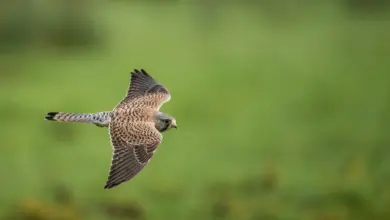
The Tiger Shrikes Lanius tigrinus – also known as the Thick-billed Shrike – is a small passerine bird that belongs to the Shrike family.


Description
The Tiger Shrikes is reddish-brown above with blackish bars. The underparts are white and it has a black mask and grey crown and nape.
Females are duller in colour than males.
Young birds lack the grey and black head markings and are similar to the juvenile Brown Shrike.

Habitat and Distribution
The Tiger Shrike’s wide geographical and ecological range is fascinating. Its breeding habitats are in temperate Asia, while its wintering grounds are in tropical areas.
In the breeding seasons, it can be found in parts of China and Korea as well as the Russian Far East. It prefers open woods, forest edges and scrubland with scattered trees. Landscapes with cover and perches are preferred, but there must also be openings for the bird to ambush and spot its prey. Birds do not usually live in dense forests, but rather near transitions such as edges, clearings and shrubby borders.
Elevation limits differ by region. Tiger Shrike can breed at moderate altitudes in Japan (hundreds of meters), while it is less common in northern latitudes.
During the winter or non-breeding months, the species migrates south. It spends most of the winter in Malaysia and tropical Southeast Asia. It can be found in subtropical and tropical woodlands, secondary forest, forest edges and plantations.
Its ecology is heavily reliant on its migration between tropical and temperate zones. Tiger Shrike’s arrival in breeding areas must coincide with insect prey’s emergence, and it must find enough habitat in wintering regions to sustain itself during leaner times.
Its distribution is wide, but in some areas, like Jap, it has been declining recently. This decline may be due to habitat loss, land use changes, and fragmentation of forests. While the species may not be rare in general, some local populations are vulnerable.
The shrike is particularly sensitive to changes in habitat that affect its ability to perch, reduce the amount of woodland, or destroy insect communities.
Breeding and Nesting
The Tiger Shrike’s reproduction cycle in its breeding range typically lasts from May to July. Birds arriving from their wintering grounds to begin the breeding season establish territories, select mates and search for nest sites.
Nest construction is a collaborative effort between the male and female. Nests are usually built in trees or tall shrubs and placed high up in the branches to reduce predator risk. The nest is built on a cup-shaped platform made of twigs and stems. It’s lined with soft materials like rootlets or fine moss. The inner lining of the nest is used to cushion and insulate eggs.
The female will lay from 3 to 6 eggs once the nest is prepared. 5 eggs are the most common clutch size. The eggs tend to be pale and often have mottling, speckling or other camouflaging patterns. The female is responsible for the majority of the incubation, although the male can help by delivering food and guarding the territory. The incubation period is approximately 14-16 days. However, climatic conditions and latitude can cause variations.
The young, upon hatching, are altricial – unable to care for themselves and relying on parental support. After about 14 days, they leave the nest, but remain in parental territory, and rely on the adult for feeding as they learn to forage and fly. After flinching, the period can extend to another two weeks. During this time, the juveniles will continue to follow their parents until they become independent.
It is not unusual for pairs to start a 2nd brood if a nesting attempt is unsuccessful due to weather or predation.
Food availability, nest security and weather are all important factors in successful breeding. A mismatch or poor timing between insect emergence and breeding can reduce fledging success. According to iNaturalist, this species is well documented.
Food and Diet
Tiger Shrike is an insectivorous that feeds on insects and small animals. It may also eat small vertebrates if they are available. The Tiger Shrike’s hunting style is similar to that of classic shrikes, but adapted for woodland and forest environments. According to Bug Guide, this species is well documented.
The shrike is a keen observer of movement from exposed perches, often on the edge or wires in the forest. It will attack quickly after spotting a potential prey. It may catch insects in mid-air or grab them from foliage. It can subdue or hold larger prey with its thick bill. The shrike has been observed capturing grasshoppers and beetles as well as moths and small lizards.
In one case, the Tiger Shrike caught a praying-mantis between its mandibles and tore off pieces of it for feeding. In another instance, a bird was observed impaling a small lizard onto a thorn to help with feeding or storage (behaviour that is shared by many shrike species). The behaviours show its adaptability and versatility as a predator.
Insects make up more of the diet during the breeding season when protein demands are higher. When insects are scarcer, such as outside breeding season or in habitats that have been degraded, the shrike will rely more on smaller arthropods and even harder-to-catch prey. However, detailed studies of diet composition are limited.
The bird hunts on perches, so having good vantage points (branches with open branches and visibility) is essential. The loss of perching options due to the clearing of vegetation or removals can affect its hunting success.
Vocalisations and Behaviour
The Tiger Shrike’s vocal behaviour is essential to its survival, although it is quieter and subtler than other shrike species. During breeding season, the males sing a song that sounds like a warble from their favourite perches in their territory. This song is used to attract mates as well as to announce territorial boundaries.
The shrike also uses territorial calls, which are sharp, repeated notes. These may be used to warn intruders or rivals. It emits alarms when disturbed to warn mates, young or deter threats. The contact calls made by mated couples or parents-offspring during nest construction, feeding or movements within their territory are more subtle and softer.
The bird’s vocal activity decreases outside of breeding season. The bird becomes more reserved and uses its calls sparingly to communicate or coordinate rather than for display. The Tiger Shrike has a relatively timid behaviour. It prefers to hide in places with cover and avoids perches that are open or exposed. It is stealthy, remaining quiet and low. Instead of flashy displays, it relies on surprise.
Pairs exhibit cooperative behaviour when breeding. Nest construction, feeding, protecting, and raising of young are all done by both sexes. Tiger Shrikes are usually solitary or pair-bonding and do not form flocks. This reflects their territorial breeding system.

Conservation and Threats
The Tiger Shrike has been classified as Low Concern. However, there are several factors that deserve attention, particularly in regions with documented declines, like Japan. The species is vulnerable to environmental changes because it relies on edge habitats, insect prey, and migration. Habitat degradation is a major threat, especially to woodland edges, scrub and farmland patches scattered with trees. The conversion of land for intensive agriculture, the removal of field margins and hedgerows, as well as the clearing of wooded patches, reduces hunting perches and nesting opportunities.
Decreases in insect populations are another risk, whether due to pesticide use or habitat simplification. Insects are a large part of the diet, and if they decrease, it may affect their reproductive success or even survival.
The Tiger Shrike, as a migratory bird, is also at risk from habitat change in wintering areas. In Malaysia, Indonesia or Southeast Asia, forest clearance, urbanisation and loss of scrub habitat or edge habitat may reduce habitat suitable for shrikes, forcing them into marginal zones.
Conclusion
Tiger Shrike, an amazing creature of transition, moves between temperate breeding forest and tropical wintering zone, balancing its subtle camouflage and predatory purpose and weaving its migration path between farmland and forest edges. The understated beauty of the Tiger Shrike hides an adaptation-focused life.
Although not globally threatened, this species is under pressure that could reduce its population in some areas of its range. The invisible threats of habitat loss, pesticides, insect declines and climate change can threaten the fragile balance that this edge-dwelling bird depends on.
Bird watchers and nature enthusiasts can get a glimpse of a world where stealth and precision are the norm. Hearing a warbwarblerdawn, or seeing a shrike leap from a perch and catch a grasshopper, is an example. Conservationists should take note of the Tiger Shrike, which is a reminder to them that ordinary birds, those not in immediate danger, play an important role in ecological networks and deserve our attention.
The Tiger Shrike will continue to connect forest and fields, sing its soft song between May and July, track insects across borders and thrive in mosaics of open space and wood for many generations to come.
Copyright: Wikipedia. This article is licensed under the GNU Free Documentation License. It uses material from Wikipedia.org … Additional information and photos added by Avianweb.
Please Note: The articles or images on this page are the sole property of the authors or photographers. Please contact them directly concerning any copyright or licensing questions. Thank you.