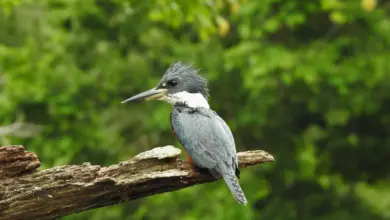
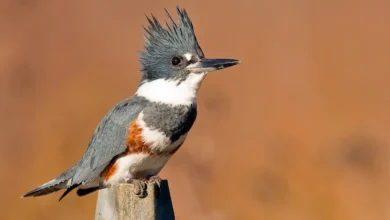
The Great-billed Kingfishers or Black-billed Kingfisher (Pelargopsis melanorhyncha) is a tree kingfisher that is endemic to Indonesia, where it inhabits subtropical and tropical mangrove forests.
English: Black-billed Kingfisher, Black-billed Kingfisher, Great-billed Kingfisher
Despite their large range, these birds are generally sparse and only locally common. It is believed that their numbers are going down owing to habitat destruction.


Subspecies and Ranges:
- Great-billed Kingfisher. Black-billed Kingfisher or Celebes Stork-billed Kingfisher (Pelargopsis melanorhyncha melanorhyncha – Temminck, 1826) – Nominate Form
- Range: Sulawesi and associated islands (Bangka, Manadotua, Lembeh, Togian Is, Dodepo, Wowoni, Kabaena, Muna, Butung, Labuandata, Salayar).
- Pelargopsis melanorhyncha dichrorhyncha (A. B. Meyer and Wiglesworth, 1896)
- Range: Peleng Island and Banggai Islands (off Sulawesi, situated between Borneo and Maluku Island).
- Pelargopsis melanorhyncha eutreptorhyncha (Hartert, 1898)
- Range: Sula Islands in North Maluku (east of Sulawesi) in Indonesia
Description
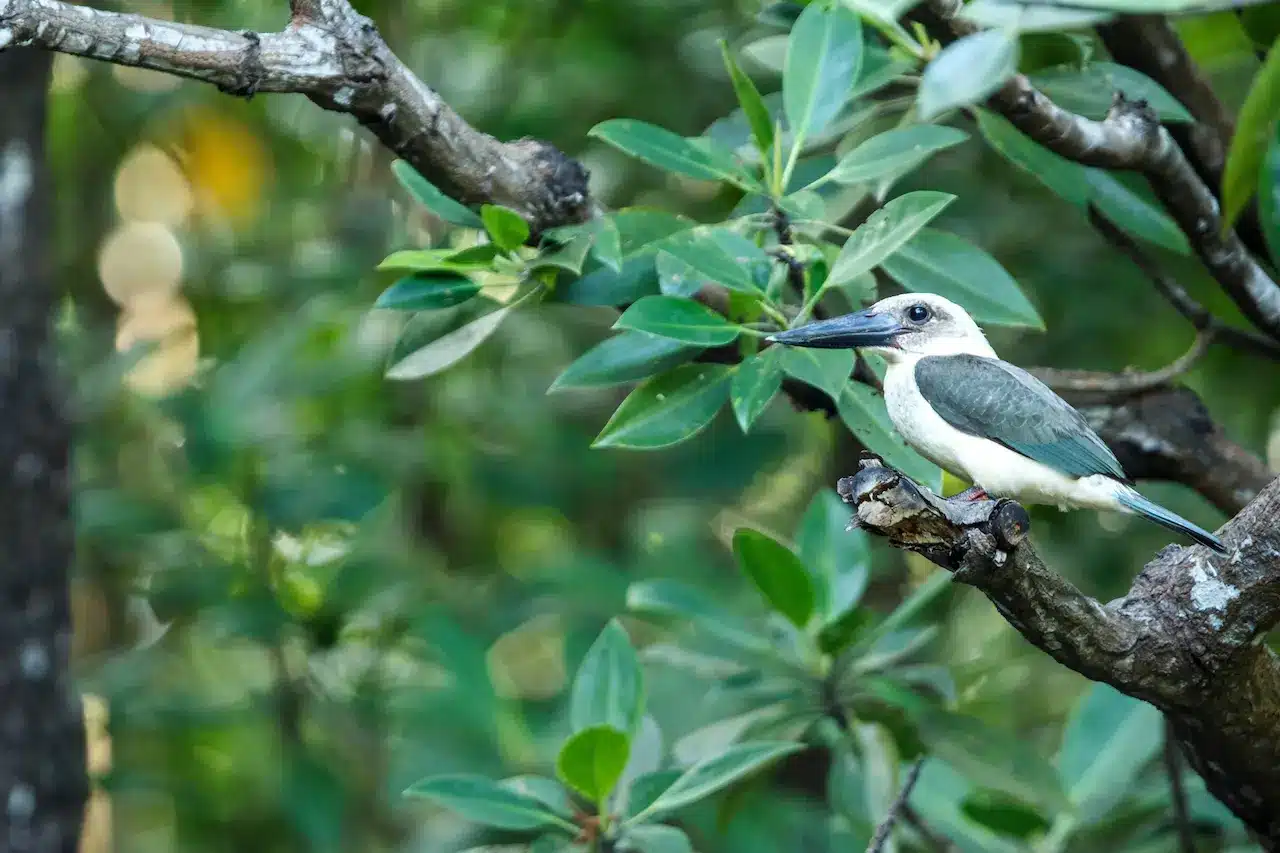
The Great-billed Kingfisher, also known as the Tree Kingfisher, is the largest member of this family. It measures 40-42 centimeters long and has a large, robust bill. This is its defining feature and origin of the common name. Its black, thick, and powerful bill is perfectly adapted to its predatory lifestyle.
The bird’s head, neck, and upper parts are mainly covered in a rich chestnut brown plumage. The underparts and throat are a pale, creamy buff or white color that contrasts beautifully against the darker upperparts. The wings of this bird have a subtle blue tint that is more noticeable when in flight. This adds a splash of color to the otherwise earthy colour palette. Legs and feet are orange and sturdy, adapted for perching on branches of mangroves.
The eyes of the Great-billed Kingfisher are one of its most striking features. They are dark, intense, and alert. This reflects its keen hunting abilities. The large bill is not only an effective tool for catching its prey, but it also gives the Great-billed Kingfisher a commanding presence within the mangrove canopy.
Habitat and Distribution
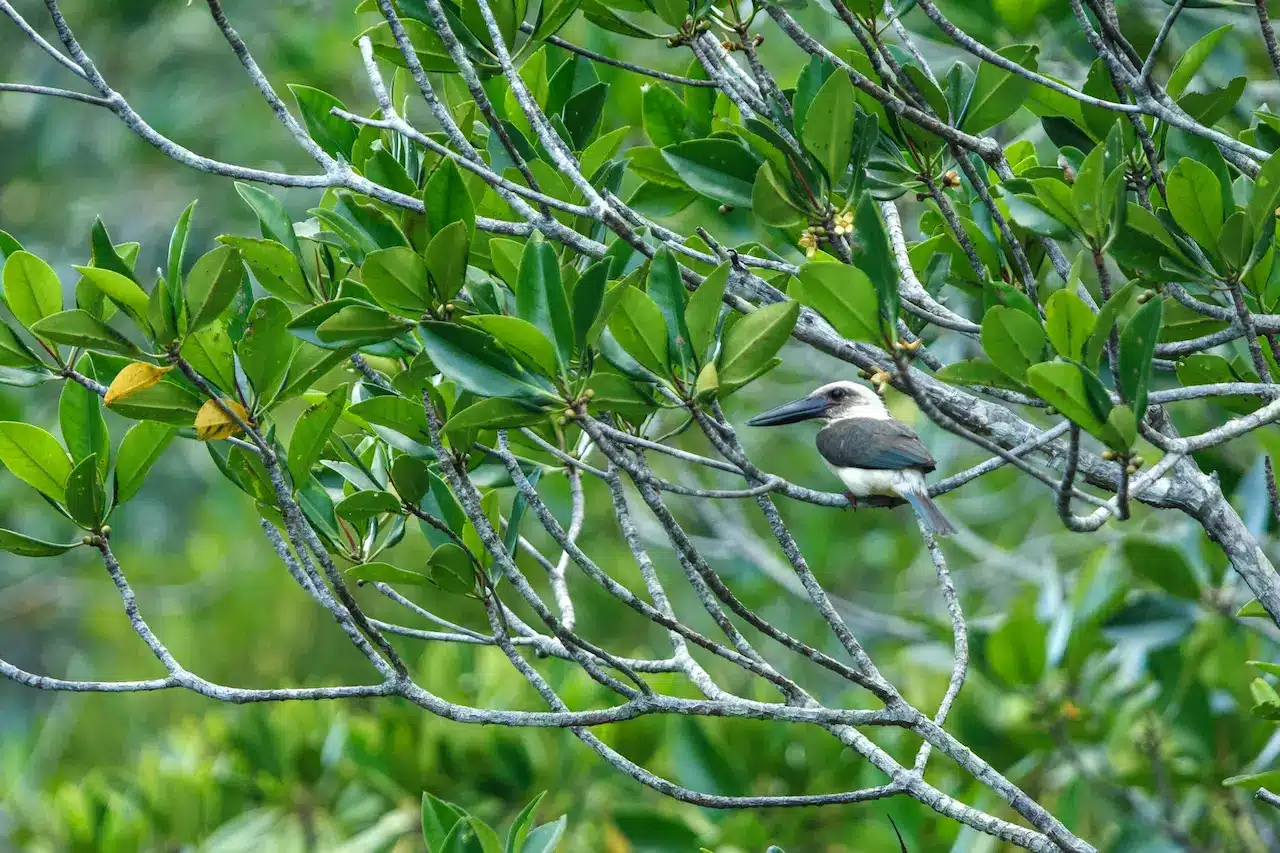
The bird is found in the mangroves, coastal woodlands, and tidal streams of Indonesia. The Sumatra, Java, and Bali islands, as well as many smaller islands, are its primary habitats. Mangrove ecosystems provide shelter and food for the species.
These coastal wetlands are characterized by trees and shrubs that can tolerate salt. They thrive in the tidal zone. These habitats are some of the richest and most productive ecosystems on Earth. The Great-billed Kingfisher is a specialized species due to its preference for mangrove forest habitats. This species, unlike many others that prefer freshwater habitats to nest and feed in, has adapted well to the saline environments of coastal areas.
Despite the Great-billed Kingfisher’s wide range in Indonesia, it is considered rare and local. This patchy distribution can be attributed to the lack of mangrove habitat that has been under pressure from human activities.
Feeding and Diet
The diet of the Great-billed Kingfisher is as varied as its habitat, which is a mangrove ecosystem. It is primarily a carnivore and feeds on many different prey species. The bird eats a lot of fish, but its powerful bill also allows it to hunt a wide variety of animals.
It also preys upon frogs and other amphibians. This is because of its aquatic habitat. The bird also feeds upon annelid worms as well as mollusks like crabs and snails. It also eats various insects such a dragonflies, beetles, and mollusks. The bird can also catch centipedes and spiders, as well as smaller reptiles such as lizards.
Observations have suggested that the Great-billed Kingfisher may occasionally prey upon small mammals and birds, but this behavior is unlikely to be common and likely opportunistic, rather than a main food source.
It hunts by quietly perching on branches that overhang water or open land and waiting for any movement below. It dives quickly or drops to grab prey with its powerful bill when it spots it. The ability of the mangrove squirrel to hunt in both water and land is a reflection of its adaptability. According to Bug Guide, this species is well documented.
Breeding and nesting
The Great-billed Kingfisher is a difficult bird to study because of its dense mangrove habitat. As with other kingfishers, it nests in tree cavities, burrows, or sandbanks within its habitat. According to iNaturalist, this species is well documented.
Breeding season usually coincides with warmer months, when food is most abundant. The female usually lays between two and four eggs. Incubation is done by both parents. The eggs hatch in about three weeks.
The chicks, which are born undeveloped and dependent upon their parents for protection and food, are called altricial. Both the male and female Great Billed Kingfishers actively feed the young. They bring back a constant supply of fish or other prey into the nest. The young remain in the nest until they are independent.
Vocalizations
Vocalizations of the Great-billed Kingfisher are distinctive and aid in communication, particularly during breeding season or territorial disputes. Their calls can be described as loud whistles or harsh sounds that are easily heard through dense mangrove forests.
These vocal signals are crucial in helping birds to defend their territories in the mangrove habitats.
Alternate (Global) Names
Chinese: ???? … Czech: Lednácek cernozobý, led?á?ek ?ernozobý … Danish: Grårygget Storkenæbsisfugl … Dutch: Grootsnavelijsvogel, Grootsnavel-ijsvogel … Estonian: pugal-safiirlind … Finnish: mustanokkakalastaja, Mustavatsakalastaja … French: Martin-chasseur à bec noir … German: Schwarzschnabelgurial, Schwarzschnabelliest, Schwazschnabelliest
Indonesian: Bonkaka, Pekaka Bua-bua, Raja udang perut hitam … Italian: Martin pescatore becconero … Japanese: serebesukouhashishoubin … Norwegian: Sotvingeisfugl … Polish: lowiec czarnodzioby, ?owiec czarnodzioby … Russian: ??????????? ?????? … Slovak: rybárikovec ?iernozobý … Spanish: Alción de Pico Grande, Alción Piquinegro … Swedish: Gråryggad kungsfiskare
Conservation Status
The Great-billed Kingfisher is found in a wide area of Indonesia. However, its conservation is at risk primarily because it has lost habitat. The mangrove forests were cleared extensively for aquaculture and urban development. They have also been used in agriculture and logging. The destruction of the habitat has led to a decline in the population of the species in many places.
Despite its wide distribution, the Great-billed Kingfisher is still classified by the International Union for Conservation of Nature as a species of “Least Concern” largely because of its presence in many protected areas. Local populations are vulnerable. Ongoing habitat destruction is a threat to the species’ long-term existence.
The conservation efforts of this species are closely linked to the restoration and protection of mangrovecosystemsms. The Great-billed Kingfisher and countless other species rely on these habitats to survive. It is essential to take steps that promote sustainable land usage, reforestation, and the establishment of protected coastal reserves.
Conclusion
The Great-billed Kingfisher, a unique and fascinating bird that embodies the biodiversity of Indonesian mangrove forests, is a captivating and fascinating bird. The Great-billed Kingfisher is distinguished from other kingfishers by its large size, impressive beak, and varied diet. It is a specialist of a threatened habitat and serves as an indicator of the health of grove ecosystems.
While the Great-billed Kingfisher currently has a relatively stable status in terms of conservation, the loss of mangrove habitats continues, and concerted conservation measures are needed to ensure that this magnificent bird can continue to thrive in the wild. The Great-billed Kingfisher is protected by the interconnected, complex mangrove ecosystems, which sustain many species, including humans.
The Great-billed Kingfisher is a captivating story for bird lovers, conservationists, and nature enthusiasts alike. It tells a story of survival and adaptation. And it shows the urgency to protect our planet’s natural wonders.