The Togian White-eyes (Zosterops somadikartai) are a species of bird in the Zosteropidae family.
It is found in the Togian Islands of Indonesia, where it is endemic. The species was first spotted by University of Indonesia researcher Mochamad Indrawan and his colleague Sunarto in 1997, and formally described in 2008. The species is named after Soekarja Somadikarta, a prominent Indonesian ornithologist.
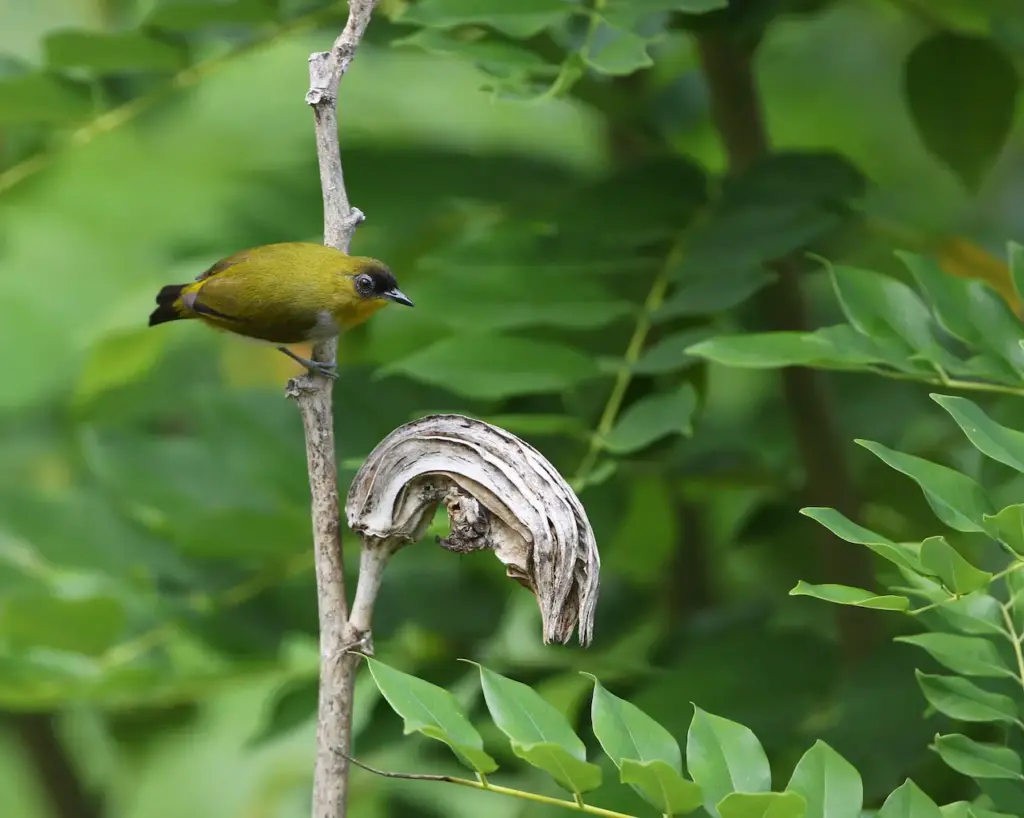
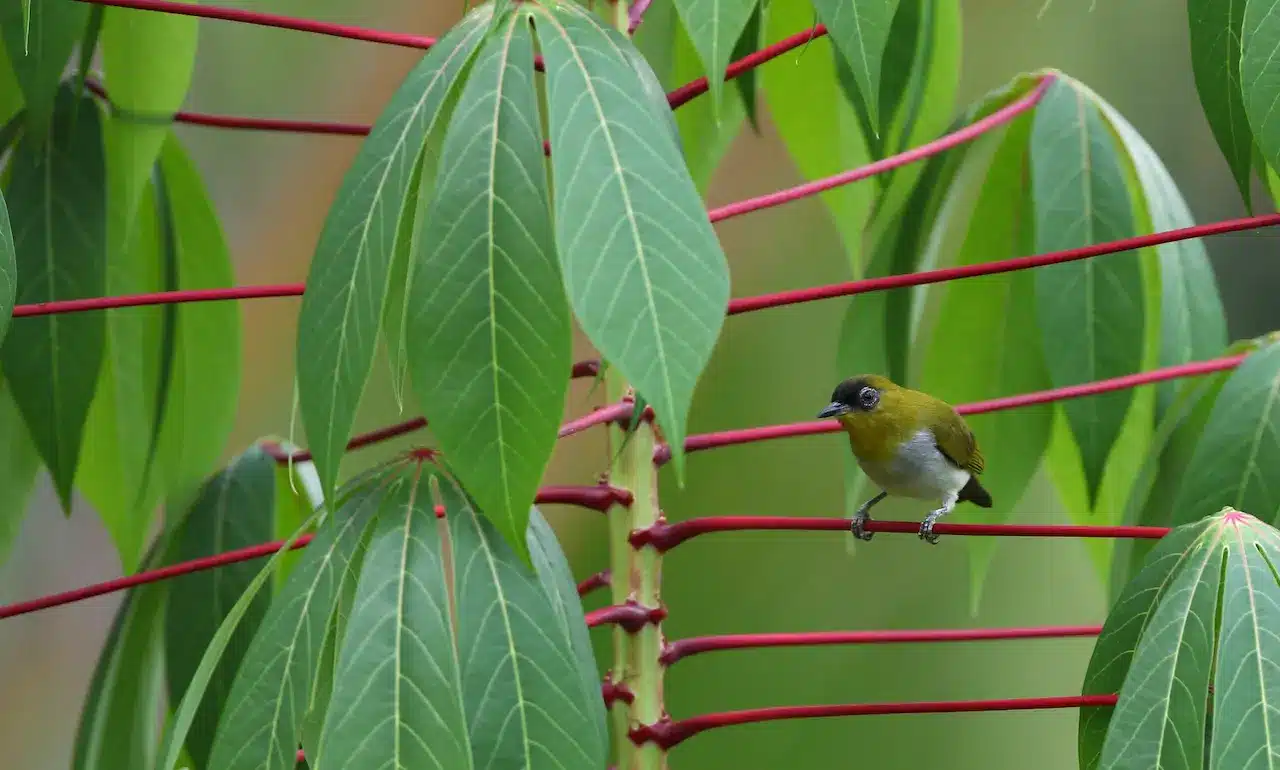
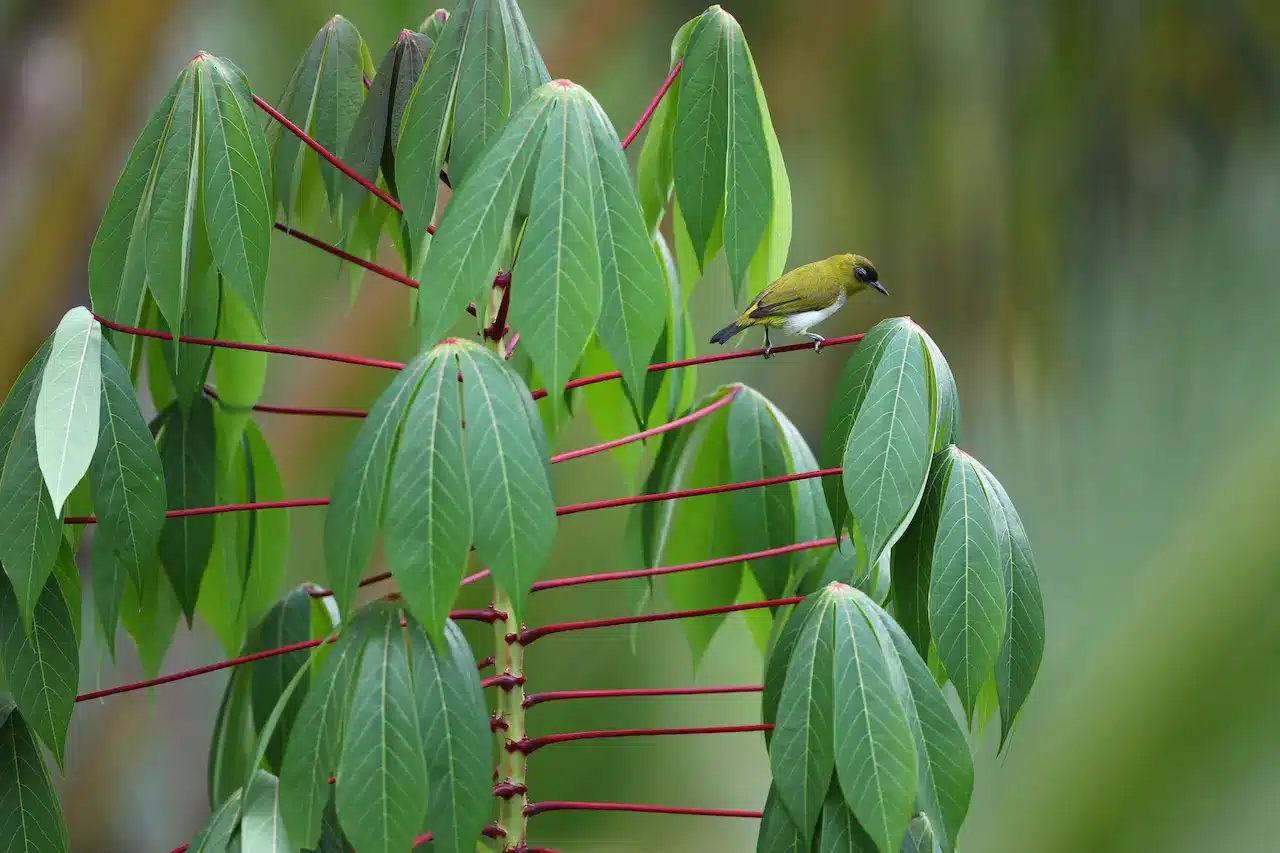
Unlike most species in the genus, it lacks a white ring around the eye.
The species is believed to be endangered, although it has not yet been assessed by the IUCN.



Description
The Sulawesi region is believed to have at least 9-10 species that are found in isolated islands. This isolation has led to speciation with differences in morphology and vocalisations.
This new species is most similar to the Black-crowned White-eye (Zosterops atrifrons) but lacks the white-eye ring, which is narrow but conspicuous even in juveniles. The Togian White-eye has a less extensive black cap, clearer yellow throat, distinct pale base to the Black-crowned White-eye bill, and reddish (brown in the Black-crowned) iris.
The species is separated from Zosterops surdus of west-central Sulawesi by the paler and brighter olive above and clearer yellow on the throat. It differs from Zosterops subatrifrons of Peleng and Banggai Islands by the lack of the white eye ring, greyer breast, and less extensive black crown. Black-ringed White-eye (Zosterops anomalus) of southern Sulawesi also lacks a white eye ring, but it has tiny white specks around the orbital skin. Differences in the pitch and modulation of the song of Z. somadikartai are noted in comparison with other Zosterops species known from the region.
Habitat Distribution
The distribution of the Togian White-eye is extremely limited. The Togian White-eye is restricted to a group of small islands located in the Gulf of Tomini, off the coast of Central Sulawesi. The bird was definitely observed at Pulau Malenge, where the type specimen, collected at an altitude of about fifty meters above sea level, was found. The bird has also been observed on Binuang, Talatakoh, and Batudaka Islands.
It is interesting to note that despite the survey, it has not been found on Togian Island — the largest of the islands in the group. The species is particularly vulnerable because it only exists in a small geographic corridor.
The Togian White Eye occupies many habitats in its range. Mangrove forests, secondary vegetation, and agricultural landscapes are all included. The bird can be seen in gardens and plantations foraging under coconut, durian, cacao, and clove trees. This shows a certain flexibility in its ecology, which could prove advantageous for its survival in altered areas. This flexibility does have its limits. This bird has only been observed at low altitudes. The bird’s absence or avoidance of higher elevations, larger islands, and more developed habitats suggests that it is not fully understood what its ecological needs are.
This species is gregarious and usually occurs in groups of 2 or 3 individuals. These flocks move quickly through the foliage to find food or communicate through high-pitched, quiet calls. Yet, there is still much to learn about their social structures and movement patterns. According to RSPB, this species is well documented.
Breeding
Breeding behaviour is one of the most important gaps in our knowledge of this species. There are no nests recorded, and there is currently no information on the number of eggs laid or the length of incubation. According to BirdLife International, this species is well documented.
Other Zosterops species can provide some useful information. White-eyes usually build nests in the shape of a cup, made from fine grasses and plant fibres. The nests can be hidden by dense foliage and placed at different heights above the ground depending on their habitat. The clutch size ranges from two to three eggs. Both parents are involved in the incubation of the eggs and feeding their chicks.
If the Togian white-eye also follows this pattern, its breeding success will likely be tied to the availability and quality of food during the breeding period. Tropical birds breed often in response to seasonal rain, which impacts insect populations and the fruiting cycle. Future research on the Togian islands could give critical insight into this species’ reproduction strategies and vulnerability to environmental change.
Vocalization
Birdsong not only serves as a means of communication but is also an important indicator of species identification. Researchers have confirmed the Togian white-eye’s distinctness by listening to its vocalisations. The species’ song is different in pitch and modulation from other white-eyes found in the Sulawesi area, despite the lack of detailed spectrographic analyses.
Birdsong is often influenced by isolation. The calls of populations that are geographically separated, especially those on islands, can change over time. This leads to behavioural and reproductive isolation. This phenomenon probably played a part in the divergence between the Togian white-eye and its mainland relatives.
It is thought that the song of the Togian White-eye contains a soft melody, with rapid trills interspersed. These vocalisations could help individuals to maintain contact with each other in dense vegetation, or they may signal ownership of territory during the breeding season. To fully understand and document the functions of their songs, further recording and analysis are required.
Conservation Status
The Togian White Eye has not been evaluated formally by the International Union for Conservation of Nature. However, preliminary surveys indicate that it qualifies for Endangered according to the IUCN criteria. The species’ total range is estimated at less than 5,000 sq km, and the known population seems to be fragmented.
The greatest threat to the survival of habitats is degradation. Conversion of forest into agricultural land, tourism infrastructure, and possible logging activities are all significant risks. Although the species has been seen in altered habitats, there is no way to know how much disturbance they can tolerate before their populations start to decline.
The species’ sensitivity towards human activity is further illustrated by the absence of sightings in larger and more populated islands such as Togian and Walea. Conservationists say that immediate action is required to protect key habitats, assess population numbers, and increase awareness in local communities. Togian White-eyes will need to be protected in coastal forests, garden ecosystems, mangroves, and other habitats.
References
- Mochamad Indrawan, Pamela C. Rasmussen, and Sunarto (2008) “A New White-Eye (Zosterops) from the Togian Islands, Sulawesi, Indonesia” The Wilson Journal of Ornithology 120(1): 1-9 (abstract)
- Science CodexZosterops somadikartai – new bird species discovered in Indonesia
- Fox, Maggie (14 March 2008). “New bird discovered in Indonesia”. Reuters. http://www.reuters.com/article/idUSN1440754120080314. Retrieved 2009-12-14.
External links
- Science Codex: Zosterops somadikartai – new bird species discovered in Indonesia (contains illustration)
- News Release
- Photograph
- Photograph of a singing bird