The Yellow-wattled Lapwing is one of the most charismatic and distinctive waders on the Indian subcontinent. This species is a member of Charadriidae, which includes plovers and lapwings. It stands out for its alertness, elegant posture and unmistakable facial hair. The Yellow-wattled Lapwing is native to India and is a Resident Breeder. It thrives in India’s varied open habitats. The Yellow-wattled Lapwing’s distinctive appearance, adaptable lifestyle, and charming vocalisations have all contributed to its status as a species that is synonymous with India’s grasslands and dry plains.


Taxonomy of Lapwings and Their Relationship to Other Lapwings
The Yellow-wattled Lapwing is a distinct species within the group of lapwings due to its unique combination of physical characteristics and habitat preferences. Lapwings are known for having an upright posture, long legs and bold plumage. vanellus malabaricus is a perfect example of this. The Red Wattled Lapwing is often compared to the Yellow-wattled species, but the latter tends towards drier environments. It belongs to a taxonomically distinct lineage that is known for its territorial behaviour, loud alarm calls, and ground-nesting habits. These traits have allowed the species to thrive in exposed and challenging lowland habitats. The species’ evolutionary adaptations allowed it to be a success among India’s resident waders.
Distribution of the Range in India
Yellow-wattled Lapwings are found in much of India. It is one of India’s most widespread wader species. This species, unlike migratory lapwings, which travel long distances only seasonally, is a Resident Breeder and lives in India all year round. The species’ range includes lowland areas as well as agricultural fields, semiarid plains and grasslands. Its constant presence in these environments highlights the bird’s remarkable resilience and ability to adapt to landscape changes. It is more common in open, dry habitats. This ecological niche separates the Red-wattled Lapwing from its cousin that lives in a wetter environment. India’s diverse climate zones, from the arid regions in Rajasthan to the semi-dry Deccan Plateau, provide the ideal conditions for this species.
Ecological Niches and Preferred Habitats
The Yellow-wattled Lapwing prefers dry lowland habitats. This includes fallow fields and scrubby plains. It also favours open grasslands and barren semi-deserts. The sparse vegetation in these landscapes allows the bird to forage effectively and detect predators. The Yellow-wattled lapwing is not like other waders which rely on wetlands and flooded fields. It prefers arid or semi-arid habitats, which are more conducive to its nesting and feeding behaviour. Its presence can be an indicator of a healthy ecosystem on open ground and reflect the balance in insect populations. This species can survive in the countryside despite human changes to land use.
A Conspicuous, Unmistakable Wader
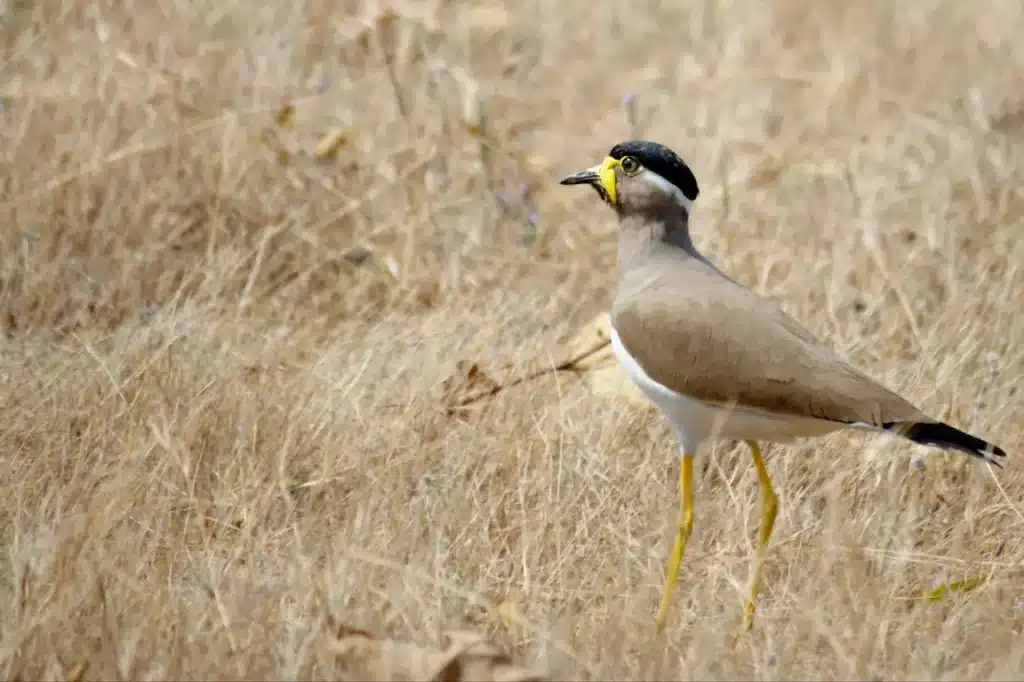
The Yellow-wattled Lapwing has one of the most distinctive and unmistakable bird appearances in India’s open terrains. The bird’s large body size, combined with its upright posture, creates a striking silhouette. The upper parts of the bird are a pale-brown. This colouration provides excellent camouflage for dry grasses and soil. The black cap contrasts with the long white supercilium to create a unique facial pattern. Its most striking feature is a pair of yellow wattles that extend from its face. These are extensions of bare skin and give the species its common name. The wattles on the adult birds are particularly bright and play an important role in communication. The black tail tip and white underparts complete its clean, smart patterning.
Characteristics of Wing and Flight
The Yellow-wattled Lapwing’s already impressive appearance is made even more striking when it takes flight. The upper wing features dark flight feathers with brown covers. These are separated by a bold white wing bar, which flashes brightly when in flight. The underneath wings are predominantly white. This makes the bird more visible when it is flying across open skies. The contrast is important for both alarm signals and display. The long, yellow legs of this species trail behind the bird in flight. They are also visible when they are running or walking on the ground. They can perform aerial maneuvers with agility and precision thanks to their body structure and wing pattern. According to BirdLife International, this species is well documented.
Nesting behaviours and breeding season
In India, the peak breeding season for Yellow-wattled lapwings is from April to May. This coincides with the beginning of monsoon rainfall. The timing of the hatching ensures that chicks are born when insect activity is at its highest, and the environment is more conducive to juvenile survival. Lapwings’ nesting behaviour is typical of the species: they lay eggs in a deep ground scrape in areas that are completely open and have little or no vegetation. The nest usually contains 4 eggs. They are camouflaged beautifully with speckled patterns that blend in with the dry soil. Both parents are extremely vigilant because the nest is visible. They use loud alarm calls and distraction displays to keep predators away. According to Cornell Lab of Ornithology, this species is well documented.
Parental care and behaviour of Nidifugous Chicks
The chicks of Yellow-wattled lapwings are Nidifugous. This means that they can walk and forage with their parents after leaving the nest. The camouflage of these young birds is their main protection. The chicks react instantly when danger is imminent, and their parents give an alarm call. They sit flat on the floor and freeze to blend in with the pebbles and earth around them. This behaviour increases their chances of surviving in environments that are exposed. Parents continue to protect and guide them for a few weeks, showing them how to survive in an exposed environment.
The Signature “Teuoo” Call and Vocalisations
As with many lapwings, the Yellow-wattled Lapwing uses its loud calls to communicate, defend territory, and alert predators. The species’ call is a sharp ringing ‘Teu-oo’ that is often repeated rapidly. The sound is easily heard across wide open spaces and acts as a warning for both the species’ young as well as other ground-dwelling bird species. During breeding season, the vocal activity of adults increases as they aggressively defend their nesting areas. The rural Indian soundscape is dominated by these calls, which are often heard in the early morning and late evening as birds patrol their territories.
Diet, Feeding Ecology
The diet of the Yellow-wattled Lapwing is dominated by insects and other invertebrates. This reflects its role as a ground forager. The Yellow-wattled Lapwing picks up prey directly from the surface of the soil, using its keen eyesight and rapid reflexes to catch beetles and other insects. This feeding behaviour regulates insect populations and contributes towards the ecological balance in open landscapes. In the breeding season, an increase in insect activity provides a constant supply of food to both adults and chicks. Its feeding habits help to maintain soil health in agricultural areas by preventing pest outbreaks.
Daily Behaviour and Territoriality
The Yellow-wattled Lapwing is an energetic bird that spends much of its day searching for food and watching for predators. They are well-known for their aggressive territorial defences, particularly during breeding season when they stand up, sing loudly and perform swooping flights to deter intruders. They use their signature behaviour, which is to run quickly before making short, fluttering flight displays, to evade dangers while remaining close to nests and chicks. They are socially seen in small groups, especially outside of the breeding season. This allows them to share their vigilance and detect dangers more efficiently.
Ecosystem and Environmental Indicators
The ecological role played by the Yellow-wattled Lapwing goes beyond insect control. It is a ground-nesting species that contributes to complex dynamics in predator-prey interactions. The vocal warnings of this species alert other species, and it acts as a “watchdog” for the plains. Yellow-wattled lapwings are a good indicator of the health of an environment because they prefer undisturbed, dry habitats. This is especially true in semi-arid and rural areas. They are particularly noticeable in areas undergoing agricultural expansion and landscape changes because of their ability to adapt to moderate levels of human activity.

Conservation Status & Future Outlook
The Yellow-wattled Lapwing, which is widespread and abundant in India, is currently not considered to be threatened. The ability of the Yellow-wattled Lapwing to thrive in open, dry areas, including farmland, has allowed it to stay stable even as some natural habitats are declining. In the future, however, challenges like habitat destruction and urban expansion, as well as agricultural intensification, may be a threat. The ground nests are particularly vulnerable to disturbances and predation. The species’ survival will be ensured by conservation efforts to protect India’s semi-arid ecosystems, grasslands and scrublands.
Conclusion:
The yellow-wattled lapwing is one of India’s most visually distinct wader species. It offers a unique blend of beauty and behaviour as well as ecological importance. The striking yellow facial wattles, bold flight patterns and intricate nesting habits of the Yellow-wattled Lapwing reflect the diversity of India’s Avifauna. The bird’s ability to adapt to dry terrains, its characteristic “Teu” call and its role as an insect-predator make it an important part of India’s natural heritage. Yellow-wattled Lapwings will continue to flourish and be admired in India’s grasslands and plains as long as their habitats are protected.