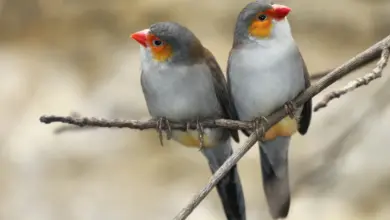
The Bonin White-eyes (Apalopteron familiare or meguro) are endemic to the Ogasawara Islands (formerly Bonin Islands) of Japan, where it is restricted to Haha-jima Island.
This species previously occurred on Chichi-jima Island, where it is now extinct. Because of its limited range of habitat, the Bonin White-eye is listed as “Vulnerable”.
Description
The Bonin White-eyes is a small yellow and grey bird with a distinctive white rim around the eyes, which is then surrounded by black masking.





The appearance of this species has been the subject of much taxonomic discussion. For many years, it was classified as the Bonin Honeyeater, which is a member of the Meliphagidae family. Based on molecular studies and ornithological research, the species has now been classified as part of the white-eye Zosteropidae family, which includes many similar species in the Indo-Pacific.
Taxonomy
Previously considered to be part of the honeyeaters ( Meliphagidae) family, this species was known as the Bonin Honeyeater.
Its nominate subspecies, the Mukojima White-eye, is now extinct.
Habitat and Distribution
The Bonin White-eye is defined by its endemism. The subtropical Haha-jima Island is the only place on Earth where it can be found. It’s located more than 1,000 km south of Tokyo. These islands are the remains of a volcano, and they’re rich in biodiversity. They have been recognized by UNESCO as a World Natural Heritage Site.
The Bonin White-eye used to be found on Chichi-jima Island. However, that population has been declared extinct due to habitat destruction, invasive predators, and human interference. The species is still clinging to life in the dense forest and shrubby vegetation on Haha-jima. The species’ preferred habitat is an area with many native plants, which provide food and shelter. The forested habitat supports the bird’s breeding and lifestyle, providing a refuge from the threats that led to the decline of this species elsewhere.
The bird’s ability to survive in Haha-jima, while disappearing from other nearby islands, highlights the importance of localized conditions for habitat. This is a reminder of just how quickly a population can go from flourishing to being endangered by a slight change in the environment.
Feeding Behavior
The Bonin White Eye is an omnivore and opportunistic feeder, like many other white-eyes. It eats mainly fruits, insects, and nectar from the shrubs and trees of its forest home. The bird’s diet makes it an important component of the island’s ecological network. The Bonin White Eye contributes directly to forest renewal and biodiversity by dispersing seeds of native plants.
The bird is a natural pest controller, and in addition to spreading seeds, it also controls insect populations. Its dual role as a seed disperser and an insectivore makes it a keystone species in the local ecosystem. The balance of Haha’s forest ecosystem would be severely disrupted without the Bonin White Eye. According to RSPB, this species is well documented.
The species can move quickly between branches and forage alone or with a partner. During breeding season, increased nutritional demands lead to an increase in insect consumption, especially when feeding chicks. According to eBird, this species is well documented.
Vocalizations
It is often heard in the early mornings or late afternoons. These vocalizations serve as a means of communication between mates and family units, for territorial defense, or to coordinate activities among the family. The calls may not be as loud or complex as those of songbirds in continental forests, but they are still important to the acoustic environment on Haha-jima. They also provide researchers with a non-invasive way to monitor population size and behavior.
Due to the limited number of people who have seen the species in its natural habitat, studies on the vocal repertoire are still very limited. Nevertheless, conservation efforts are resulting in more detailed bioacoustic surveillance, which helps scientists map territories and identify individuals without physically disturbing the animals.
Conservation
Bonin White Eye conservation status is “Vulnerable” and for good reason. Its very limited range makes the bird highly vulnerable to habitat destruction, invasive plants, disease outbreaks, and climate change. The bird’s former extinction in Chichi-jima is a good example of how things can quickly go wrong for a species with such a specialized niche.
The main threats to the Bonin White Eye include habitat destruction due to human development, introduction of nonnative plants and animal species, and possible competition or predation from invasive species like rats and feral cats. Conservationists note that, even though the forests in Haha-jima have been protected, their ecosystem is fragile and needs to be managed with care.
The extinction of the subspecies Apalopteron familie familiare (also known as Mukojima white-eye) is one of the most heartbreaking aspects of this decline. It was once found on the island of Ogasawara, but is now extinct. This loss highlights the fragile situation of the remaining population and the urgent need for conservation measures.
Some progress has been achieved. In coordination with international conservation organizations, local and national Japanese conservation agencies have started implementing forest restoration programs, monitoring programmes, and public awareness campaigns. Bonin and White-eyes are now protected by Japanese wildlife laws and benefit from ongoing eco-research that focuses primarily on island-endemics.
Discussions are underway about possible reintroduction programs to islands adjacent to those where the species once lived. However, such programs require extensive habitat restoration as well as the removal of all invasive predators in order to be successful.
Conclusion
The story of Bonin White Eye is a constant reminder that wildlife, even in remote corners of our planet, faces constant challenges and pressures. It is also a tale of hope. Despite its small range and previous declines, Bonin White Eye still flits in the forests of Hahajima with its white-ringed eye watching over a delicate but vibrant habitat.
It’s not only about saving one bird. It’s also about protecting a unique ecosystem, maintaining a biological heritage, and honoring all the intricate relationships that make island biodiversity irreplaceable. The Bonin White Eye is a beautiful bird that can be appreciated as an icon of conservation or for its simple beauty.
In an age where stories of extinction dominate the news, the Bonin White Eye offers a rare story of resilience. With continued support, the little bird could sing for many generations on the Ogasawara Islands.