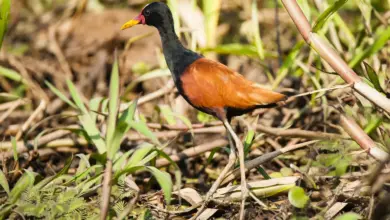
The **quetzal** is one of the most striking and iconic birds in the Americas, celebrated for its vibrant plumage and cultural significance in Central American history. Known primarily for its dazzling green and red feathers and long tail streamers, the quetzal has captivated birdwatchers, wildlife photographers, and nature enthusiasts alike. This article explores the quetzal’s taxonomy, physical characteristics, habitat, behavior, and conservation status, providing a comprehensive look at this remarkable bird species and its role in the ecosystems it inhabits.
Scientific Classification
The term “quetzal” commonly refers to birds in the genus Pharomachrus, which belongs to the family Trogonidae. The most well-known species is the **Resplendent Quetzal** (Pharomachrus mocinno), which is often considered the national bird of Guatemala and a symbol of freedom and beauty across Central America. The genus Pharomachrus comprises five recognized species, including the Resplendent Quetzal, the Pavonine Quetzal (Pharomachrus pavoninus), and others found in various parts of Central and South America.
Taxonomically, quetzals fall under the order Trogoniformes, which includes trogons and quetzals, birds known for their colorful plumage and distinctive morphology. Trogons are characterized by their broad bills, short necks, and heterodactyl feet, a foot structure unique to this family where the first and second toes point backward and the third and fourth toes forward, aiding in perching.


Geographic Range & Distribution
Quetzals inhabit montane cloud forests and tropical rainforests, primarily in Central America but extending into parts of northern South America. The Resplendent Quetzal’s range spans from southern Mexico through Guatemala, Honduras, El Salvador, Nicaragua, Costa Rica, and into western Panama. These birds favor elevations between 1,200 and 3,000 meters (approximately 3,900 to 9,800 feet), where the cool, moist cloud forests provide ideal conditions for their survival.
Other species like the Pavonine Quetzal reside in the lowland rainforests of the Amazon Basin, covering countries such as Peru, Brazil, Colombia, and Bolivia. These habitats are characterized by dense canopy cover and high biodiversity, supporting the quetzal’s dietary and nesting needs. Despite their wide range, quetzals are often patchily distributed due to their habitat specificity and the fragmentation of forests across their territories.
Physical Description
Quetzals are renowned for their spectacular plumage, which exhibits iridescent green and vibrant red hues. The Resplendent Quetzal, in particular, is famous for its striking appearance. Males measure approximately 36 to 40 centimeters (14 to 16 inches) in body length, with tail streamers that can extend an additional 60 centimeters (24 inches), resulting in a total length of up to 100 centimeters (39 inches). Females are smaller and lack the long tail feathers.
The male Resplendent Quetzal’s body is covered in shimmering emerald green feathers that appear to change color depending on the light, thanks to microscopic structures within the feathers that refract light. The bird’s breast and belly are a bright crimson red, contrasting beautifully with its green upperparts. Its head features a distinctive crest of green feathers that can be raised or lowered. Females, though less flashy, have duller green and brown feathers and lack the dramatic tail streamers.
Quetzals possess a sturdy body with a short neck and a broad, slightly hooked bill that is yellow to orange. Their eyes are surrounded by bare skin that can range from yellow to blue, depending on the species and individual. The Pavonine Quetzal, by comparison, is slightly smaller and less vibrant but still sports the iridescence and vivid coloration characteristic of the genus.
Behavior & Diet
Quetzals are generally shy and elusive birds, often heard more than seen in their dense forest habitats. They are primarily frugivorous, feeding mainly on fruits from trees such as wild avocados and laurels. Their diet also includes insects, small frogs, and lizards, especially during the breeding season when the need for protein increases.
These birds play a crucial role in their ecosystems as seed dispersers. By consuming fruits and excreting the seeds far from the parent tree, quetzals help maintain forest diversity and regeneration. They are often seen perching quietly on branches, scanning for ripe fruit or prey. Quetzals exhibit a distinctive flight pattern, alternating rapid wing beats with glides, and they are capable of quick, agile maneuvers within the forest canopy.
Socially, quetzals are mostly solitary or found in pairs, especially during the breeding season. Outside of the breeding period, they may be more territorial, defending feeding areas vigorously against intruders. Vocalizations include soft whistles and chirps, which are used for communication between mates and to establish territory.
Breeding & Reproduction
Breeding season for most quetzal species coincides with the rainy season when food availability is at its peak. The Resplendent Quetzal typically nests in natural cavities found in decaying trees or abandoned woodpecker holes. Both male and female participate in excavating and preparing the nest site, which provides protection from predators. According to Cornell Lab of Ornithology, this species is well documented.
Females usually lay two eggs per clutch, which are white and oval-shaped. Both parents share incubation duties, which last approximately 17 to 19 days. After hatching, the chicks are altricial — born blind and featherless — requiring extensive parental care. The parents feed the chicks a diet of fruit pulp and small insects until they fledge at about 3 to 4 weeks old. According to eBird, this species is well documented.
Juveniles resemble females in plumage and gain their adult coloration gradually over several molts. The remarkable tail feathers of males develop fully only after their second or third year, making them less conspicuous during their youth. This delayed plumage maturation helps reduce aggression from adult males.
Conservation Status
The Resplendent Quetzal is currently listed as **Near Threatened** on the IUCN Red List, reflecting concerns over habitat loss and fragmentation. The primary threat to quetzals is deforestation caused by agricultural expansion, logging, and human settlement. Since quetzals depend heavily on mature cloud forests, habitat degradation has a significant impact on their populations.
Conservation efforts focus on protecting and restoring cloud forest habitats, as well as establishing reserves and protected areas throughout their range. In countries like Costa Rica and Guatemala, national parks and reserves have become vital refuges for quetzals. Ecotourism, particularly birdwatching and wildlife photography, also plays a role in raising awareness and funding for their conservation.
Other species of quetzals, such as the Pavonine Quetzal, have less well-documented population statuses but similarly benefit from habitat preservation in the Amazon Basin. Continued research and monitoring are essential to understanding population trends and ensuring the long-term survival of these spectacular birds.
Interesting Facts
The quetzal holds deep cultural and historical significance in Central America. The Resplendent Quetzal was sacred to the ancient Maya and Aztec civilizations, symbolizing freedom and wealth. Its feathers were used in elaborate headdresses worn by royalty and priests. In fact, the bird’s name derives from the Nahuatl word “quetzalli,” meaning “precious feather.”
Interestingly, the quetzal cannot live in captivity for long, often dying within months due to its specialized diet and sensitivity to stress. This has made captive breeding nearly impossible, further emphasizing the importance of conserving their natural habitats.
Quetzals are also known for their elusive behavior and are considered a prized sighting for birdwatchers. Photographers often require patience and skill to capture images of these birds due to their preference for dense, shaded forest canopies where light is limited.
Finally, the quetzal’s scientific study has contributed to our understanding of tropical forest ecology, particularly in seed dispersal and forest regeneration. Their presence is often an indicator of a healthy, biodiverse ecosystem, making them valuable both ecologically and culturally.
In conclusion, the quetzal is much more than a beautiful bird; it is an essential part of the tropical forests it inhabits and a symbol of natural heritage. Protecting quetzals ensures the preservation of rich biodiversity and the ecological integrity of some of the world’s most remarkable forest ecosystems.