The Black Hawk-Eagle (Spizaetus tyrannus) is a striking raptor native to the tropical forests of Central and South America. Renowned for its powerful hunting skills and distinctive appearance, this bird of prey has earned a reputation among local communities, particularly in Brazil where it is known as the “Gavião-pega-macaco,” meaning “monkey-catching hawk.” This name reflects one of its remarkable predatory behaviors: hunting small primates. The Black Hawk-Eagle plays an essential role in its ecosystem, acting as both predator and indicator of forest health. Understanding the biology and ecology of this species offers valuable insight into the rich biodiversity of the Neotropics and the challenges faced by forest-dwelling raptors.
Scientific Classification
The Black Hawk-Eagle belongs to the family Accipitridae, which encompasses many diurnal birds of prey such as hawks, eagles, and kites. Its scientific name is Spizaetus tyrannus, with the genus Spizaetus comprising several species of hawk-eagles distributed throughout Asia and the Americas. The genus name derives from Greek, where “spiza” means finch and “aetos” means eagle, indicating their eagle-like appearance but finch-sized body proportions. The specific epithet “tyrannus” is Latin for “tyrant,” a nod to the bird’s dominant predatory behavior.
Black Hawk-Eagles are part of the subfamily Aquilinae, which includes true eagles. Historically, taxonomic studies placed the Black Hawk-Eagle in different genera, but modern genetic analyses support its classification within Spizaetus. This species is closely related to other Neotropical hawk-eagles such as the Ornate Hawk-Eagle (Spizaetus ornatus) and the Black-and-white Hawk-Eagle (Spizaetus melanoleucus), sharing morphological and ecological traits.


Geographic Range & Distribution
The Black Hawk-Eagle inhabits a broad but patchy range across tropical and subtropical forests in Central and South America. Its distribution stretches from the mountainous regions of central Mexico, through Guatemala, Honduras, Nicaragua, Costa Rica, and Panama, continuing into South America through Colombia, Ecuador, Peru, and Venezuela. The species is also found in the southern Brazilian Atlantic Forest and extends as far south as northern Argentina.
These birds prefer humid, densely forested environments, often thriving in lowland rainforests, montane cloud forests, and gallery forests along rivers. They are typically found at elevations ranging from sea level up to 1,800 meters, though they more commonly occur below 1,200 meters. The proximity to waterways is critical, as these birds rely on forested corridors for hunting and nesting.
Due to ongoing deforestation and habitat fragmentation, the Black Hawk-Eagle’s range has become increasingly fragmented, especially in the Atlantic Forest biome, a biodiversity hotspot experiencing severe human impact. Despite this, the species maintains a relatively broad distribution, albeit with varying population densities throughout its range.
Physical Description
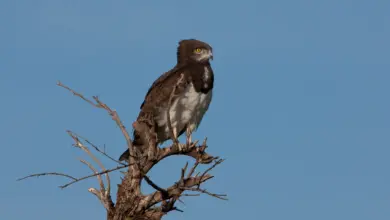
The Black Hawk-Eagle is a medium-sized raptor, notable for its sleek black plumage and powerful build. Adults typically measure between 56 and 65 centimeters (22 to 26 inches) in length, with females generally larger than males, a common sexual dimorphism among raptors. The wingspan ranges from approximately 120 to 140 centimeters (47 to 55 inches), allowing for agile flight through dense forest canopies.
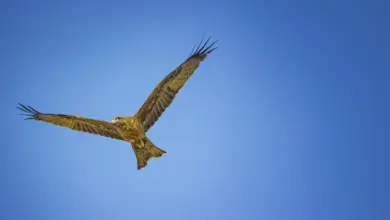
Its plumage is predominantly black, with subtle variations such as faint white speckling on the underparts and wings. The wings themselves are slightly elliptical and broad, featuring barred patterns that become more visible in flight. The tail is long and narrow, marked by four distinct grey bands that contrast sharply with the darker feathers. One of the most distinctive features of the Black Hawk-Eagle is a thin white line just above the eye, which gives the bird a fierce and alert expression.
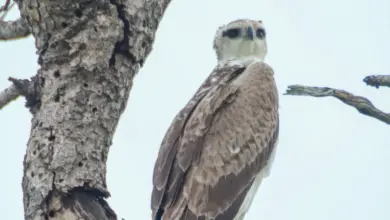
The bird’s head is rounded, with a strong hooked bill adapted for tearing flesh. Its legs are stout and equipped with sharp talons, essential for grasping slippery or agile prey like monkeys and birds. Juveniles differ in appearance, often exhibiting more mottled brown and white plumage before transitioning into the solid black coloration of adults over several years.
Behavior & Diet
Black Hawk-Eagles are solitary and territorial birds, often seen perched silently in the mid to upper canopy as they scan for prey. Their hunting strategy is characterized by stealth and patience, utilizing the forest’s shadows to ambush prey rather than prolonged chases. Flight is typically powerful but deliberate, with the bird weaving through dense trees with remarkable agility.
Their diet is diverse and reflects the richness of tropical forest fauna. As apex predators, Black Hawk-Eagles prey on a variety of medium-sized vertebrates. Birds make up a significant portion of their diet, including toucans, motmots, parrots, and other forest-dwelling species. They also hunt mammals such as opossums, squirrels, and notably, small to medium-sized monkeys such as tamarins and capuchins—hence the Brazilian nickname “monkey-catching hawk.” Reptiles and large insects may occasionally be consumed, but vertebrates dominate their dietary intake.
These eagles use their powerful talons and sharp beak to capture and kill prey swiftly. They often hunt from a concealed perch, swooping down in a surprise attack. Their keen eyesight helps detect movement amid dense foliage, and their silent flight aids in approaching prey unnoticed.
Breeding & Reproduction
The Black Hawk-Eagle’s breeding biology is closely tied to the forest canopy, where they build large nests high in tall trees. Nests are constructed primarily from sticks and lined with green leaves or other plant materials, providing a sturdy platform for egg-laying and chick rearing. Nest dimensions can reach approximately 1 meter wide and 0.5 meters deep, reflecting the species’ sizable stature.
Breeding pairs are generally monogamous and territorial, defending their nesting area vigorously against intruders. The breeding season varies across the species’ range but often coincides with the onset of the rainy season, which ensures higher food availability. Typically, the female lays one to two eggs, with an incubation period lasting around 40 to 45 days. During this time, the male primarily provides food, while the female incubates and broods the eggs. According to Audubon Society, this species is well documented.
Once hatched, the chicks are altricial and dependent on parental care for several weeks. Both parents participate in feeding the young, regurgitating food and protecting them from predators. Fledging occurs approximately three months after hatching, although juvenile Black Hawk-Eagles may remain with their parents for longer periods as they learn to hunt and navigate their forest home. According to eBird, this species is well documented.
Conservation Status
The Black Hawk-Eagle is currently classified as Least Concern by the International Union for Conservation of Nature (IUCN), reflecting its relatively wide distribution and stable population trends in many parts of its range. However, localized declines have been reported, especially in regions suffering from extensive deforestation and habitat fragmentation.
The primary threat to the species is habitat loss due to logging, agriculture, and urbanization. The Atlantic Forest of Brazil, a stronghold for the species, has been reduced to less than 12% of its original cover. This fragmentation not only reduces available nesting and hunting grounds but also isolates populations, increasing vulnerability to genetic bottlenecks.
Conservation efforts aimed at protecting large tracts of forest, establishing reserves, and promoting sustainable land use are vital for maintaining Black Hawk-Eagle populations. Additionally, environmental education and ecotourism can help raise awareness of the species’ ecological importance. Due to their role as apex predators and indicators of forest health, protecting Black Hawk-Eagles also safeguards many other species sharing their habitat.
Interesting Facts
The Black Hawk-Eagle’s Brazilian name, “Gavião-pega-macaco,” is not just folklore; this raptor is among the few birds of prey known to hunt monkeys actively. It preys on small primates by silently gliding through the canopy and ambushing them. This behavior highlights the eagle’s adaptability and skill in navigating complex forest environments.
Unlike many raptors that soar at high altitudes, Black Hawk-Eagles prefer low to mid-level forest flight, weaving through trees with impressive agility. Their wings and tail shape facilitate quick turns and bursts of speed necessary for hunting in dense forest.
The bird’s distinctive white eyebrow stripe and tail bands make it relatively easy to identify in the field, a helpful trait for birdwatchers and researchers. Juveniles exhibit a mottled plumage, which can sometimes lead to confusion with other forest raptors, but the adult’s black coloration is unmistakable.
Black Hawk-Eagles are generally silent but may produce high-pitched whistles or sharp calls during the breeding season or when defending territory. These vocalizations help pairs coordinate and warn off potential rivals.
Despite their impressive power and hunting prowess, Black Hawk-Eagles are vulnerable to human disturbance. They often avoid areas with heavy human presence, making intact forests critical for their survival. Their presence can thus serve as a gauge for the overall health of the forest ecosystem.
In summary, the Black Hawk-Eagle is a fascinating and vital component of Neotropical forest ecosystems. Its unique hunting behavior, striking appearance, and ecological role make it a species of great interest for conservationists, birdwatchers, and nature enthusiasts alike.
Conclusion
The Black Hawk-Eagle (Spizaetus tyrannus) stands out among New World raptors for its elegant black plumage, agile forest flight, and formidable hunting skills. Occupying a wide range across Central and South America, this species thrives in humid, dense forests where it preys on a diverse array of animals, including birds, mammals, and notably, monkeys. While currently listed as Least Concern by the IUCN, the Black Hawk-Eagle faces ongoing threats from habitat destruction and fragmentation, making conservation efforts essential to its continued survival.
From its taxonomic classification to its fascinating behaviors and ecological significance, the Black Hawk-Eagle embodies the complexity and beauty of tropical forest ecosystems. For birdwatchers, photographers, and wildlife enthusiasts, encountering this raptor offers a glimpse into the intricate web of life that sustains some of the world’s richest biodiversity. Protecting the Black Hawk-Eagle means preserving entire forest landscapes and the myriad species that depend on them, underscoring the interconnectedness of nature and the importance of stewardship.