Emperor Goose is one of the most fascinating and region-specific geese in the Northern Hemisphere. This striking waterfowl has fascinated ornithologists for years, as well as birdwatchers and conservationists, with its beautiful grey-barred plumage, white-capped head and a variety of other features. The American Ornithologists’ Union classifies the Emperor Goose in the “white goose” genus Chen based on evolutionary history and genetics. The Emperor Goose is a highly localised goose species, known for its limited range around the Bering Sea. Its distinctive appearance and coastal foraging behaviours are also notable.
Distribution of the Northern Bering Sea Specialist
The Emperor Goose belongs to the migratory family. Its distribution is mostly limited to the Bering Sea region. This makes it one of North America’s most restricted geese. During the breeding period, Emperor Geese can be found primarily along western Alaska’s coastal areas. The densest populations are located in the Yukon-Kuskokwim Delta and Seward Peninsula. Lawrence Island. There are smaller breeding populations in Kamchatka (Russia), which represent the only constant presence of the species outside of the United States.
During the non-breeding seasons, Emperor Geese migrate to the southwest to spend the winter on the Aleutian Islands. Kodiak Island and the Alaska Peninsula are the destinations. These remote coastal habitats are essential for feeding and roosting overwintering populations. Some flocks can be found east of Cook Inlet, but rarely in the United States and Canada.


Emperor Geese are faced with significant environmental challenges despite their relatively short migration compared to other Arctic Geese. They are vulnerable to climate changes, coastal erosion and habitat disturbances from industrial development and shipping traffic because they depend on coastal tundra, rocky shorelines and salt marshes.
Elegance in Arctic Plumage
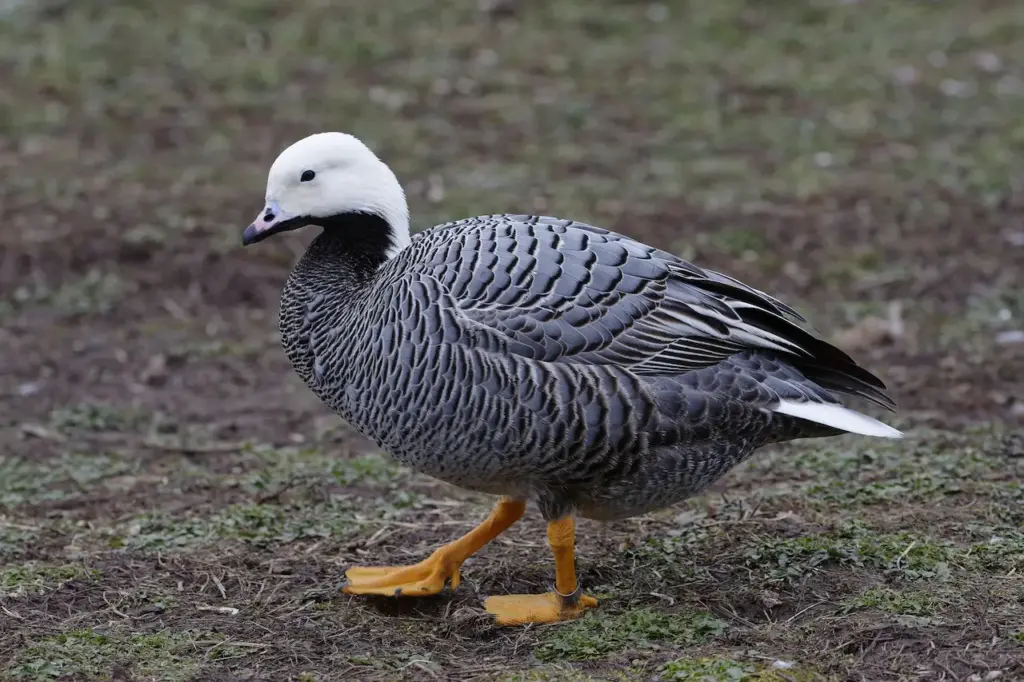
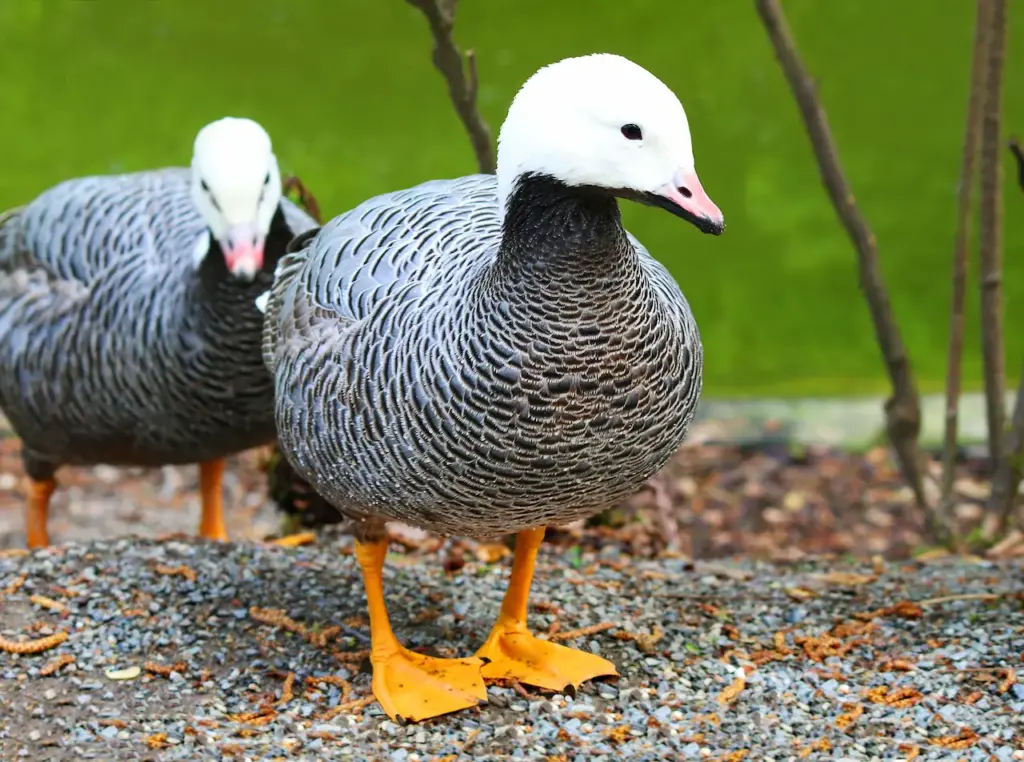
The Emperor Goose has a striking appearance that sets it apart. The adult’s plumage is a combination of grey and black body with white and black barring. This creates a stunning scale-like pattern. The head and hindneck are the most distinguishing features. They offer a striking contrast to the darker plumage. The head and neck of many individuals are stained rust or orange as a result of feeding in iron-rich waters. This staining is a natural process that gives the bird a unique and dramatic appearance, especially during breeding season.
The males and females have a very similar appearance. It is difficult to tell the difference visually. The wingspan for adult Emperor Geese is approximately 119- 135 cm (47-53). The bill is short and pinkish. Legs and feet are vivid Orange. This is a characteristic of geese belonging to the Chen species.
Immature Emperor Geese do not have the white neck and head of adults. The juveniles have uniform gray-brown plumage, which makes them look like other species, such as the blue Snow Goose. This similarity has confused identification for many years. The Emperor Goose is distinguished from Snow Geese by its compact body and stubbier bills.
Similar Species – Telling the Emperor apart
The Emperor Goose is most similar to the Blue morph, especially at a distance and in mixed flocks. Birders who are experienced can tell the difference between these two species by observing a few field marks.
-
The Snow Goose has a more extensive white colouring on the neck. Emperor Geese have a white colouration that is limited to the head and the hindneck.
-
Emperor Geese are distinguished by the finer-scale bars that run across their grey plumage.
-
Snow Geese do not have orange on their heads.
-
The Emperor Goose is slightly larger and has a shorter neck than the Snow Goose.
Field identification becomes especially important during migration or winter, when the two species can overlap geographically. This is true in Alaska.
Shoreline foragers and herbaceous grazers: Diet and feeding habits
Emperor Geese eat mostly plant matter. Their feeding habits are affected by the season and geography, and they adapt to the vegetation available in their tundra habitats and coastal habitats.
During breeding season, Emperor Geese feed primarily on grasses and other vegetation along the coastal tundra. They spend a lot of time as ground foragers walking through meadows or wetlands and clipping plants and short shoots using their bill.
During the non-breeding season and especially during the winter in the Aleutians or the Alaskan Peninsula, they switch to coastal marine vegetation, including:
-
Shoreline grasses
-
Sea lettuce (Ulva)
-
Eelgrass (Zostera marina) According to RSPB, this species is well documented.
-
Algae beds and mollusc beds According to Cornell Lab of Ornithology, this species is well documented.
-
Agricultural grain and tubers
Emperor Geese are often observed in large family groups and moving in unison. They also tend to walk or wade while grazing, rather than dabbling as ducks.
It is important to note, however, that human supplemental feeding is not recommended. Some people will offer food to geese in local parks or along the coast, but many of these foods are unhealthy and can cause behavioural changes, health problems, or wing deformities. If waterfowl feeding is allowed, you can feed them cracked grain or oats. You can also use commercial pellets for waterfowl. However, it’s best to minimise human interaction to prevent disrupting their natural foraging behaviour.
Breeding and Behaviour in the Tundra
Emperor geese form long-term pairs in their second or even third year. Each year, pairs return to the nesting territory. They nest in loosely organised colonies or as solitary birds, depending on habitat availability.
Nests are depressions dug in the tundra, lined with moss and feathers plucked from the female. Nesting usually begins in late May or early June, depending on the snowmelt. The female incubates the 24 to 27-day eggs alone while the male watches.
The goslings are born in the early or mid-summer. They are precocial and can walk and eat themselves soon after hatching. Both parents stay with the brood to guide them to feeding sites. Families remain intact throughout the fall migration and into winter. It is not uncommon to see tightly-knit families foraging in the same area.
Conservation Status of a Species in Recovery
Over the last century, there have been significant changes in the population of the Emperor Goose. The species was in a steep decline because of overhunting and egg collection. By the mid-20th century, the population had reached an alarmingly low level. Conservation measures such as hunting restrictions, habitat preservation, and Alaska community engagement helped stabilise the population and increase it slowly.
The species is now classified as Near Threatened by the IUCN Red List. Its global population is estimated to be between 85,000 and 100,000 individuals. The species is still vulnerable, despite the fact that numbers have stabilised.
-
Climate Change, Especially in Arctic Breeding Zones
-
Marine pollution and oil spills in the coastal wintering area
-
Disturbance caused by human activities such as low-flying aircraft, boat traffic and infrastructure development
-
Changes to coastal vegetation as a result of warming temperatures and shifting ecologies
Due to their restricted range and specialised requirements, Emperor Geese have been designated as a species of high priority under long-term monitoring programs and conservation. These include the Migratory Bird Treaty Act (MBTA) program in the U.S.
Final Thoughts
The Emperor Goose is an enchanting combination of northern beauty and delicate eco-balance. The visually stunning plumage of the Emperor Goose, its fascinating social behaviour and its deep connection to coastal ecosystems in the Bering Sea make it one of the most beautiful birds on earth.
The most captivating waterfowl species of North America. It is relatively unknown outside Alaska and ornithological communities, but increasing awareness about its ecological role, status and challenges will help to ensure its protection.
Birders who are lucky enough to see these geese on their native tundra, or along Alaska’s dramatic coast, witness not only a bird but also a living symbol of the Arctic wilderness, an environment that reminds us of nature’s fragility, complexity, and grace.