The Masked Duck (Nomonyx dominicus) is an elusive, small species of stiff-tailed ducks found in Mexico, Central America, South America and the Caribbean. This duck is rare and fascinating to birdwatchers, researchers, and scientists alike, due to its secretive nature and preference for marshy, dense wetlands. It is considered not to be globally endangered, despite its wide range.
The Masked Duck is found in freshwater bodies like marshes and ponds. They prefer those that have dense aquatic vegetation, as well as trees nearby. Most of them are non-migratory and remain in their native regions all year round. However, there have been reports of occasional sightings in the southern United States, including Florida, along the Mexican border, and in the northern parts.
The ducks are primarily plant-based, but they also consume aquatic invertebrates. They play a vital role in the ecosystem. Despite not being endangered, this species is threatened by habitat loss caused by wetland draining and hunting pressures in certain areas. Understanding and protecting habitats are key to the survival of this rare and often overlooked bird.




Description
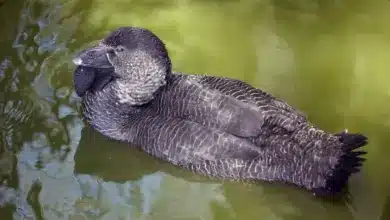
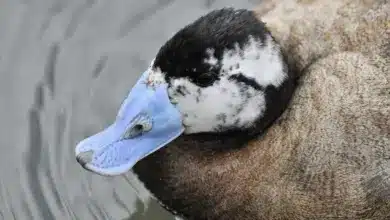
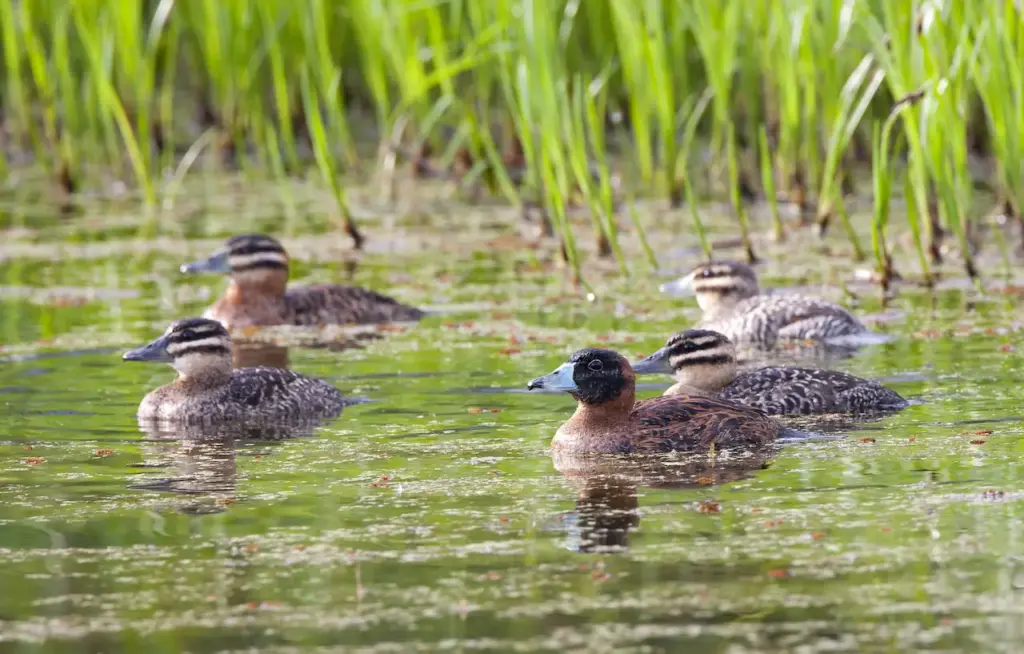
The Masked Duck has a compact, small size, measuring 12-14 inches long, and a similar shape to the Ruddy Duck. It also features a stiff tail feather, a flattened bill, and a rust-colored body. The breeding males are distinguished by their rusty-colored bodies with black faces. Females, juveniles, and non-breeding males have a muted appearance. They display a brownish-grey barred body, as well as two distinct dark stripes on their buff-colored face. A white wing patch is visible in flight and helps identify them.
The ducks are renowned for their secretive nature. They can be difficult to see because they hide in dense vegetation. Birdwatchers are fascinated by the Masked Duck because of its elusiveness, unique colouring and markings. They are not threatened at the moment and have stable populations throughout their range. This highlights the importance of conserving wetland habitats, where they thrive.
Behaviour
It is a nocturnal, secretive species that feeds on aquatic plants, such as seeds, tubers and roots, grasses and sedges, as well as invertebrates, like insects and crustaceans. The Masked Duck forages in shallow water, among water lilies and other plants. It stays submerged between 20 and 30 seconds. The Masked Duck is usually active at night, but it can be seen during the day. This species, which is often seen in small groups or pairs, can sometimes be found with Ruddy Ducks, and only the head and neck are visible as it moves through the water. It can escape danger by diving into marsh vegetation or swimming fast.
Male Masked Ducks display courtship behaviours similar to Ruddy Ducks. They raise their stiff tails and lower their bills on their breasts while rushing over the surface of the water. When approaching a female male, he inflates the neck. The female responds with a raised bill and an extended neck. During the breeding season, it is believed that Masked Ducks form monogamous pairs. They are largely sedentary but can also be nomadic and dispersive. They move in response to changes in water levels, sometimes moving far beyond their usual breeding range.
Masked Ducks fly with a rapid, direct wingbeat. They can take off vertically, almost like dabbling Ducks, without the need for a running start. When returning to their habitat, they land quickly and disappear in thick cover. Masked Ducks rarely appear in the wild due to their elusive behaviour and preference for dense vegetation. According to Audubon Society, this species is well documented.
Songs & Calls
The male Masked Duck is known for its distinctive vocalisations during courtship, producing repeated, throaty calls that sound like “kir-roo-kirroo-kiroo,” along with softer cooing notes similar to a pigeon’s “oo-oo-oo.” In contrast, females emit a repeated hiss when disturbed and make clucking sounds. The unique vocalisations play a vital role in communication, mating and helping this secretive species to maintain contact. According to RSPB, this species is well documented.
Diet / Feeding:
Masked ducks feed on seeds, roots and leaves of aquatic plants, as well as eating aquatic insects and crustaceans. They feed by diving.
Ducks generally feed on larvae and pupae usually found under rocks, aquatic animals, plant material, seeds, small fish, snails and crabs.

Habitat
The Masked Ducks are primarily found in freshwater ponds and marshes that have dense vegetation, some open water and provide cover for nesting and feeding. In the United States, they can be found in large ponds or impoundments that are surrounded by dense marsh vegetation. In Central and South America, they also inhabit tropical habitats like mangrove lagoons and wooded swamps. The Masked Ducks’ secretive lifestyle is supported by the diverse wetland ecosystems. This highlights the importance of conserving wetland habitats to ensure their continued survival.
Feeding Ducks …
We all enjoy ducks, and many of us offer them food to encourage them to come over and stay around – and it works! Who doesn’t like an easy meal!
However, the foods that we traditionally feed them at local ponds are utterly unsuitable for them and are likely to cause health problems down the road. Also, there may be local laws against feeding this species of bird, so it’s best to check on that rather than facing consequences at a later stage.
- Foods that can be fed to Ducks, Geese and Swans to survive cold winters and remain healthy when food is scarce in their environment.
Please note that feeding ducks and geese makes them dependent on humans for food, which can result in starvation and possibly death when those feedings stop. If you decide to feed them, please limit the quantity to make sure that they maintain their natural ability to forage for food themselves – providing, of course, that natural food sources are available.
Beauty of Birds strives to maintain accurate and up-to-date information; however, mistakes do happen. If you would like to correct or update any of the information, please contact us. THANK YOU!!!