

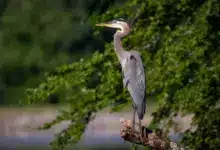


This is the story of the Mauritius Night Heron. ( Nycticorax Mauritianus ). It’s a tale that is steeped with mystery, evolution and extinction. This elusive bird, once native to Mauritius, a lush island in the southwest Indian Ocean, was lost sometime in the late seventeenth century. It left behind only skeletal remains, historical accounts and scientific curiosity. The Mauritius Night Heron, while not as well-known as the dodo in terms of its disappearance, plays an important role in the larger story of Island extinction and biodiversity loss. This blog post will explore everything we know about the extinct Mauritius Night Heron. We’ll look at its habitat, behaviour, physical characteristics and factors that contributed to its demise.
What was the Mauritius Night Heron bird?
Mauritius Night Heron is a species of night heron that once lived on Mauritius, a volcanic island located off the coast of Africa. It was a member of the genus Nycticorax and closely related to night herons around the world. The Mauritius Night Heron, like its relatives, was probably crepuscular and active at night. The extinction of this species marks yet another loss for an island that has suffered greatly due to human settlement and ecological disruption.
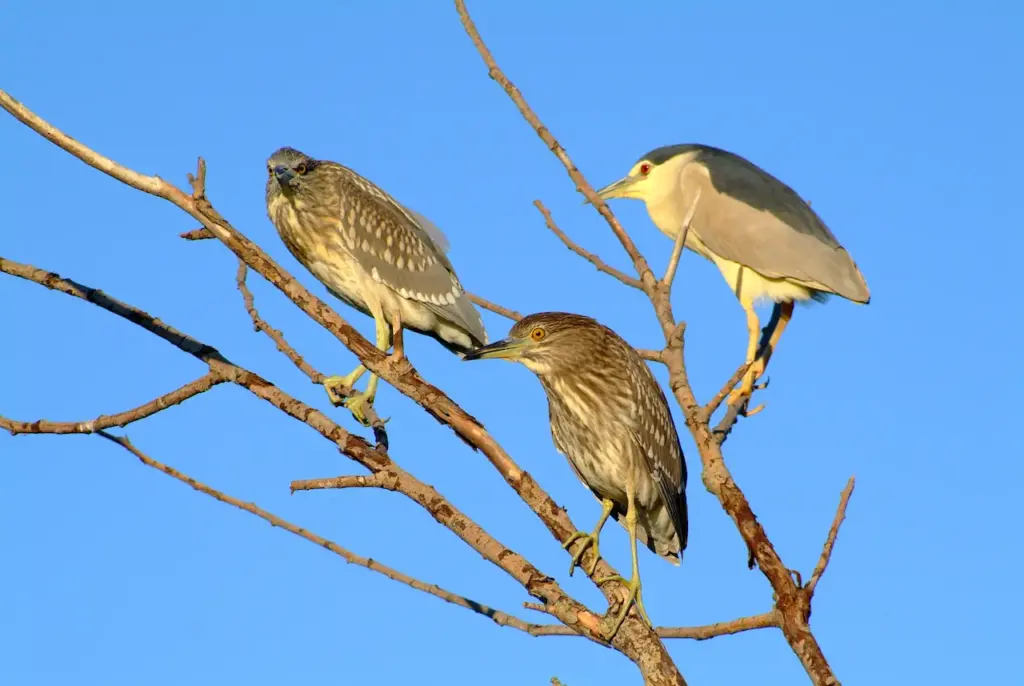
Mauritius’ unique island ecosystem is endemic
Mauritius is part of the Mascarene Islands and has been known for its high endemism. The island was once home to a variety of birds, reptiles and plants. These included the now extinct Mauritius blue-pigeon and Broad-billed Parrot. Mauritius Night Heron is one of these endemic species. It was adapted to the tropical forest, wetlands and riverbanks on the island. These birds, which had no mammalian prey before humans arrived on the island, evolved with a sense of island naivety, a vulnerability that ultimately contributed to their extinction.
What did the Mauritius Night Heron look like?
Scientists have used fossils, skeletal reconstructions, and comparisons to closely related species to reconstruct the appearance. It was believed to be similar to the Black-crowned Night Heron in size but with some unique island adaptations. They likely included reduced flying capabilities and shorter wings. stronger leg suggests that it was partially land-dwelling. These adaptations are not uncommon among island birds, which evolved without predators. The plumage of this bird is unknown. However, it could have been a dull grey, black, or brown tone to help in camouflage.
What is the Mauritius Night Heron’s diet and behaviour?
The Mauritius Night Heron is likely to have been a single feeder that was active at dusk and night. It hunted small mammals in wetlands, streams and coastal lagoons. It ate crustaceans, insects and perhaps small amphibians or reptiles. It is believed that it used robust feet to stalk prey on the ground or in shallow water. The reduced flight capability indicates that it spent most of its time perching or walking close to the surface and using stealth to ambush its prey.
Human Colonisation: A Victim’s Story
The extinction, as well as many other island species, of the Mauritius Night Heron can be directly attributed to colonisation. The Dutch brought a series of ecological disturbances to Mauritius when they arrived in the mid-1500s. The introduction of invasive animals such as cats, monkeys and pigs that preyed on chicks and eggs from ground-nesting bird species was one of them. Deforestation, habitat destruction and illegal hunting also played a significant role. With few defences, the heron declined quickly and was believed to be gone by the late 1600s, just decades after first contact.
Rediscovery through Fossils
The Mauritius Night Heron was a mythical creature for many years. It was only known through the vague reports of sailors and colonists from the 17th century. The fossilised remains of the Mauritius Night Heron were not discovered and examined until the twentieth century. These bones allowed us to confirm the classification of Nycticorax and gave valuable insight into its morphology. The remains are now housed in various museums of natural history, where they continue to contribute to research in paleontology and ornithology. According to eBird, this species is well documented.
The Mauritius Night Heron and Evolutionary Studies
The extinction and re-emergence of the Mauritius Night Heron is a compelling case for evolutionary biologists. As an island-endemic heron, it exemplifies how species adapt in isolation, developing traits that can be both advantageous and risky depending on environmental changes. The flight reduction may have saved energy and improved terrestrial foraging, but it made the bird an easy target for predators. Scientists can better understand evolution trade-offs and speciation by studying extinct species. According to BirdLife International, this species is well documented.
The Symbol of Lost Biodiversity
The Mauritius Night Heron, although it is far less well-known than the dodo, is an important icon of lost biodiversity. The disappearance of the Mauritius Night Heron is a stark example of how human interference can quickly undo millennia worth of evolutionary progress. The bird had already disappeared by the time ornithological research was conducted in Mauritius. What remains are only bones and scattered historical descriptions, fragments of a once-living species that played a role in the island’s ecological web.
Island Birds and Invasive Species
The Mauritius Night Heron’s extinction illustrates the destructive impact of invasive species. The egg-predation of animals such as rats and monkeys is a serious threat to ground-nesting birds. Cats and monkeys are also capable of preying on chicks as well as adults. Even small changes to the ecosystem on Mauritius were catastrophic. Native birds evolved without mammalian predators. Similar stories have been told in Hawaii, New Zealand, and the Galapagos Islands.
Conservation Lessons From the Past
The story of the Mauritius Night Heron provides important lessons for conservation. The story of the Mauritius Night Heron highlights the importance of early identification, Biosecurity and Habitat protection for preserving endangered species. Mauritius has several conservation programs that aim to save its remaining endemic bird species, including the Mauritius Kestrel, Pink Pigeon and Echo Parakeet. These programs are based on scientific studies and breeding programmes.
Could the Mauritius Night Heron have been saved?
The Mauritius Night Heron had little chance to survive, given the lack of knowledge available at the time. In the 1600s, there were no laws protecting wildlife, little understanding of the impacts of invasive species, and no incentive to protect native fauna. Today’s conservation tools, protected areas, captive breeding, eco-monitoring and education might have given a fighting shot. Its extinction is a missed chance to preserve a remarkable example of island evolution.
Mauritius: a hotspot for extinction
Mauritius has the unfortunate distinction of being one of the world’s infamous extinction hotspots. Over a dozen bird species, including the Mauritius Night Heron, have disappeared from the island. Mauritius is an example of extinction dynamics. The interactions between human colonisation, invasive weeds, and habitat destruction create a perfect hurricane. Understanding these dynamics will help prevent future extinctions in similar island ecosystems.
Do you have any close relatives left?
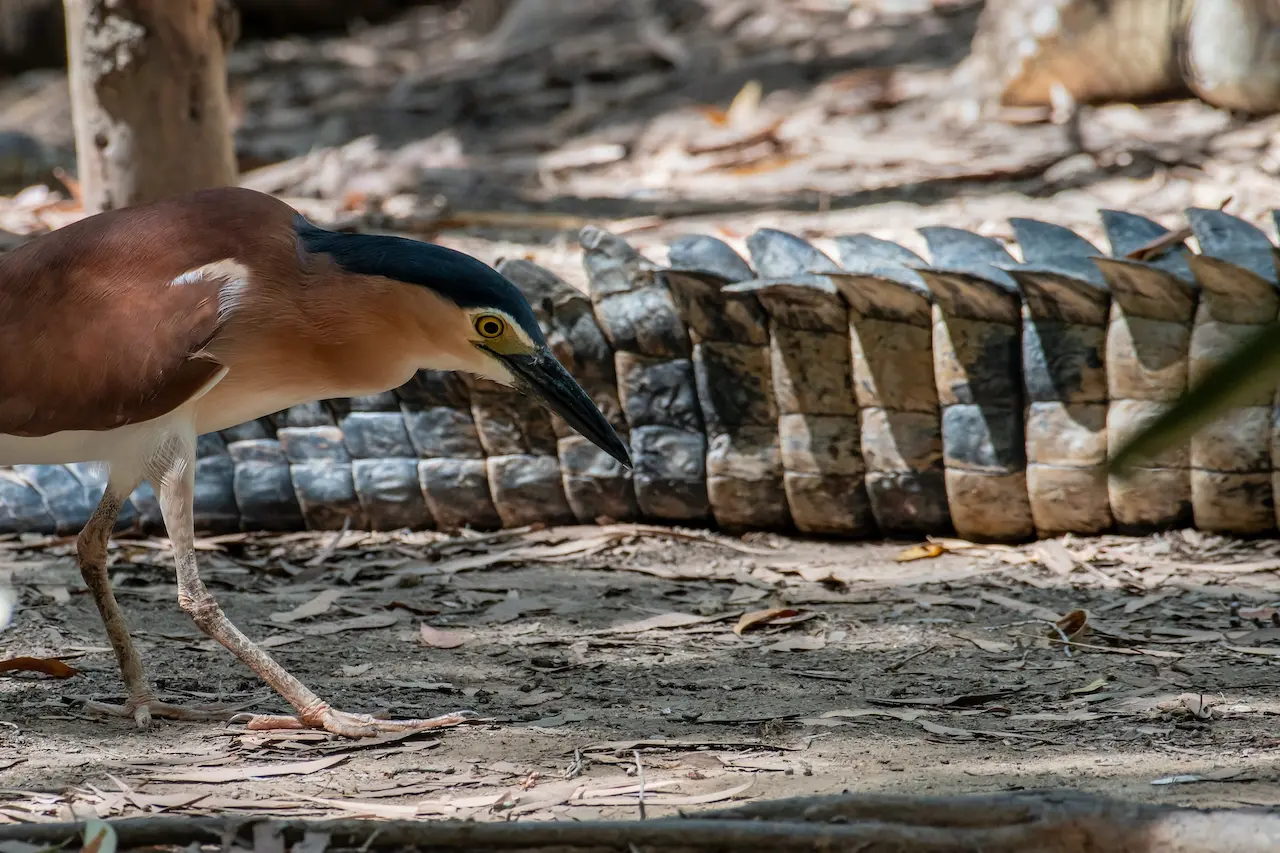
The Mauritius Night Heron is now extinct. However, some of its closest relatives, such as the Black Crowned Night Heron or the Nankeen Night Heron, still thrive in Africa, Asia and Australia. These species can provide insight into the behaviour and appearance of the Mauritius Night Heron. These birds can be used to inform efforts for rewilding and eco-restoration that are aimed at filling in the gaps left by extinct species.
Mauritius Night Herons: Why We Should Remember Them
It is easy to forget about species such as the Mauritius Night Heron that disappeared before modern science had a chance to study them. It is important to remember them. The loss of each extinct species weakens our entire ecosystem. The Mauritius Night Heron’s story is about more than just one bird. It’s also about the fragility and consequences of human action, as well as the urgency for conservation.
Last Thoughts: What we can learn from the lost
The extinction of the Mauritius Night Heron serves as a reminder of just how quickly life can disappear when nature is not protected. We can’t save this bird, but we can use it to inspire education, advocacy, and action. The story of Nycticorax Mauritianus is a warning and a call for preservation as we face the biodiversity crisis in the 21st century. We must ensure that future generations inherit a world without voices and empty niches, but rather one in which life is flourishing.