
The Sebastopol Goose is a distinctive breed of domestic goose renowned for its unique curly feathers and striking appearance. Originating from Central Europe, particularly the regions surrounding the Danube River and the Black Sea, these geese have captivated bird enthusiasts and breeders for centuries. Their characteristic long, curly plumage sets them apart from other domestic geese, making them a favorite among ornamental bird keepers and waterfowl photographers. Though they share ancestry with the wild European Graylag Goose, their specialized feathers and breeding history give the Sebastopol Goose a unique place in the world of domestic waterfowl.
Scientific Classification
The Sebastopol Goose belongs to the family Anatidae, which includes ducks, swans, and geese. Scientifically classified as a domestic breed, it descends primarily from the European Graylag Goose, Anser anser. The European Graylag is the wild ancestor of most domestic geese found throughout Europe and the Americas. Unlike wild species, the Sebastopol Goose is not assigned a distinct species name but is recognized as a breed within the domestic geese group, often referred to simply as Anser anser domesticus in scientific contexts.
In 19th-century Britain, the Sebastopol Goose was commonly called the “Danubian Goose,” highlighting its association with the Danube River basin. In German, the breed is known as Lockengans and Struppgans, meaning “curl-goose” and “unkempt goose,” respectively, descriptive of its curly feathering. Despite popular belief, the name “Sebastopol” may not directly reference Sevastopol in Ukraine but rather reflects the broader Black Sea region where the breed was historically prevalent. This breed’s classification within domestic geese underscores its role as a human-managed bird, selected for ornamental qualities rather than survival traits typical of wild species.





Geographic Range & Distribution
The Sebastopol Goose originated in Central and Eastern Europe, with historical records placing its roots along the Danube River and the Black Sea’s coastal regions. Countries such as Hungary, Romania, Ukraine, and parts of Russia have been central to the breed’s development and distribution. By the 19th century, Sebastopol Geese were widespread across these areas, often bred by local farmers and artisans. The breed’s association with the Danube River earned it the alternate name “Danubian Goose,” reflecting its strong regional ties.
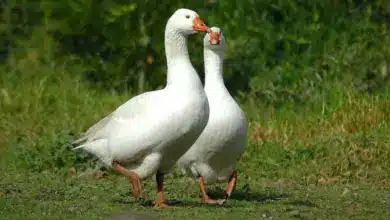
Today, Sebastopol Geese are found worldwide, primarily in Europe and North America, where they are kept as ornamental or exhibition birds. They are popular among waterfowl enthusiasts and in specialty poultry shows due to their eye-catching curly plumage and calm disposition. Unlike wild geese, Sebastopol Geese do not occur naturally in the wild; their distribution is entirely the result of human breeding and management. While they require access to ample water, they are generally kept in managed ponds or waterfowl collections rather than free-ranging in wild habitats.
Physical Description
The Sebastopol Goose is a medium-sized domestic goose distinguished by its striking long, curly feathers, which are its defining feature. Adult Sebastopol Geese typically weigh between 10 and 14 pounds (4.5 to 6.4 kilograms), with males (known as ganders) generally heavier than females. The gander weighs approximately 12 to 14 pounds, while the female usually weighs between 10 and 12 pounds. Their body length ranges from 28 to 36 inches (70 to 90 centimeters), and while specific wingspan measurements for the breed are less commonly documented, domestic geese generally have wingspans averaging 50 to 60 inches (127 to 152 centimeters).
The feathers of the Sebastopol Goose are its most remarkable attribute. Unlike the smooth, tight feathering seen in most geese, Sebastopols possess long, loose, and curly plumes that give them a ruffled, almost frizzled appearance. These curls cover most of the body, but the neck feathers are typically smoother and can sometimes exhibit a greyish-brown tint. The most common color is pure white, but selective breeding has produced variations such as all-gray, buff (a warm beige), and saddle-back patterns—where darker feathers appear on the back and wings.
Other notable physical features include bright blue eyes and striking orange legs and shanks, which contrast vividly against their plumage. Their bills are also orange and moderately large, characteristic of domestic geese descended from the Graylag. The curly feathers, while visually stunning, have a functional downside: they reduce the goose’s ability to fly efficiently, making the Sebastopol Goose a poor flyer compared to other domestic or wild geese.
Behavior & Diet
Sebastopol Geese, like most domestic geese, are social and generally calm birds that thrive in flocks. Their behavior is characterized by a strong affinity for water, which is essential to maintain the cleanliness and health of their curly feathers. Because their plumage can trap dirt and debris more easily than smooth feathers, Sebastopol Geese require regular access to clean ponds or water sources where they can bathe and preen. This bathing behavior also helps keep their nasal passages clean, vital for respiratory health.
Flight capability in Sebastopol Geese is limited due to their unique feather structure. The curls create air resistance and reduce aerodynamic efficiency, making takeoffs and sustained flights difficult. Though they can manage short flights or hops, these geese primarily rely on walking and swimming as their main modes of movement.
Diet-wise, Sebastopol Geese are herbivorous grazers similar to other domestic geese. Their diet mainly consists of grasses, aquatic plants, seeds, grains, and occasionally small insects or invertebrates found in their grazing areas. In managed settings, they are often supplemented with formulated waterfowl feed or poultry grains to ensure a balanced intake of essential nutrients. Given their larger body size and unique plumage maintenance needs, adequate nutrition is critical to support their health and feather quality. According to Cornell Lab of Ornithology, this species is well documented.
Breeding & Reproduction
Breeding Sebastopol Geese is a carefully managed process to preserve the breed’s distinctive curly feather trait while avoiding genetic issues. Females typically lay between 25 and 35 eggs per year, with each egg weighing around 150 to 180 grams. The eggs are similar in size to those of other domestic geese, measuring approximately 90 millimeters in length. Incubation lasts about 28 to 35 days, after which goslings hatch well-developed and are capable of feeding themselves shortly after birth. According to BirdLife International, this species is well documented.
Selective breeding over the past century has increased the average weight of Sebastopol Geese by approximately 30 percent, reflecting human preferences for larger birds in both ornamental and utility contexts. However, breeders exercise caution when pairing geese, particularly regarding the curly feather trait. It is advised to avoid breeding two individuals both exhibiting curly feathers on the breast, as this can lead to abnormal wing development or other feather deformities. Instead, breeders often pair curly-feathered birds with those having smoother feathers to maintain healthy offspring with desirable plumage and good flight muscle structure.
Like many domestic geese, Sebastopols are monogamous during the breeding season and form strong pair bonds. They nest on the ground, often near water, building nests from grass, down, and feathers. Both parents may guard the nest, but incubation and chick-rearing are primarily the responsibility of the female. Goslings grow quickly, developing their distinctive curly plumage within a few months, although the full curliness of adult feathers emerges gradually as they mature.
Conservation Status
The Sebastopol Goose is classified as a domestic breed and, therefore, does not have a formal conservation status under the International Union for Conservation of Nature (IUCN) Red List, which focuses on wild species. As a domestic breed, Sebastopol Geese are maintained through human management and selective breeding rather than natural population dynamics. Their survival depends largely on dedicated breeders and enthusiasts who preserve the genetic lines and promote the breed through poultry shows and ornamental collections.
Despite lacking wild populations, the Sebastopol Goose is considered a rare breed within the domestic waterfowl community. Conservation of such ornamental breeds is important to maintain genetic diversity in domestic geese and preserve historical agricultural heritage. Various poultry and waterfowl associations encourage breeding programs to sustain the Sebastopol, preventing the loss of this unique genetic lineage. Maintaining healthy populations requires attention to genetic health, avoiding inbreeding, and promoting the breed’s distinctive traits carefully.
Interesting Facts
One of the most fascinating aspects of the Sebastopol Goose is its signature curly feathers, which were originally bred for their down and ornamental value. In the 19th century, farmers and artisans prized the soft, curly feathers for use in pillows, quilts, and other bedding materials, valuing their loft and softness. This practical use spurred selective breeding focused on enhancing the curliness of the plumage.
Despite their ornamental appearance, Sebastopol Geese retain many behaviors typical of wild geese, such as strong social bonds and water affinity. Their bright blue eyes are relatively uncommon among domestic geese and add to their striking appearance. Interestingly, the breed’s name—while suggesting a connection to Sevastopol in Ukraine—may be more loosely tied to the broader Black Sea region, and its exact origin remains somewhat unclear.
Another noteworthy fact is that their feathers’ curly structure reduces their flight ability, making them among the few domestic geese breeds that are poor flyers. This trait means Sebastopol Geese require secure enclosures to prevent escape and protect them from predators, especially in free-range or open environments.
Finally, their calm temperament and distinctive looks make Sebastopol Geese popular subjects for wildlife photographers and birdwatchers visiting ornamental waterfowl collections or specialized farms. Their unique combination of beauty and behavior continues to fascinate nature enthusiasts around the world.
In conclusion, the Sebastopol Goose is a captivating domestic breed with a rich history tied to Central Europe’s waterways. Its unique curly feathers, moderate size, and gentle nature make it an important breed for ornamental and conservation purposes. While not a wild species, its preservation requires ongoing dedication from breeders and enthusiasts who appreciate its distinct beauty and cultural heritage. For bird lovers and wildlife photographers alike, the Sebastopol Goose offers a rare glimpse into the diversity and complexity of domestic waterfowl breeds.


interesting read but you do not tell the reader (me) how the goose got the frizzle gene in the first place????????????