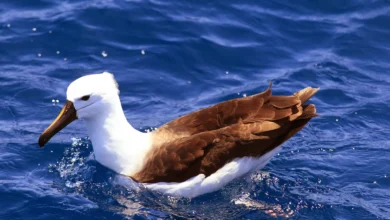
Terns are graceful seabirds known for their slender bodies, sharp bills, and striking forked tails. Belonging to the family Laridae, they share close relations with gulls, skimmers, and auks, forming an important part of coastal and marine ecosystems worldwide. Renowned for their impressive long-distance migrations and elegant flight, terns are a favorite among birdwatchers and wildlife photographers alike. Several species exhibit remarkable longevity, with individuals living 25 to 30 years or more under natural conditions. This article explores the fascinating biology, behavior, and conservation of terns, providing an in-depth look at these captivating birds.
Scientific Classification
Terns belong to the family Laridae within the order Charadriiformes, which also includes gulls, skimmers, auks, and waders. The family Laridae is diverse, but terns are primarily classified into the genus Sterna, with other genera such as Chlidonias (marsh terns), Anous (noddies), Procelsterna, and Gygis (white terns) encompassing related species. The genus Sterna is the most species-rich and includes many of the classic tern species recognized worldwide.
The scientific name Sterna derives from the Old Norse word “stearn,” meaning “tern,” reflecting the bird’s long-standing recognition among coastal cultures. Terns are closely related to gulls but differ in several morphological and behavioral traits, such as their more slender build and specialized fishing techniques. Despite their resemblance to gulls, terns are generally more agile and streamlined, adapted for life over open water and coastal environments.




Within the family, the taxonomic distinctions are often based on tail shape, plumage patterns, and behavioral characteristics. For example, typical terns (Sterna) usually have deeply forked tails, while marsh terns (Chlidonias) have shorter, less pronounced forks. Noddies, such as the brown noddy (Anous stolidus), possess wedge-shaped tails with unique feather arrangements. These subtle differences help ornithologists differentiate species and understand their evolutionary relationships.
Geographic Range & Distribution
Terns have a nearly global distribution, inhabiting coastal regions, islands, estuaries, and inland freshwater bodies across all continents except Antarctica. Their ability to exploit a variety of marine and freshwater habitats has allowed them to colonize an extensive range of environments, from tropical coral reefs to temperate shorelines and Arctic tundra.
Many tern species are migratory, undertaking extensive seasonal journeys between breeding and wintering grounds. For instance, the Arctic tern (Sterna paradisaea) is famous for having the longest migration of any bird, traveling annually from Arctic breeding sites to Antarctic wintering areas—a round trip exceeding 70,000 kilometers (43,500 miles). Other species, such as the least tern (Sterna antillarum), may migrate shorter distances along coastlines, while some, like the black tern (Chlidonias niger), breed in freshwater marshes and migrate to tropical coasts for the non-breeding season.
Not all terns migrate; some populations, particularly those in tropical regions, remain resident year-round. For example, the white tern (Gygis alba) is commonly found on tropical islands in the Pacific and Indian Oceans without significant seasonal movement.
Terns often breed in large colonies on sandy beaches, rocky islands, or marshy areas, choosing sites that offer protection from predators and proximity to productive feeding grounds. The Agreement on the Conservation of African-Eurasian Migratory Waterbirds (AEWA) includes terns among protected migratory species, highlighting their ecological importance and the need for international conservation efforts to safeguard their habitats and migratory routes.
Physical Description
Terns vary in size, but are generally medium-sized seabirds with a streamlined build optimized for agile flight and efficient fishing. The smallest tern, the least tern (Sterna antillarum), weighs approximately 42 grams (1.5 ounces) and measures around 23 centimeters (9 inches) in length. On the opposite end, the largest species, the Caspian tern (Hydroprogne caspia), can weigh up to 630 grams (1.4 pounds) and reach lengths of 53 centimeters (21 inches), boasting a wingspan of up to 1.4 meters (4.6 feet).
Terns typically exhibit slender bodies with long, pointed wings and forked tails that enhance maneuverability during flight. Their plumage is predominantly white or pale gray, often contrasted with black markings on the head, such as caps or hoods, which vary seasonally and by species. For example, many terns develop a black “cap” during the breeding season that recedes to a black patch behind the eye in winter. The bill is usually sharp and pointed, adapted for catching fish, and may be red, orange, or black depending on the species.
The feet of terns are webbed, aiding in takeoff and landing on water, although these birds rarely swim. Unlike gulls, terns have a lighter body structure and narrower wings, which enable their characteristic buoyant, graceful flight. Their tail shapes also vary: species in Sterna have deeply forked tails, marsh terns in Chlidonias have shallower forks, and noddies have distinct wedge-shaped tails. This variation supports different flight styles and ecological niches.
Behavior & Diet
Terns are highly skilled foragers, employing a range of feeding techniques primarily focused on fish and other small aquatic animals. Most species forage by flying several meters above the water’s surface, then executing swift plunge-dives to capture prey with their sharp bills. This hunting method requires exceptional aerial agility and precision. Some terns hover briefly before diving, while others perform shallow dips or skimming maneuvers over water.
Dietarily, terns mainly consume small fish such as anchovies, sardines, and herring, but they also eat squid, shrimp, and crabs depending on their habitat. Marsh terns (Chlidonias) tend to feed more on insects, skimming the surface of freshwater bodies or catching insects mid-flight. Opportunistic behaviors, such as kleptoparasitism—stealing food from other birds—are occasionally observed.
Socially, terns forage both alone and in groups, often gathering in estuaries, lagoons, and mangrove areas rich in prey. Courtship feeding is a notable behavior; males capture fish and present them to females as part of elaborate mating displays. This ritual not only strengthens pair bonds but also demonstrates the male’s foraging ability and suitability as a partner.
Flight is a defining behavior of terns—they are fast, graceful flyers capable of intricate aerial maneuvers. Their long migrations require endurance and navigational skill, often flying thousands of kilometers nonstop or in stages. Despite their webbed feet, terns rarely swim, preferring to stay airborne or perched on rocks, buoys, or sandy shores.
Breeding & Reproduction
Terns typically breed in dense, colonial nesting sites that can host hundreds or even thousands of pairs. These colonies are usually located on isolated coastal islands, sandy beaches, or marshy areas, offering relative safety from terrestrial predators. Breeding colonies often contain mixed species, with different tern species nesting in proximity. According to RSPB, this species is well documented.
During courtship, the male tern performs an elaborate display by offering a fish to the female. She may swallow the fish immediately or hold it in her bill as the pair performs aerial flights together, flying high and gliding in tandem. This courtship feeding continues throughout the breeding season, reinforcing the pair bond and ensuring the female’s nutritional needs are met during egg-laying and incubation. According to eBird, this species is well documented.
Terns generally lay between one and three eggs in shallow scrapes on the ground, often lined with bits of vegetation or shells. The eggs are well-camouflaged with speckled patterns to blend into the substrate. Both parents share incubation duties, which typically lasts around three weeks. After hatching, tern chicks are semi-precocial, meaning they are relatively mobile but remain dependent on parental care for feeding and protection.
The chicks grow rapidly, fledging within 20 to 30 days, after which they learn to fish and survive independently. Predation by gulls, raptors, and introduced mammals like rats or cats poses significant threats to eggs and chicks, making colony location and vigilance critical for reproductive success.
Conservation Status
The conservation status of terns varies widely among species, reflecting differences in habitat range, population trends, and threats. Many tern species are classified by the International Union for Conservation of Nature (IUCN) as Least Concern due to their broad distributions and large populations. However, some species face significant pressures and are listed as near threatened or vulnerable.
Habitat loss from coastal development, pollution, disturbance by humans, and introduced predators are among the primary threats affecting tern populations globally. For example, the roseate tern (Sterna dougallii) is considered Near Threatened due to habitat degradation and predation. The Chinese crested tern (Sterna bernsteini), one of the rarest terns, is Critically Endangered with fewer than a few hundred individuals remaining, mainly due to habitat loss and egg collection.
Conservation efforts for terns include protecting breeding colonies, managing human access during nesting seasons, controlling invasive predators, and restoring degraded habitats. International agreements such as AEWA and the Convention on Migratory Species (CMS) provide frameworks for transboundary cooperation in protecting migratory waterbirds like terns.
Public education and community involvement have also played vital roles in tern conservation, encouraging responsible tourism and habitat stewardship. Monitoring programs continue to track population trends and inform adaptive management strategies to ensure the long-term survival of these elegant seabirds.
Interesting Facts
The Arctic tern is perhaps the most remarkable member of the family, known for its extraordinary migratory journey from the Arctic to the Antarctic and back each year. This round-trip migration covers more distance than any other known animal migration, allowing the bird to experience two summers annually and more daylight than any other creature on Earth.
Terns exhibit fascinating courtship behaviors, including aerial displays where pairs fly high above the colony, gliding and diving in synchronization. These displays strengthen pair bonds and demonstrate the fitness of potential mates.
Interestingly, terns have a unique method of thermoregulation; by fluttering their wings and holding their bills open, they can cool themselves on hot days. This behavior, known as gular fluttering, helps them manage body temperature in exposed nesting sites.
Some tern species are known to engage in “baiting” behavior, dropping objects or bait on the water surface to attract fish, showcasing notable problem-solving skills and behavioral adaptability.
Unlike many seabirds, terns often nest very close to one another, relying on safety in numbers to reduce predation risks. This communal nesting strategy also allows them to form social bonds and share information about feeding areas.
Finally, the white tern (Gygis alba) is unique among terns for its nesting habits, often laying eggs on bare branches of trees without building a traditional nest. The egg adheres to the branch with sticky secretions, a rare adaptation among seabirds.
Conclusion
Terns are a captivating group of seabirds distinguished by their elegant flight, diverse behaviors, and global presence. From the tiny least tern to the majestic Caspian tern, these birds play essential roles in marine and coastal ecosystems by controlling fish populations and serving as indicators of environmental health. Their remarkable migratory journeys and intricate courtship rituals continue to inspire awe and curiosity. While many tern species thrive, ongoing conservation challenges underscore the importance of protecting their habitats and migratory corridors. Understanding and appreciating terns enriches our connection to the natural world and highlights the intricate balance of life along our planet’s shores.