Majestic Egrets – Elegant Waders in the Wetlands
Few birds can evoke such a serene sense of beauty as the egret. Egrets have long, graceful legs and slender bodies. They are also often covered in brilliant white feathers. They are not just pretty: they also have fascinating behavior, complex life cycles, and important ecological roles within wetland habitats all over the world. Egrets face many threats from habitat loss and pollution. This article explores what makes egrets fascinating, their lifestyle, challenges, and the importance of conservation.
What Are Egrets?
Egrets, a grouping of medium-sized to large wading bird species in the family Ardeidae (herons), are most closely associated with the genus Egretta. Although egrets are sometimes classified as herons or under different names, they can be distinguished by their white plumage, elegant appearance, and decorative feathers during breeding.
Here are some of the more well-known species.


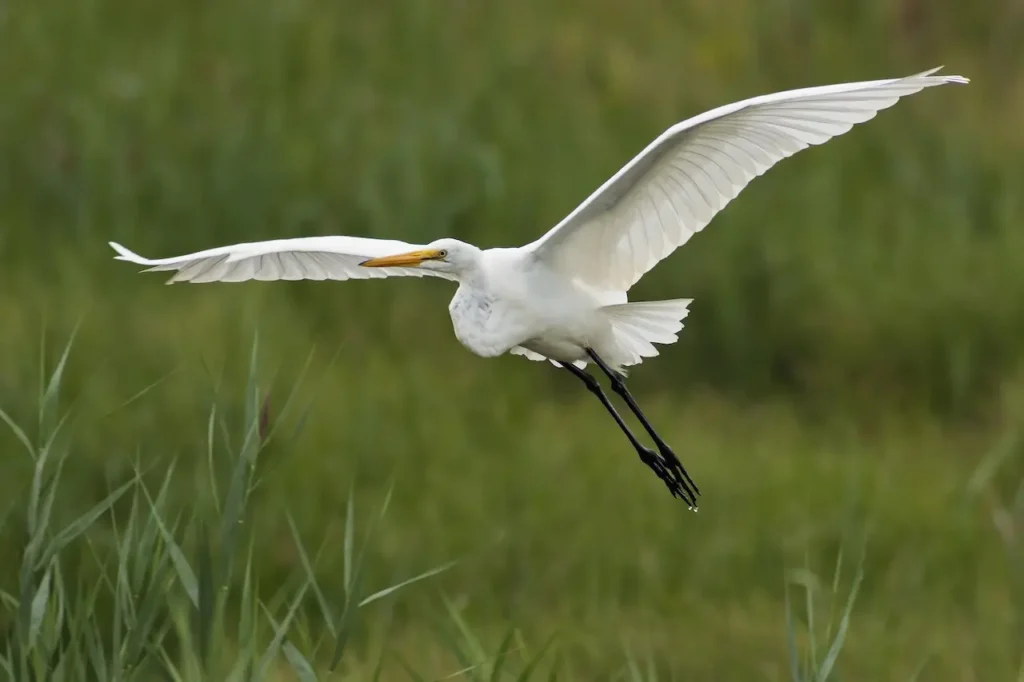
- Great Egret ( Ardea alba ) – One of the biggest with a soaring height. It has a long yellow bill and long black legs. The beautiful plumes of the Great Egret were once hunted, but populations are now recovering in many areas.
- Snowy Egret Egretta Thula — A smaller, more graceful egret with yellow feet. It is found in shallow water like mangroves, salt marshes, and other areas.
- Little Egret Egretta Garzetta – Widely distributed and often found in shallow water habitats. It uses foraging techniques like foot-stirring or chasing prey through muddy shallow water.
- Reddish Egret Egretta Rufescens — This species is known for its dramatic foraging behaviors (dancing on mudflats and spreading wings), and for having two color variants (dark or white). It lives in coastal lagoons and shallow saltwater.

These species share many characteristics – long legs, sharp bill, preference for shallow water – but each has also adapted to its habitat or behavior.
Appearance, Grace, and Behavior
The Rose-faced Parrot, also known as “Beautiful Parrot”, lives up to its name. This graceful bird, native to the lush forests in western Colombia and Ecuador, moves silently through the canopy. It is not loud, but its striking appearance and gentle behavior make it a rare jewel of the New World Tropics.
Ornamentation, feathers, and plumage
Many species have pure white plumage outside of breeding season. Egrets use their ornamental plumes to signal territory and display courtship during breeding. These plumes used to be highly valued, which led to an overhunting of egrets, particularly in the 19th and 20th centuries. The plume trade decimated a number of egret populations. In many areas, conservation, legal protection, and changing fashions helped them recover.
Beaks and Feet as well as Hunting Techniques
The sharp, pointed bills of egrets are well-adapted for catching small aquatic animals, fish, amphibians, and insects. They have long legs that allow them to wade through shallow water or in mudflats. Some species of birds have brightly colored feet, such as the Yellow Feet of the Snowy Egret. These feet may be useful in feeding.
Foot-stirring is a behavior that stands out: Egrets use their feet to shuffle the water or sediment to flush out hidden prey, such as mud or vegetation. Others hunt by waiting or stalking, while others stand still and wait. Reddish Egrets are very active, running, dancing, and shading water with their wings. They also chase prey.
Habitat & Distribution
The egret can be found in marshes and wetlands. They are also common along riverbanks. Some species use habitats that have been altered by humans, such as rice paddies or flooded fields. Snowy Egrets, for example, nest in trees and shrubs that are near water or coastal islands.
Many species have a wide range, but they migrate according to the season. The Great Egret, for example, breeds in temperate zones and migrates into warmer zones during the non-breeding season. Little Egrets are often migratory birds in Europe, especially in the northern part of their range.
Diet & Foraging
Egrets feed on whatever they can find, including fish, crustaceans, insects, and small amphibians. Snowy Egrets eat a variety of animals, including fish, crustaceans, and worms. They also eat insects, snails, amphibians, and small lizards. According to RSPB, this species is well documented.
Foraging methods include: hovering or using their wings to shade the water. They can adapt their feeding strategies to suit the wetland type they are in. According to Audubon Society, this species is well documented.
Reproduction and Life Cycle
Males will display their behaviors during breeding season: they may show off their ornamental plumes or perform vocalizations, flight displays, or vocalizations in order to attract mates. Nesting sites can be found in colonies, with trees, reedbeds, or shrubs close to water. In nests of sticks, reeds, or branches, females lay between 3 and 5 eggs. Both parents are involved in the incubation of eggs and the feeding of chicks. Many egrets fledge their young in 4-6 weeks, but they remain dependent on the parents for a longer period of time.
Guardians of Wetlands: Ecological Role
They are more than just beautiful birds. Egrets are important components of the wetland ecosystem:
- Population Control: They regulate fish, insect, and crustacean populations. They help maintain ecosystem balance by feeding on small prey.
- Indicator species: Healthy populations of egrets often reflect healthy wetlands – good water quality, abundance of prey, intact foliage. Egret populations often decline when wetlands are degraded.
- Support for biodiversity: Their nests, colonies, and foraging activity help cycle nutrients.
Egrets are facing threats.
While some egrets have recovered from the days of plume-hunting, threats today are still serious and growing in some cases.
- Wetland Degradation and Loss: Development, agricultural expansion, flooding control, drainage of marshes and wetlands, and other factors reduce the available habitat for breeding and foraging.
- Pollution Runoff of agricultural chemicals and heavy metals can cause water pollution, which in turn reduces aquatic life and fish. Plastic pollution and fishing line entanglements also pose a problem.
- Disturbance: Human disturbance–boating, walking near nesting colonies, noise–can cause nest abandonment or reduced breeding success.
- Predation & Competition: The loss of habitat can concentrate birds and make nests more vulnerable to predators such as crows. Also, invasive species may compete with chicks and eggs or even prey upon them. Competition with other wading bird species for nesting sites or feeding grounds.
- Climate change: Rising water levels can threaten coastal wetlands. Changes in precipitation and hydrology may affect food availability, as well as the nesting colonies. Storms near water can also wipe out a nesting colony.
Conservation Efforts & Successful Stories
Many success stories are being told, and efforts are ongoing to protect the egrets. These show that positive changes are possible when habitats are protected and human impacts are managed with care.
- The Great Egret, which was once nearly hunted to extinction by hunters for its plumes, has made a significant recovery due to new laws and protections.
- Many countries are stabilizing populations by protecting nesting areas, conserving wetland reserves, restoring degraded wetlands, and controlling invasive plants.
- Local regulations, enforcement, and awareness reduce threats such as nest disturbance, habitat destruction, or illegal hunting. In Massachusetts, Great Egrets have been monitored and protected by state and wildlife agencies.
Why Egrets are Important — They’re More than Just Beautiful
The Egret is not just beautiful, but it also offers important lessons.
- We can tell a lot about the health of wetlands by their presence or absence. Egret loss can mean a decline in water quality, a decrease in prey species, or deterioration of habitat structure.
- They provide ecosystem services, such as pest control, nutrient recycling, and supporting other species.
- Egrets are often depicted in literature, folklore, or art. It is hard not to be drawn to their calm patience, poised stance, and serene flight.
What We Can Do to Help
- Protect, restore, and preserve wetlands.
- Encourage policies to regulate the development, drainage, and pollution of wetlands.
- Promote sustainable farming practices that preserve wetland margins and avoid draining.
- Reduce pollution by reducing plastic waste and pesticide runoff.
- Respect nesting birds and avoid disturbing them.
- Support citizen science, conservation groups, and monitoring efforts – they help track egret population and habitat health.
Great Egret & Snowy Egret
-
The Great Egret has a large distribution. The plume trade severely impacted the species, but it has recovered in many areas. Despite this, wetland degradation and pollution, as well as human disturbance, continue to pose threats. In Europe and Africa, conservation efforts include managing breeding colonies and feeding grounds, and maintaining wetland water levels.
-
The Snowy Egret is a smaller egret that shows just how adaptable and opportunistic they can be. It is adapted to a variety of shallow water habitats and eats a variety of aquatic prey. It is also vulnerable to pollution, coastal development, and the removal of nesting trees.
Conclusion,
Few birds combine beauty, grace, and ecological importance like egrets. They are easy to admire because of their elegant form, long bill, graceful or snowy plumage, and elegant hunting. Behind that beauty, however, are complicated lives, complex journeys, breed requirements, and vulnerability.
The egret, with its long neck curled, standing motionless, in shallow water and waiting for e,e y, is a great example of balance, patience, and precision. Egrets are a symbol of wetlands, those vital ecosystems that provide us with clean water, protect that diversity, regulate flooding, and store carbon.
We must ensure that wetlands are healthy and pollution is reduced, so future generations can see and hear egrets. The egrets’ tranquility may be deceiving, but they depend on our collective conservation efforts and respect for nature.