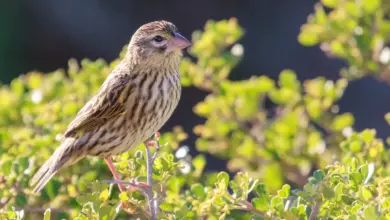
The Rufous-bellied Helmetshrike, also known as the Gabon Helmetshrike (Prionops rufiventris), is a striking passerine bird that inhabits the tropical forests of Central Africa. Belonging to the family Prionopidae, this species is notable for its vivid coloration, social behavior, and distinctive vocalizations. Although often overshadowed by more widespread helmetshrike species, the Rufous-bellied Helmetshrike offers a fascinating glimpse into the diverse avian life of Africa’s dense forest ecosystems. This article delves into the species’ taxonomy, range, physical characteristics, behavior, breeding habits, and conservation status, providing a comprehensive overview for nature enthusiasts and birdwatchers alike.
Scientific Classification
The Rufous-bellied Helmetshrike is scientifically classified as Prionops rufiventris. It belongs to the family Prionopidae, which comprises helmetshrikes—a group of passerine birds known for their distinctive head ornaments and social nature. The genus Prionops includes several species distributed across sub-Saharan Africa, all sharing similar morphological traits such as broad wings and stout bills adapted for insectivory.
Historically, the Rufous-bellied Helmetshrike has sometimes been considered a subspecies or a population variant of the Chestnut-bellied Helmetshrike (Prionops caniceps), which is native to West Africa. However, current taxonomic consensus generally recognizes Prionops rufiventris as a distinct species, primarily based on differences in plumage coloration, vocalizations, and geographic range. Two recognized subspecies of the Rufous-bellied Helmetshrike are P. r. rufiventris, found in the western part of the range, and P. r. mentalis, distributed further east.



Geographic Range & Distribution
The Rufous-bellied Helmetshrike is native to the tropical forests of Central Africa, with a range extending from southern Cameroon and mainland Equatorial Guinea through Gabon, the Republic of Congo, and parts of the Democratic Republic of Congo (DRC). The western subspecies, P. r. rufiventris, inhabits southern Cameroon, mainland Equatorial Guinea, southwestern Central African Republic, northern and western Gabon, the Angolan exclave of Cabinda, and parts of the Republic of Congo and northwestern DRC. Meanwhile, the eastern subspecies, P. r. mentalis, is found in central and eastern DRC and western Uganda, with historical records in Rwanda, though its current presence there is uncertain.
This species favors lowland tropical forests, typically occupying primary and mature secondary forests. It is also known to inhabit gallery forests along rivers, where the dense canopy provides ample foraging opportunities. The Rufous-bellied Helmetshrike is usually found from sea level up to altitudes of approximately 1,450 meters, favoring dense, humid forest environments that support rich insect populations. Despite its relatively limited range, the species is considered locally common within suitable habitats.
Physical Description
The Rufous-bellied Helmetshrike is a medium-sized bird, measuring between 20 and 22 centimeters in length. It typically weighs around 50 to 70 grams, although weight can vary slightly depending on subspecies and individual condition. Its wingspan generally ranges from 28 to 33 centimeters, with broad, rounded wings that facilitate agile flight through dense forest canopies.
Adults of the nominate subspecies, P. r. rufiventris, display a striking combination of colors. The upperparts, including the back and throat, are glossy black, contrasting vividly with the rich rufous or reddish-brown coloration of the underparts. A narrow white breastband separates the dark upper chest from the belly. The head shows a pale blue-grey coloration on the top and sides, with a similarly colored chin. One of the most distinctive features is the presence of bushy, whitish feathers on the forehead, forming a “helmet” that gives the bird its name. The wings bear a conspicuous white band across the primaries, further enhancing its distinctive appearance.
The bill, legs, and feet are bright orange-red, matching the bare skin ring around the eyes, which are yellow, creating a vivid facial pattern. The eastern subspecies, P. r. mentalis, differs slightly with darker underparts and a grey-brown eye, while juvenile birds tend to be duller overall, with a pale buff-white breast and belly and a mostly whitish head. Juveniles also have a blackish bill and dark orange legs and feet, lacking the bright coloration seen in adults.
Behavior & Diet
The Rufous-bellied Helmetshrike is known for its social and vocal nature. These birds are often observed in pairs or small groups, displaying cooperative behaviors such as communal foraging and group vigilance. They frequently participate in mixed-species feeding flocks, which allow them to exploit food resources more efficiently while benefiting from increased protection against predators.
Foraging typically occurs in the mid-levels of the forest canopy, between 10 and 30 meters above the ground. The Rufous-bellied Helmetshrike employs a combination of short flights and gleaning techniques to capture prey. It actively moves through small branches and foliage, snatching insects and other arthropods from leaves, bark, and twigs. Its diet primarily consists of a wide variety of insects, including beetles, ants, caterpillars, and spiders, although it may opportunistically feed on other small invertebrates as well.
Vocal communication plays a crucial role in the species’ social dynamics. The Rufous-bellied Helmetshrike produces a variety of complex calls, including chattering and whistling notes. These calls are often delivered in duets or choruses, suggesting a high level of social coordination within groups. Additionally, the birds create non-vocal sounds such as bill-snapping and wing-generated noises during flight, which may serve as further communication signals or territorial displays.
Breeding & Reproduction
Although detailed studies on the breeding behavior of the Rufous-bellied Helmetshrike are limited, available information suggests that this species exhibits cooperative breeding, a relatively rare strategy among birds. Groups typically consist of one dominant breeding pair supported by “helpers,” which are often related individuals that assist with nest construction, incubation, and chick rearing. This social structure enhances reproductive success by increasing the survival rate of offspring through shared parental investment. According to RSPB, this species is well documented.
Nesting usually takes place within the dense forest canopy or in well-concealed locations among tangled branches. The nest is constructed from twigs, leaves, and other plant materials, forming a cup-shaped structure. Clutch size is generally small, with females laying between two and three eggs. Both parents, along with helpers, participate in incubating the eggs and feeding the chicks after hatching. According to eBird, this species is well documented.
The breeding season varies geographically but often coincides with periods of increased insect abundance, ensuring adequate food supply for growing chicks. The young fledge after several weeks but may remain with the group for some time, learning foraging skills and social behaviors essential for survival.
Conservation Status
The Rufous-bellied Helmetshrike is currently classified as Least Concern on the International Union for Conservation of Nature (IUCN) Red List. This status reflects its relatively wide distribution across Central Africa and its presence in several protected forest areas. The species appears to tolerate some habitat disturbance, benefiting from mature secondary forests in addition to primary forest.
Nevertheless, ongoing threats to tropical forest habitats in Central Africa—such as logging, agricultural expansion, and infrastructure development—pose potential risks to the Rufous-bellied Helmetshrike’s long-term survival. Habitat fragmentation could isolate populations, reducing genetic diversity and increasing vulnerability to environmental changes. Continued monitoring of population trends and habitat quality is essential to ensure that the species remains secure.
Conservation efforts focused on preserving large tracts of intact forest, especially in biodiversity hotspots like Gabon and the Congo Basin, are crucial. Maintaining the ecological integrity of these habitats benefits not only the Rufous-bellied Helmetshrike but also many other forest-dependent species.
Interesting Facts
The Rufous-bellied Helmetshrike’s distinctive “helmet” of bushy white feathers on its forehead is one of its most charming features and is thought to play a role in visual communication among group members. This feature also lends the family its common name, highlighting the importance of head ornamentation in their social interactions.
Another remarkable trait is the species’ complex vocal repertoire. The duets and choruses performed by groups serve multiple functions, including strengthening social bonds, coordinating group movements, and defending territories. Observers often describe these vocalizations as musical and intricate, making the Rufous-bellied Helmetshrike a favorite subject for bioacoustic studies.
Unlike some other helmetshrikes that have more solitary habits, the Rufous-bellied Helmetshrike’s cooperative lifestyle provides an excellent example of avian social complexity. The involvement of helpers in raising young is a fascinating adaptation that underscores the benefits of group living in dense forest environments.
Finally, the bird’s bright orange-red bill, legs, and eye ring create a vivid contrast against its darker plumage, making it a visually striking species that attracts the attention of birdwatchers and photographers exploring Central Africa’s rich avifauna.
In summary, the Rufous-bellied Helmetshrike is a remarkable bird species embodying the intricate relationships and adaptations found within Central Africa’s tropical forests. Its unique appearance, cooperative social behavior, and vibrant vocalizations make it a captivating subject for anyone interested in the natural world. Conservation of its forest habitat remains vital to ensure that this charismatic bird continues to thrive for generations to come.