The Madagascar Marsh Harrier (Circus macrosceles) is a striking bird of prey that belongs to the marsh harrier group within the larger harrier family. This raptor is endemic to the unique island of Madagascar and the nearby Comoro Islands, both located in the Indian Ocean. Once thought to be a subspecies of the Réunion Harrier (Circus maillardi), the Madagascar Marsh Harrier is now widely recognized as a distinct species due to differences in morphology, behavior, and genetic studies. Known also as the Malagasy Harrier or Malagasy Marsh Harrier, this bird is a fascinating example of island adaptation and an important predator within its ecosystem.
Scientific Classification
The Madagascar Marsh Harrier is classified within the family Accipitridae, which includes hawks, eagles, and other diurnal birds of prey. Its genus, Circus, is characterized by harriers, a group of slender, medium-sized raptors well known for their low, gliding flight over open habitats. The species name macrosceles derives from Greek roots meaning “long legs,” a reference to the harrier’s relatively elongated legs compared to other raptors. This species was first described by the ornithologist Charles Lucien Bonaparte in 1855.
Taxonomic debates have long surrounded the Madagascar Marsh Harrier, as it shares many features with the Réunion Harrier. However, recent molecular analyses and detailed morphological comparisons have supported its status as a separate species. This distinction is important for conservation efforts, as it highlights the unique biodiversity of Madagascar and stresses the need to protect its endemic species.


Geographic Range & Distribution
The Madagascar Marsh Harrier is found almost exclusively on the island of Madagascar and the Comoro Islands, a volcanic archipelago situated northwest of Madagascar in the Mozambique Channel. Within Madagascar, it inhabits a variety of wetland and grassland ecosystems, ranging from sea level up to elevations of approximately 1,800 meters. While it is distributed throughout much of the island, it is notably absent from the arid southern regions where suitable habitat is scarce.
In Madagascar, the largest populations tend to occur in the northwestern marshlands, where extensive wetlands provide ideal hunting and nesting grounds. The Comoro Islands populations are more scattered and adapt to a wider range of habitats, including drier areas and forest edges. Historically, the species has been recorded on all four main Comoro islands—Grande Comore, Mohéli, Anjouan, and Mayotte. However, recent surveys have failed to confirm its presence on Mayotte, raising concerns about local extirpations.
The Madagascar Marsh Harrier’s distribution is closely tied to the availability of open marshes, grasslands, and wetlands—habitats increasingly threatened by human activity. Its presence across these islands underscores the importance of preserving a mosaic of wetland and grassland ecosystems for maintaining biodiversity in this unique biogeographic region.
Physical Description
The Madagascar Marsh Harrier is a medium-sized raptor measuring approximately 55 to 59 centimeters in length, with females generally larger and heavier than males by up to 13%. The wingspan ranges between 120 and 140 centimeters, giving it a broad, buoyant flight profile typical of harriers. Males typically weigh between 600 and 800 grams, while females can weigh up to 900 grams.
Adult males exhibit a distinctive plumage pattern: the back is dark blackish-brown, contrasted by a greyer head marked with fine dark streaks. Their underparts and rump are largely whitish, creating a striking contrast with the darker upperparts. The tail is grey with prominent dark barring. The forewings and wingtips are predominantly blackish, while the secondaries—the shorter feathers on the upper wing—are grey with dark bars, contributing to a layered wing appearance during flight.
Females tend to be browner overall with less contrast between head and body coloration. Their plumage is more cryptic, which may provide better camouflage when nesting on the ground. Juvenile birds resemble females but often show more streaking and mottling, which gradually changes as they mature.
In comparison to its close relative, the Réunion Harrier, the Madagascar Marsh Harrier is generally larger with longer legs and wings. The Réunion Harrier has a darker overall coloration, shorter legs, and more rounded wings, adaptations likely reflecting differences in habitat and hunting strategies between the species.
Behavior & Diet
The Madagascar Marsh Harrier is a skilled and versatile hunter, adapted to exploit a variety of prey across different habitats. It primarily hunts by flying low and slowly over open marshes and grasslands, using its keen eyesight to detect prey. When it spots potential food, it performs a rapid, controlled dive to capture it. The bird is also capable of hunting over forest canopies or more densely vegetated areas, demonstrating adaptability in its foraging behavior.
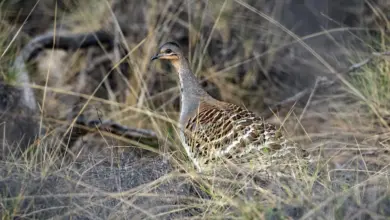
Its diet is varied, reflecting the diversity of prey available within its habitats. Birds make up a significant portion of its diet, with the Madagascar Partridge (Francolinus madagascariensis) being a commonly targeted species. This preference for ground-dwelling birds highlights the harrier’s ability to hunt in open terrestrial environments. In addition to birds, the Madagascar Marsh Harrier feeds on small reptiles such as lizards, amphibians including frogs, various rodents, and large insects.
This dietary flexibility is crucial for survival in the fluctuating wetland environments of Madagascar and the Comoros. The harrier’s role as a mid-level predator helps regulate populations of small vertebrates and insects, contributing to the ecological balance of its habitats.
Breeding & Reproduction
The breeding season of the Madagascar Marsh Harrier coincides with the austral spring and early summer months, typically from September to January. During this period, harriers establish territories in suitable marshes and grasslands, often returning to the same nesting sites year after year if conditions remain favorable. According to BirdLife International, this species is well documented.
Nests are constructed on the ground or low in bushes within dense marsh vegetation. The nest itself is a simple structure composed of grass, reeds, and stems, carefully arranged to provide some concealment from predators and environmental elements. Ground nesting exposes eggs and chicks to threats, making camouflage and strategic nest placement critical for reproductive success. According to RSPB, this species is well documented.
Females usually lay between two and four eggs, which are white and sometimes show faint markings. The incubation period lasts approximately 32 to 34 days, during which the female primarily incubates while the male provides food. After hatching, the young are altricial and depend entirely on parental care. They fledge after around 42 to 45 days but may remain dependent on their parents for some weeks thereafter as they learn to hunt and navigate their environment.
Harriers are known for their monogamous pair bonds during the breeding season, although detailed studies on the Madagascar Marsh Harrier’s mating system remain limited. Breeding success can be influenced by habitat quality, prey availability, and predation pressures.
Conservation Status
The Madagascar Marsh Harrier is currently classified as Vulnerable on the International Union for Conservation of Nature (IUCN) Red List. This status reflects concerns over its relatively small and declining population, estimated at between 250 and 999 mature individuals. The species faces several threats, primarily habitat loss and degradation due to agricultural expansion, wetland drainage, and uncontrolled burning of grasslands.
Hunting pressure also contributes to its decline, as the bird is sometimes targeted by humans either for sport or due to perceived threats to poultry. Additionally, the destruction of marshes for rice cultivation and other human activities reduces the availability of suitable nesting and hunting grounds.
Conservation efforts for the Madagascar Marsh Harrier focus on protecting wetland habitats and raising awareness of the species’ ecological importance. Several protected areas in Madagascar contain suitable marshlands, but enforcement of conservation laws remains challenging. Research on population trends and habitat use is ongoing, aiming to inform more effective management strategies.
Given its restricted range and vulnerability to environmental changes, the Madagascar Marsh Harrier serves as an indicator species for the health of Madagascar’s wetland ecosystems. Protecting this harrier benefits many other species that rely on these threatened habitats.
Interesting Facts
One of the fascinating aspects of the Madagascar Marsh Harrier is its remarkable flight style. Like other harriers, it flies with wings held in a shallow V-shape, gliding low over the ground with slow, buoyant wingbeats. This distinctive flight allows it to cover large areas efficiently while scanning for prey.
Another intriguing behavior is its adaptability to different environments within its range. While primarily a marshland specialist, this harrier can adjust to drier habitats on the Comoro Islands and even hunt along forest edges, demonstrating ecological flexibility unusual for many harrier species.
Unlike many raptors, which build nests high in trees, the Madagascar Marsh Harrier’s preference for ground nesting makes it particularly vulnerable to predation from introduced species such as rats and feral cats. This vulnerability highlights the broader challenges invasive species pose to island ecosystems.
Finally, the Madagascar Marsh Harrier plays an important cultural role in local communities, often viewed with a mix of respect and superstition. Its presence is sometimes considered an omen or a symbol of the health of the natural environment, underscoring the deep connections between wildlife and human cultures in Madagascar and the Comoros.
In conclusion, the Madagascar Marsh Harrier (Circus macrosceles) is a captivating bird of prey that embodies the unique biodiversity of Madagascar and the Comoro Islands. With its distinctive appearance, specialized hunting techniques, and reliance on threatened wetland habitats, it is both an ecological sentinel and a species in need of continued conservation attention. Understanding its biology and protecting its environment are vital steps toward ensuring that future generations can witness this elegant raptor soaring over the marshes of the Indian Ocean islands.