Jays are among the most striking and intelligent birds found across various parts of the world. Known for their vibrant blue plumage and lively behavior, the birds commonly referred to as “blue jays” belong to the family Corvidae, which includes crows, ravens, and magpies. Jays captivate birdwatchers and nature photographers alike with their bold colors, vocal abilities, and fascinating behaviors. This photo gallery celebrates the diversity of jay species, focusing especially on the well-known Blue Jay, while exploring the broader group’s taxonomy, distribution, physical traits, behaviors, and conservation status.
Scientific Classification
Jays belong to the family Corvidae, a group renowned for some of the most intelligent birds in the avian world. The term “jay” encompasses several genera, but the most familiar “blue jay” is scientifically named Cyanocitta cristata. This species is a member of the order Passeriformes, commonly known as perching birds or songbirds. Within the genus Cyanocitta, there are two primary species: the Blue Jay (C. cristata) native to North America, and the Steller’s Jay (C. stelleri), found primarily in western North America. Other jay species include the Eurasian Jay (Garrulus glandarius), the Green Jay (Cyanocorax yncas) of Central and South America, and several members of the genus Aphelocoma, such as the Florida Scrub-Jay (A. coerulescens).
These birds share key traits typical of corvids, including complex social behaviors, problem-solving skills, and a varied diet. The classification highlights their evolutionary relationships with other corvids, emphasizing their adaptability and ecological significance.




Geographic Range & Distribution
The Blue Jay (Cyanocitta cristata) primarily inhabits eastern and central North America, ranging from southern Canada through the eastern United States and into northern Mexico. Its range extends westward to the Great Plains and as far south as parts of Florida and northeastern Mexico. Blue Jays prefer mixed woodlands, particularly those with oak trees, but they are also common in suburban and urban areas where trees and bird feeders are plentiful.
Other jay species occupy different ranges globally. The Steller’s Jay is found in western North America, from Alaska through the Rocky Mountains down to Central America, favoring coniferous forests. The Eurasian Jay (Garrulus glandarius) inhabits much of Europe and parts of Asia, thriving in deciduous and mixed forests. Central and South America are home to colorful jays like the Green Jay and various Aphelocoma species, which live in woodlands and scrub habitats.
Jays are adaptable birds, often able to thrive near human populations as long as their basic habitat needs—such as ample trees for nesting and food sources—are met. Their widespread distribution reflects their ecological versatility.
Physical Description
The Blue Jay is notable for its brilliant blue coloration, which contrasts with white underparts and black markings around the neck and face. Adult Blue Jays measure approximately 25 to 30 centimeters (10 to 12 inches) in length, with a wingspan ranging from 34 to 43 centimeters (13 to 17 inches). They typically weigh between 70 to 100 grams (2.5 to 3.5 ounces). The blue coloration is not due to pigment but rather the microscopic structure of feathers that refracts light, creating the vivid hue.
Blue Jays have a distinctive crest on their head, which they can raise or lower depending on their mood or behavior. Their strong, stout bill and robust legs aid in foraging and manipulation of food. The tail is long and rounded with white tips on the tail feathers, which are visible in flight.
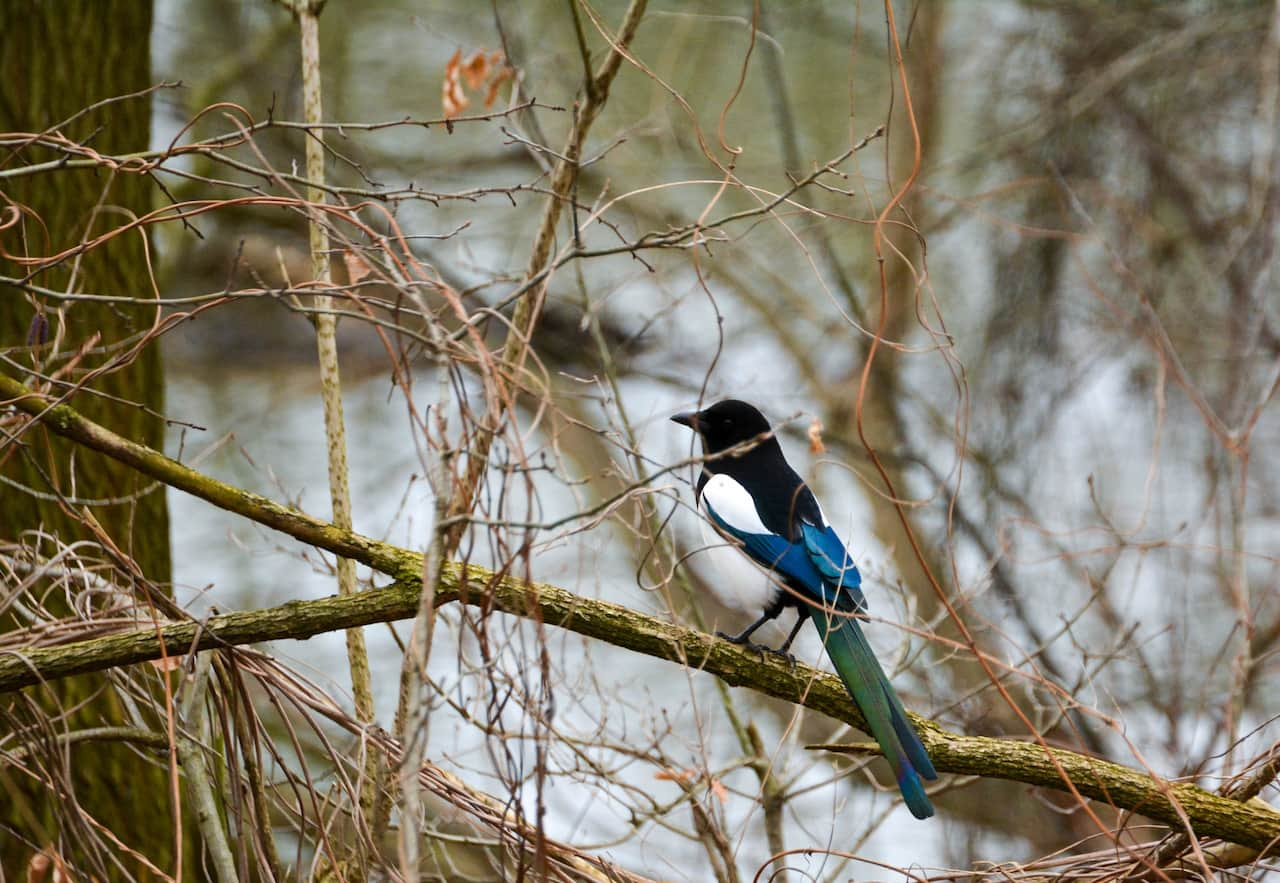
Other jay species exhibit varying colors and sizes. For example, the Steller’s Jay is darker with deep blue body feathers and a black head and crest. The Eurasian Jay is less vividly blue and instead sports pinkish-brown plumage with blue and black wing patches. The Green Jay is a spectacular combination of bright green, blue, and yellow hues. Despite differences in coloration, most jays share similar body structures adapted for agile movement through trees and complex food handling.
Behavior & Diet
Jays are highly intelligent and social birds known for their vocal communication, complex social structures, and resourcefulness. Blue Jays, in particular, exhibit a wide range of calls, including loud jeers, whistles, and mimicry of other bird species, including hawks. This mimicry may serve to deceive other birds or alert conspecifics to predators.
These birds are omnivorous and opportunistic feeders. Their diet includes acorns, nuts, seeds, fruits, insects, small vertebrates, and occasionally eggs or nestlings of other birds. Acorns are a favorite food, and Blue Jays are famous for their role in oak forest regeneration because they cache thousands of acorns each autumn, some of which grow into new oak trees. Jays use their strong bills to crack open nuts and their sharp eyesight to spot food items.
Jays are diurnal and spend much of their day foraging on the ground and in trees. They are also known for their boldness and curiosity, often approaching bird feeders and human-inhabited areas. Socially, Blue Jays can be seen in family groups or larger flocks during non-breeding seasons, which may help reduce predation risk and improve foraging success.
Breeding & Reproduction
Blue Jays typically breed from late April through July, with timing varying by geographic location. They build sturdy, cup-shaped nests from twigs, grass, and mud, often placed in the crotch of trees or dense shrubs 3 to 20 meters above the ground. Both male and female participate in nest building, incubation, and feeding of the young. According to RSPB, this species is well documented.
The female usually lays between three to six eggs, which are pale blue or greenish with brown spots. The incubation period lasts about 16 to 18 days, primarily carried out by the female, while the male provides food and protection. After hatching, nestlings are altricial—helpless and featherless—and depend entirely on parental care. Both parents feed the young for approximately 17 to 21 days until they fledge, though juveniles may remain with parents for some time afterward to learn essential survival skills. According to eBird, this species is well documented.
Jays are known for their territorial behavior during the breeding season, defending their nesting area vigorously against potential threats. Their intelligence and adaptability contribute to their relatively high reproductive success compared to many other songbirds.
Conservation Status
The Blue Jay is currently classified as Least Concern on the International Union for Conservation of Nature (IUCN) Red List. Its populations are stable and even increasing in some areas, thanks in part to their adaptability to suburban and urban environments as well as the widespread availability of food sources such as bird feeders. Habitat loss has limited impacts on Blue Jays compared to more specialized species because they thrive in a variety of habitats.
However, some jay species face greater conservation challenges. For example, the Florida Scrub-Jay (Aphelocoma coerulescens) is listed as Threatened due to habitat destruction and fragmentation of its native scrub habitats. Conservation efforts for these species include habitat restoration and protection, as well as public awareness campaigns.
Overall, jays play a vital role in their ecosystems as seed dispersers, predators of insects, and indicators of healthy woodland environments. Monitoring their populations helps conservationists track forest health and biodiversity.
Interesting Facts
Jays are among the most intelligent birds, rivaling primates in problem-solving and memory. Their ability to cache food and remember thousands of hiding places months later demonstrates remarkable spatial memory. This behavior not only helps them survive harsh winters but also contributes to forest regeneration, as many cached seeds are forgotten and germinate.
Blue Jays are also known for their loud and varied vocalizations, which can include imitations of hawks. This mimicry may serve as a defense mechanism to scare away other birds or predators. Their social behavior is complex, with evidence suggesting that they recognize individual neighbors and adjust their interactions accordingly.
Additionally, jays have been observed using tools and engaging in playful activities, indicating cognitive abilities that are still being explored by scientists. Their striking blue coloration is a result of feather structure rather than pigment, a phenomenon known as structural coloration, which is common among many birds.
For wildlife photographers, capturing the vibrant plumage and dynamic behavior of Blue Jays provides an exciting challenge. Their boldness and curiosity often bring them close to humans, making them a favorite subject for birdwatchers and nature lovers alike.
In summary, jays are fascinating birds that embody intelligence, adaptability, and vivid beauty. Their ecological roles and captivating behaviors make them a worthy focus of study and admiration.
Whether observed in a backyard feeder or deep within a forest, the Blue Jay and its relatives offer endless opportunities for learning and appreciation. This photo gallery celebrates their diversity and invites viewers to explore the remarkable world of these blue-feathered woodland wonders.