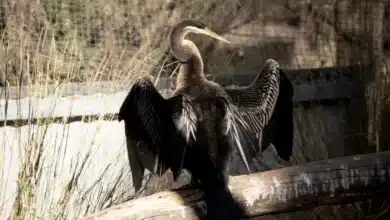
Merganser Ducks are a fascinating group of aquatic birds belonging to the family Anatidae, known primarily for their specialized fish-eating habits. These striking seabirds are often referred to as “sawbills” due to the distinctive serrated edges along their long, narrow bills that function like teeth, allowing them to grip slippery prey efficiently. Mergansers are true diving ducks, adept at pursuing fish underwater using their streamlined bodies and powerful legs. Their preference for riverine and coastal habitats, combined with their unique adaptations, makes them a captivating subject for birdwatchers, wildlife photographers, and nature enthusiasts alike.
Scientific Classification
The genus Mergus encompasses the true mergansers, a group within the subfamily Anatinae of the Anatidae family. The name Mergus is derived from Latin, historically used to describe sea ducks or diving ducks. This genus is closely related to other diving ducks but is distinguished by its serrated bill, an evolutionary adaptation for piscivory. Among the five recognized species of mergansers, the most familiar include the Mergus merganser (Common or Goosander), Mergus serrator (Red-breasted Merganser), Mergus octosetaceus (Brazilian Merganser), Mergus squamatus (Chinese Merganser), and the extinct Mergus australis (Auckland Islands Merganser).
The Common Merganser and Red-breasted Merganser are the most widespread and well-studied. They share morphological traits with other sawbills such as the Hooded Merganser (Lophodytes cucullatus) and the Smew (Mergellus albellus), which are often grouped with them due to similar feeding adaptations, though they belong to different genera. The evolutionary history of mergansers highlights a fascinating diversification linked to their fish-based diet and aquatic lifestyles.


Geographic Range & Distribution
Merganser ducks occupy a broad geographic range across the Northern Hemisphere, with species adapted to various temperate and subarctic environments. The Common Merganser (Mergus merganser) is found throughout much of Europe, northern Asia, and North America, breeding in forested lakes and rivers from Scandinavia and Siberia to Alaska and the northern United States. During winter, many Common Mergansers migrate southward to coastal waters, large lakes, and rivers that remain ice-free.
The Red-breasted Merganser (Mergus serrator) is more coastal and marine-oriented, inhabiting northern North America, Greenland, Europe, and Asia. This species breeds in freshwater lakes and rivers but is notable for its wintering habits in sheltered coastal bays, estuaries, and fjords. It is one of the most widespread mergansers, often seen far out at sea, especially during migration.
In South America, the Brazilian Merganser (Mergus octosetaceus) is a rare and highly localized species found in fast-moving rivers and streams of central and eastern Brazil. It is one of the world’s rarest waterfowl, restricted to a few fragmented habitats.
The Chinese Merganser (Mergus squamatus) occupies temperate East Asia, breeding in forested freshwater habitats in northeastern China, Korea, and parts of Russia, with wintering grounds extending southward into southern China and Japan.
Historically, the now extinct Auckland Islands Merganser (Mergus australis) was endemic to New Zealand’s subantarctic Auckland Islands, last sighted in the early 20th century and believed to have been wiped out by introduced predators.
Physical Description
Merganser ducks are medium to large diving ducks characterized by elongated bodies, slender necks, and distinctive bills adapted for catching fish. Adult males are typically more brightly colored than females, which often sport more cryptic, mottled plumage to provide camouflage during nesting.
The Common Merganser measures approximately 58–72 cm (23–28 inches) in length, with a wingspan of 86–97 cm (34–38 inches) and an average weight ranging from 1.2 to 2.1 kg (2.6 to 4.6 lbs). Males display a striking white body with a dark green head and a narrow red bill edged with serrations. Females have gray bodies and reddish-brown heads with a shaggy crest at the back of the head.
The Red-breasted Merganser is slightly smaller, measuring 51–64 cm (20–25 inches) in length with a wingspan of 71–86 cm (28–34 inches) and weighing between 0.9 and 1.5 kg (2.0 to 3.3 lbs). Males showcase a spiky, iridescent green head, a white neck ring, and a rusty breast, while females are grayish with a reddish-brown head and a shaggy crest.
The Brazilian Merganser is notable for its compact size, measuring around 54 cm (21 inches) in length and weighing approximately 1.1 kg (2.4 lbs). It has a dark body with a white neck band and a distinctive red bill.
Mergansers’ bills are their hallmark feature: long, narrow, and serrated on the edges like a saw, perfect for gripping slippery fish. Their legs are positioned toward the rear of the body, aiding in diving but making them somewhat awkward on land. Their feet are webbed for efficient swimming, and their plumage is water-resistant, allowing them to remain buoyant and dry.
Behavior & Diet
Mergansers are expert divers and swimmers, capable of pursuing fish underwater with remarkable agility. Their diet is predominantly piscivorous, consisting mainly of small to medium-sized fish. Common prey species include minnows, perch, trout, and small salmonids, but they are opportunistic feeders and will consume a variety of aquatic animals depending on availability.
In addition to fish, mergansers occasionally eat aquatic insects, larvae, crustaceans such as crayfish and crabs, mollusks, and amphibians. Juvenile birds may rely more on invertebrates during their early development. Their serrated bills help prevent prey from slipping away, a crucial adaptation given the slippery nature of their diet.
During foraging, mergansers dive from the water surface and propel themselves underwater using powerful webbed feet, swimming with their bodies streamlined to minimize resistance. They can stay submerged for upwards of 30 seconds and dive to depths of 5 to 15 meters (16 to 50 feet), though most hunting occurs in shallower waters.
Outside of feeding, mergansers are often seen resting or preening on rocks or logs near water. They are generally shy birds but may become more tolerant of humans in certain areas, especially where they are protected. Vocalizations vary by species but often include harsh, raspy calls used during courtship or territorial displays. According to Cornell Lab of Ornithology, this species is well documented.
Breeding & Reproduction
Mergansers typically breed in forested or rocky riverine habitats, nesting in tree cavities, abandoned woodpecker holes, or on the ground near water. The female is solely responsible for nest selection, incubation, and raising the young, while males usually depart after the breeding season. According to eBird, this species is well documented.
Breeding season timing varies by species and latitude but generally occurs in spring to early summer. Females lay between 6 and 12 pale greenish or whitish eggs per clutch. Incubation lasts about 30 to 35 days, during which the female remains highly secretive and protective.
Once hatched, merganser ducklings are precocial and leave the nest within 24 hours, following their mother to water where they learn to dive and forage almost immediately. Ducklings feed primarily on aquatic insects and small fish during their growth period. Parental care continues for several weeks until the young are capable of independent survival.
Mergansers reach sexual maturity between one and two years old. Courtship behaviors often include elaborate displays such as head shaking, crest raising, and vocalizations to attract mates. The species-specific plumage patterns become more pronounced during the breeding season, especially in males.
Conservation Status
The conservation status of merganser species varies widely. According to the International Union for Conservation of Nature (IUCN), the Common Merganser and Red-breasted Merganser are listed as Least Concern due to their wide distribution and relatively stable populations. These species benefit from protected freshwater and coastal habitats in many parts of their range.
The Brazilian Merganser, however, is classified as Critically Endangered. Its population is estimated at fewer than 250 mature individuals, making it one of the rarest waterfowl worldwide. Habitat loss from deforestation, pollution, and hydrological changes poses severe threats, and conservation efforts focus on habitat protection and restoration.
The Chinese Merganser is considered Vulnerable, with threats including habitat degradation, pollution, and hunting pressures in parts of its range. Conservation programs in China and neighboring countries aim to monitor populations and preserve breeding habitats.
The Auckland Islands Merganser is extinct, with its last confirmed sighting around 1902. The introduction of invasive species such as rats and cats contributed significantly to its decline.
Overall, mergansers are sensitive indicators of freshwater ecosystem health, and their presence often reflects the quality of aquatic habitats. Conservation measures that protect rivers, lakes, estuaries, and coastal environments are essential for ensuring the continued survival of these remarkable birds.
Interesting Facts
Mergansers are sometimes called “fish hawks” of the duck world due to their piscivorous diet and hunting prowess. Their serrated bills are unique among ducks and allow them to grip fish tightly, preventing escape in the water. This adaptation is comparable to the teeth of a saw, hence the nickname “sawbills.”
The Red-breasted Merganser is known for its striking courtship display, where males perform elaborate head shaking and crest raising accompanied by distinctive calls to attract females. These displays can be a favorite spectacle for birdwatchers during the breeding season.
Unlike many other ducks, mergansers have legs placed far back on their bodies, an adaptation for diving but one which makes walking on land awkward and difficult. They are graceful underwater but tend to waddle clumsily when on shore.
During winter, mergansers can be found wintering in coastal marine environments, sometimes braving harsh weather and freezing temperatures. Their dense plumage and a layer of insulating fat help them survive cold waters.
In some indigenous cultures of North America, the Common Merganser is featured in art and folklore, often symbolizing adaptability and resourcefulness due to its aquatic hunting skills.
Finally, merganser ducklings are remarkable divers from a very young age, often diving within hours after hatching, an impressive survival trait that helps them evade predators and find food quickly.
In conclusion, merganser ducks are exceptional birds that combine specialized anatomy, remarkable behavior, and diverse habitats across the globe. Their unique adaptations to a fish-based diet and aquatic lifestyle make them a compelling group for anyone interested in waterfowl ecology and conservation. Observing these elegant divers offers insight into the delicate balance of aquatic ecosystems and the importance of preserving habitats for future generations of wildlife enthusiasts.