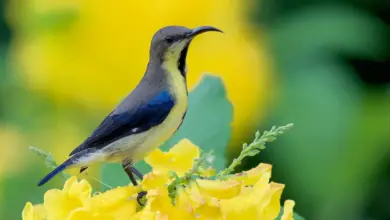
The White-Spectacled Bulbul, also commonly known as the Yellow-vented Bulbul, Pycnonotus xanthopygos, is a vibrant and adaptable bird species that captures the attention of birdwatchers and nature lovers across the Middle East. Slightly larger than a common sparrow, this bulbul is renowned for its distinctive white eye-ring, which gives it its “white-spectacled” name, and its lively presence in a variety of habitats ranging from urban gardens to arid scrublands. Known for its melodious calls and sociable behavior, the White-Spectacled Bulbul plays an important role in seed dispersal and ecosystem dynamics within its range.
Scientific Classification
The White-Spectacled Bulbul belongs to the family Pycnonotidae, a group commonly referred to as bulbuls, which comprises about 150 species mainly distributed across Africa and Asia. Its scientific name, Pycnonotus xanthopygos, reflects distinctive features of the bird: “xantho” meaning yellow and “pygos” meaning rump or vent, referring to the bright yellow patch on its ventral area. Within the genus Pycnonotus, this species is closely related to other yellow-vented bulbuls, such as the Pycnonotus goiavier found in Southeast Asia, but it is geographically separated and adapted to the arid and semi-arid environments of the Middle East.
Taxonomically, the White-Spectacled Bulbul was historically often confused with the Yellow-vented Bulbul (Pycnonotus goiavier) due to their similar vent coloration, but molecular studies have confirmed their distinction. This bird’s classification is well established within the order Passeriformes, which encompasses perching birds and songbirds, making it a part of one of the largest avian orders globally.






Geographic Range & Distribution
The White-Spectacled Bulbul occupies a broad but specific range across the Middle East, making it the most common bulbul species in countries such as Israel and Lebanon. Its distribution stretches from the Mediterranean coastal regions of southern Turkey, extending southwards through Syria, Lebanon, Israel, Jordan, the Sinai Peninsula, and into the Arabian Peninsula, including parts of western, central, and southern Arabia. In Turkey, the bird’s presence is concentrated along the Mediterranean coast, from the area near Patara and Gelemiş close to Kaş in the west, eastward to regions such as Türkoğlu.
This species exhibits a preference for warm climates and is highly adaptable, thriving in a range of habitats including cultivated orchards, fruit plantations, gardens, urban parks, and semi-arid scrublands. It often frequents areas with dense shrubbery or thickets, which provide both shelter and nesting sites. The bird’s ability to coexist in human-modified environments, including cities and agricultural zones, contributes to its widespread distribution and stable population across its range.
Physical Description
The White-Spectacled Bulbul measures approximately 19 to 21 centimeters in length, with an average wingspan ranging from 20 to 25 centimeters. It weighs between 40 and 50 grams, placing it slightly larger than a typical house sparrow. One of its most striking features is the conspicuous white eye-ring that encircles its dark eyes, giving it the “white-spectacled” appearance that is a key field identification marker.
The bird’s plumage is generally a mix of olive-brown on the upperparts and lighter underparts, with a distinctive bright yellow patch on the vent area, which is visible during flight or when perched. The head and throat are darker, often appearing blackish or deep brown, contrasting with the white spectacles around the eyes. Both males and females share similar plumage, making them visually indistinguishable in the field, though juveniles tend to have duller coloration and a browner hood with less prominent eye-rings. The bird’s tail is moderately long and edged with white tips on the outer feathers, adding to its distinctive silhouette.
Behavior & Diet
The White-Spectacled Bulbul is an active and vocal bird, known for its variety of melodious calls and chattering notes that it uses to communicate within flocks or with mates. It is typically seen in pairs or small groups, often foraging through trees and shrubs with agile movements. This species is primarily frugivorous, feeding extensively on a wide range of fruits and berries such as figs, mulberries, and various cultivated fruits. However, its diet is opportunistic and seasonal, also including insects, nectar, and small arthropods, particularly during the breeding season when protein demand is higher.
This bulbul plays a crucial ecological role as a seed disperser, aiding in the propagation of many fruiting plants. Its adaptability to urban environments is remarkable, as it readily exploits garden feeders, flower beds, and cultivated fruit trees. The bird’s energetic foraging behavior is complemented by its ability to utilize a variety of microhabitats, from dense foliage to open spaces, making it a resilient species in fluctuating environmental conditions. According to RSPB, this species is well documented.
Breeding & Reproduction
Breeding for the White-Spectacled Bulbul generally occurs during the warmer months, with timing varying slightly across its geographical range. The species builds a delicate, cup-shaped nest constructed from thin twigs, grass stems, leaves, and moss. These nests are typically positioned within dense bushes or low trees, offering protection from predators and environmental elements. The inner lining of the nest is carefully padded with softer materials such as animal hair, shredded bark, and fine roots to provide a comfortable environment for the eggs and hatchlings. According to eBird, this species is well documented.
Clutch size usually ranges from two to four eggs, which are pale with speckled markings. Both male and female parents share incubation duties, which last approximately 12 to 14 days. The hatchlings are altricial, meaning they are born blind and featherless, relying entirely on parental care. Nestlings fledge about two weeks after hatching but often remain dependent on their parents for food for some time thereafter. White-Spectacled Bulbuls may raise multiple broods per year, especially in favorable habitats where food is abundant.
Conservation Status
The International Union for Conservation of Nature (IUCN) currently lists the White-Spectacled Bulbul as a species of Least Concern. This status reflects its wide distribution, stable population trends, and high adaptability to various habitats, including human-modified landscapes. Unlike many other bird species affected by habitat loss and fragmentation, the White-Spectacled Bulbul benefits from its tolerance of urban and agricultural environments, where it often thrives.
Nevertheless, local populations could face pressures from pesticide use, habitat degradation, and urban expansion. Continued monitoring is essential to ensure that these factors do not collectively impact the species’ abundance. Conservation efforts that promote native vegetation and sustainable agricultural practices indirectly support this bird’s populations by maintaining food sources and nesting habitats.
Interesting Facts
The White-Spectacled Bulbul is not only admired for its charming appearance but also for its intriguing behaviors. It is known to engage in playful activities such as hanging upside down from branches and chasing mates or rivals in acrobatic flights. Its vocalizations are complex, consisting of a series of whistles, trills, and chatters that vary regionally, which bird enthusiasts often use to identify the species by ear.
Another fascinating aspect of this bulbul is its role in cultural symbolism within parts of the Middle East, where it is sometimes associated with vitality and resilience due to its hardy nature and cheerful presence in gardens and homes. The distinctive white eye-ring is thought to aid in visual communication among individuals, enhancing social bonds within flocks.
From an ecological perspective, the White-Spectacled Bulbul contributes significantly to the health of its ecosystems by dispersing seeds of many native plants, which supports plant diversity and habitat regeneration. This mutualistic relationship underscores the bird’s importance beyond its aesthetic appeal, highlighting its integral position in the natural world.
In summary, the White-Spectacled Bulbul (Pycnonotus xanthopygos) is a resilient and charismatic bird that enriches the landscapes of the Middle East with its lively presence. Its distinctive features, broad distribution, and ecological roles make it a fascinating subject for study and observation. For birdwatchers and wildlife photographers, spotting this species offers not only a visual delight but also an opportunity to appreciate the intricate connections between avian life and ecosystem health in a region where nature’s resilience is continually on display.