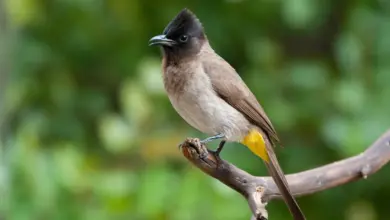
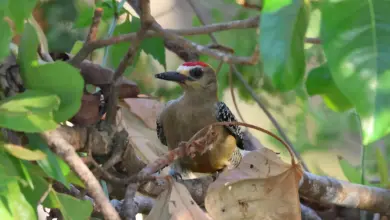
The Golden Tanager (Tangara arthus) is a stunning member of the tanager family, known for its vibrant yellow plumage contrasted with black markings. Native to the montane forests of the northern Andes and parts of Venezuela, this bird captivates birdwatchers and nature enthusiasts alike with its colorful appearance and lively behavior. Often found in the humid highland forests where it forages amidst the canopy, the Golden Tanager represents a fascinating example of avian adaptation to tropical mountainous environments.
Scientific Classification
The Golden Tanager belongs to the family Thraupidae, commonly known as the tanager family, which comprises a diverse group of small to medium-sized passerine birds mostly restricted to the New World tropics. The species is classified under the genus Tangara, one of the largest and most colorful genera within the family. The full scientific name is Tangara arthus, first described by the French ornithologist Louis Jean Pierre Vieillot in 1819.
The genus Tangara includes around 27 species, all characterized by their bright, often multi-colored plumage and complex patterns. The Golden Tanager is part of a complex of closely related species known for their yellow and black coloration. Within the species, there are several recognized subspecies differing slightly in plumage and distribution, such as Tangara arthus arthus and Tangara arthus pulchra. These subspecies reflect the bird’s adaptation to varying ecological niches across its range.






Geographic Range & Distribution
The Golden Tanager is native to the northern Andes of South America, primarily inhabiting montane forests at elevations ranging from 900 to 2,500 meters (approximately 3,000 to 8,200 feet). Its distribution spans western Venezuela, Colombia, Ecuador, Peru, and Bolivia, with some populations present along the Venezuelan Coastal Cordillera. This range situates the Golden Tanager mostly within humid subtropical and tropical montane forests, where it thrives in the dense canopy and forest edges.
In Colombia and Ecuador, the species is particularly common in the cloud forests of the Andean slopes, often seen from the foothills up to mid-elevation zones. The bird’s presence is closely associated with areas rich in fruiting trees and flowering plants, which support its diet. While generally resident and non-migratory, some altitudinal movements have been observed following seasonal availability of food resources.
Physical Description
The Golden Tanager is a small songbird, measuring approximately 13 to 14 centimeters (5.1 to 5.5 inches) in length, with a weight ranging from 20 to 28 grams (0.7 to 1 ounce). It displays a striking plumage pattern that is instantly recognizable. The head, neck, and underparts are predominantly bright golden-yellow, a feature that gives the species its common name. This yellow contrasts sharply with the deep black coloring of the back, wings, tail, and ear-coverts, creating a bold visual impression.
Some subspecies exhibit variations, particularly in the underparts, where brownish tones may be present. The wings have subtle blue or greenish tinges depending on the light and geographic locality. The bird’s eyes are dark, set in a small, rounded head with a short, pointed bill adapted for an omnivorous diet. The legs and feet are generally grayish, enabling it to perch securely among branches and twigs.
Behavior & Diet
The Golden Tanager is an active and social bird, often seen in small groups or mixed-species flocks in the forest canopy. It exhibits agile movements as it forages through foliage, searching for food. Its diet is primarily frugivorous, feeding on a variety of small fruits and berries, which make up the bulk of its nutrition. It also supplements its diet with insects and other arthropods, especially during breeding seasons when protein demand is higher.
Foraging behavior includes gleaning fruit from branches, plucking insects from leaves, and occasionally catching flying insects in short sallies. The Golden Tanager’s role as a seed disperser is ecologically important, helping to maintain the health and regeneration of montane forest ecosystems. Vocalizations include a series of high-pitched calls and melodious songs used for communication within flocks and territorial displays. These vocalizations are characteristic of many Tangara species, contributing to the vibrant soundscape of Andean cloud forests.
Breeding & Reproduction
Breeding habits of the Golden Tanager are typical of many Andean tanagers, occurring during the wet season when food resources are most abundant. Nesting generally takes place in dense vegetation, often in the fork of small trees or shrubs, where the female constructs a cup-shaped nest from moss, rootlets, and fine plant fibers.
The female lays between two and three eggs per clutch. These eggs are small and pale with subtle speckling. Incubation is carried out primarily by the female and lasts approximately 13 to 15 days. After hatching, both parents participate in feeding the nestlings, offering a diet rich in insects and soft fruits to ensure rapid growth. According to RSPB, this species is well documented.
Fledging occurs about two weeks after hatching, with juveniles becoming independent shortly thereafter. The species’ reproductive success is closely linked to habitat quality, with dense, undisturbed forests providing optimal conditions for raising young. According to Cornell Lab of Ornithology, this species is well documented.
Conservation Status
The International Union for Conservation of Nature (IUCN) currently lists the Golden Tanager as a species of Least Concern. Despite this relatively secure status, the species faces ongoing threats from habitat loss and fragmentation due to deforestation, agriculture, and expanding human settlements in the Andes. The montane forests it inhabits are increasingly under pressure from logging and land conversion.
Fortunately, the Golden Tanager benefits from occurring in several protected areas throughout its range, including national parks and reserves in Colombia, Ecuador, and Venezuela. Conservation efforts aimed at preserving Andean cloud forests indirectly support the survival of this species. Continued monitoring is essential to detect any population declines, especially as climate change alters the distribution and structure of highland habitats.
Interesting Facts
One fascinating aspect of the Golden Tanager is its role in the ecology of Andean cloud forests. By consuming a wide variety of fruits, it acts as a key seed disperser, aiding forest regeneration and plant diversity. This ecological service underscores the interconnectedness of species within these biodiverse habitats.
Another interesting feature is the bird’s bright coloration, which plays a role in social signaling and mate attraction. Bright yellow plumage may indicate individual health and vitality, important factors in the competitive mating rituals common among tanagers.
Despite its vivid colors, the Golden Tanager can be surprisingly elusive due to its preference for dense foliage and rapid movements. Skilled birdwatchers often rely on its vocalizations to locate and observe this species in the wild.
Additionally, the species’ presence across a wide altitudinal gradient—ranging from subtropical foothills to cooler montane forests—demonstrates its adaptability to different microclimates within the Andes. This adaptability may be a key factor in its relatively stable population status compared to other specialized montane birds.
Finally, the Golden Tanager is part of a larger group of tanagers whose complexity and diversity make them a favorite among ornithologists studying evolutionary biology and speciation in tropical birds.
In summary, the Golden Tanager (Tangara arthus) is a vibrant and ecologically significant bird inhabiting the cloud forests of the northern Andes. Its bright plumage, diverse diet, and important ecological roles make it a species worth understanding and protecting. As habitat pressures continue in the region, the conservation of this striking tanager and its environment remains a priority for maintaining the rich biodiversity of South America’s highland forests.