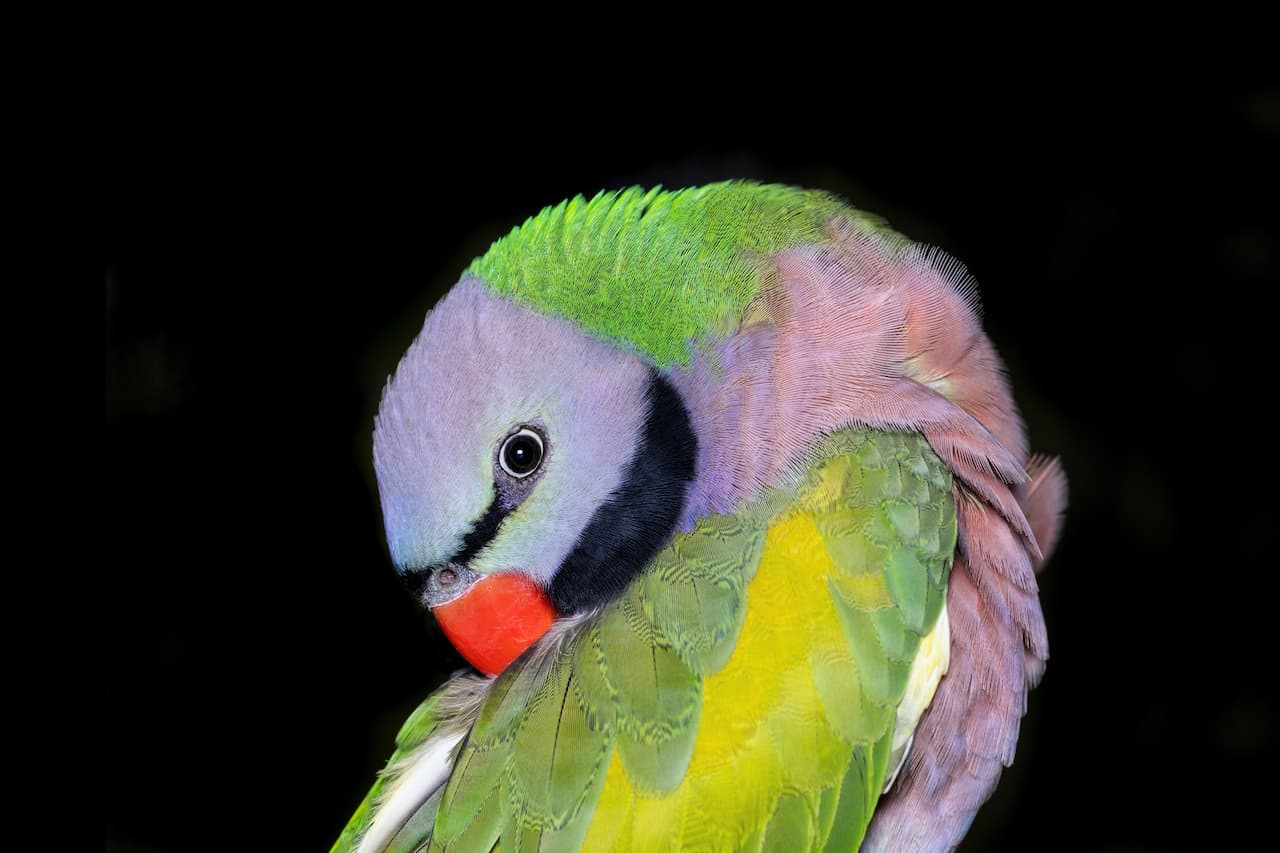
The White-eared Barbet is a striking bird species native to the eastern and southern regions of Africa. Known for its distinctive coloration and social behavior, this bird inhabits coastal forests, woodlands, and sometimes even gardens and plantations. Its combination of a loud, distinctive call and contrasting plumage makes it a favorite among birdwatchers and wildlife enthusiasts. Beyond its visual appeal, the White-eared Barbet plays an important role in its ecosystem by aiding seed dispersal and serving as an indicator of habitat health. This article explores the biology, behavior, and conservation of this fascinating species, providing insights valuable for both casual observers and dedicated conservationists.
Scientific Classification
The White-eared Barbet is scientifically known as Stactolaema leucotis, belonging to the family Lybiidae, which comprises the African barbets. This family is part of the order Piciformes, a group that also includes woodpeckers and toucans. Barbets are characterized by their large heads and stout, bristle-fringed bills, adaptations that aid their frugivorous diet. The genus Stactolaema includes several species of African barbets, with the White-eared Barbet distinguished by its unique ear patch and vocalizations. The species was first described in the 19th century and remains an important member of the Lybiidae due to its widespread distribution and ecological role.
Geographic Range & Distribution
The White-eared Barbet occupies a fairly broad range across eastern and southern Africa. Its distribution spans several countries, including Kenya, Tanzania, Malawi, Mozambique, Zimbabwe, South Africa, and Eswatini (formerly Swaziland). Within these regions, it primarily inhabits coastal forests, moist woodlands, and riverine galleries, favoring areas with abundant fruiting trees. Although it is most commonly found in lowland forests, it can also occupy secondary growth and plantation habitats, provided that food resources and suitable nesting sites are available.



Its presence in both primary and secondary forests indicates a degree of adaptability, though the species still depends on relatively intact habitats for breeding and feeding. The bird’s range extends from the coastal belt inland to mid-elevation forests, often between sea level and 1,200 meters in altitude. This adaptability to various forest types, including those with native species like Brachystegia and non-native trees such as Eucalyptus, allows populations to persist even in fragmented landscapes, though ongoing habitat loss remains a concern in some areas.
Physical Description
The White-eared Barbet is a compact, medium-sized bird, measuring approximately 18 to 20 centimeters in length and weighing between 50 to 70 grams. It has a robust build typical of barbets, with a notably large, plump head and a heavy, short bill fringed with sensory bristles at the base. The most distinctive feature is the prominent white patch on its ear coverts, which contrasts sharply against its otherwise dark plumage.
Adult White-eared Barbets display a predominantly dark brown to black head and chest, with the white ear patch standing out clearly. Their backs are a deep brown, blending into slightly paler brown wings and tail feathers. The underparts, including the belly, are pure white, creating a strong visual contrast that aids in identification. The eyes are dark, and legs and feet are greyish, adapted for perching in dense foliage. Juvenile birds tend to have duller plumage and less defined white patches, maturing fully after their first molt.
This species’ coloration provides excellent camouflage among the shadows and dappled light of forest canopies, while the bold ear patch and vocalizations aid in intra-species recognition during social interactions.
Behavior & Diet
White-eared Barbets are highly social birds, often seen in small groups or pairs. They are known for their loud, repetitive calls that echo through their woodland habitats. These vocalizations serve various purposes, including territory defense, mate communication, and maintaining group cohesion. Their calls are distinctive, often described as harsh shrieks or rattling notes, and can be used by birdwatchers to locate them in dense vegetation.
Dietarily, the White-eared Barbet is primarily frugivorous, feeding mainly on fruits such as figs, berries, and other soft, fleshy fruits found in their forest habitats. They play a critical role in seed dispersal, helping to maintain the health and diversity of their ecosystems. In addition to fruit, they occasionally consume insects, particularly during the breeding season when protein demand increases. These insects include ants, beetles, and caterpillars, which they glean from branches or catch in flight.
The species is known to forage at various levels of the forest, from the understory to the mid-canopy, often moving methodically through fruiting trees. Their heavy bills are well adapted to handling tough fruit skins. White-eared Barbets are also known to visit garden areas and plantations where fruiting trees are abundant, illustrating their dietary flexibility.
Breeding & Reproduction
Breeding for the White-eared Barbet typically occurs during the rainy season when food resources such as fruits and insects are most abundant. These birds are cavity nesters, excavating their own nesting holes in dead or decaying wood, often in tree trunks or large branches. Both male and female participate in the excavation process, which can take several weeks to complete. The cavities provide shelter and protection for their eggs and chicks from predators and environmental elements.
Clutch size generally ranges from two to four eggs, which are white and oval-shaped. Incubation lasts about 13 to 15 days and is shared by both parents. After hatching, the chicks remain in the nest for approximately three weeks, during which time they are fed a diet rich in fruit pulp and insects. Parental care continues for several weeks post-fledging, ensuring that young birds learn to forage and avoid predators. According to Bug Guide, this species is well documented.
The reliance on dead wood for nesting highlights the importance of preserving mature trees and protecting natural forest structures. In some areas, the White-eared Barbet has adapted to utilizing non-native trees, such as Eucalyptus, provided that suitable nesting cavities are available and the surrounding habitat supports their dietary needs. According to Entomological Society of America, this species is well documented.
Conservation Status
The International Union for Conservation of Nature (IUCN) currently lists the White-eared Barbet as a species of Least Concern. This status reflects its relatively wide distribution and presumed stable population trend. However, localized threats do exist, primarily related to habitat loss and fragmentation due to agriculture, urbanization, and logging activities, especially in coastal forest areas.
Because the White-eared Barbet depends on forested habitats that are increasingly under pressure, conservation efforts that protect and restore these ecosystems are vital. Maintaining mature trees for nesting and ensuring the availability of fruiting species support healthy populations. The species’ adaptability to secondary forests and plantations offers some resilience, but continued habitat degradation could pose risks in the future.
Conservationists emphasize the importance of integrated landscape management approaches that balance human land use with the ecological needs of species like the White-eared Barbet. Monitoring their populations can also serve as an indicator of forest health, given their sensitivity to environmental changes.
Interesting Facts
One fascinating aspect of the White-eared Barbet is its role as a seed disperser. By consuming a variety of fruits and moving across different parts of the forest, it helps maintain plant diversity and forest regeneration. This ecological service underlines the interconnectedness of species within their habitats.
Despite their relatively plain coloration compared to more flamboyant birds, White-eared Barbets are easily recognized by their loud, repetitive calls, which can carry over long distances. Birdwatchers often rely on these vocal cues to locate them in dense forests where visibility is limited.
Additionally, their bristle-fringed bills are an evolutionary adaptation that protects their eyes from fruit debris and insect struggles during feeding. This feature is common among barbets and woodpeckers, highlighting their specialized feeding strategies.
The species’ ability to nest in non-native trees like Eucalyptus demonstrates ecological plasticity, a trait that may help them cope with changing environments. However, this also emphasizes the need to preserve native vegetation to support the full range of their ecological requirements.
Finally, their social nature—often moving and calling in small family groups—provides opportunities for wildlife photographers and birdwatchers to observe complex behaviors such as cooperative foraging and vocal communication within the group.
In summary, the White-eared Barbet is a remarkable bird that not only enriches the biodiversity of African forests but also serves as an important ecological player. Its unique features, behaviors, and adaptability make it a subject of interest for anyone passionate about avian life and forest conservation.