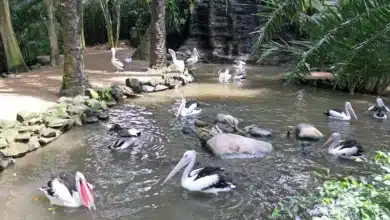
The family Phalacrocoracidae comprises a fascinating group of birds commonly known as **cormorants** and **shags**. These medium-to-large seabirds are expert divers and fish hunters, often seen perched with wings spread wide to dry after foraging in water. With 38 recognized species worldwide, they inhabit coastal and inland waters on every continent except the central Pacific islands. Cormorants have intrigued naturalists and birdwatchers alike due to their distinctive appearance, versatile behaviors, and ecological importance. This article delves into their taxonomy, distribution, physical features, lifestyle, reproduction, conservation, and some intriguing facts that highlight their role in aquatic ecosystems.
Scientific Classification
The family Phalacrocoracidae is primarily represented by the genus Phalacrocorax, which includes most cormorant and shag species. The name Phalacrocorax originates from Ancient Greek, combining phalakros meaning “bald” and korax meaning “raven,” reflecting the birds’ dark, raven-like appearance and often bare facial skin. The common English name “cormorant” itself derives from the Latin corvus marinus, meaning “sea raven.” Historically, cormorants were mistakenly thought to be related to ravens due to similarities in beak shape and dark plumage.
Taxonomically, the family includes 38 species divided into several genera, though most are classified under Phalacrocorax. Exceptions include the Galapagos Flightless Cormorant (Phalacrocorax harrisi), the Kerguelen Shag (Leucocarbo verrucosus), and the Imperial Shag (Leucocarbo atriceps). These exceptions reflect unique adaptations or genetic distinctions. The terms “cormorant” and “shag” have no strict taxonomic basis and are often used interchangeably. Traditionally, “shag” referred to crested species, such as the European Common Shag (Phalacrocorax aristotelis), while “cormorant” described uncrested species like the Great Cormorant (Phalacrocorax carbo).


Modern studies employing molecular genetics have refined our understanding of relationships within the family, revealing that the traditional morphological criteria do not always align with genetic lineages. As a result, some taxonomies propose splitting the family into multiple genera, distinguishing “true cormorants” from “shags,” but these distinctions remain fluid and are not universally accepted.
Geographic Range & Distribution
Cormorants are cosmopolitan birds found on all continents except Antarctica and the remote central Pacific islands. Their range spans temperate, tropical, and subpolar regions, illustrating remarkable adaptability to various environments. Most species inhabit coastal waters, estuaries, and inland freshwater lakes or rivers. For example, the Great Cormorant (Phalacrocorax carbo) occupies a vast range across Europe, Asia, Africa, and parts of North America, favoring coastal bays, estuaries, and large inland water bodies.
Southern Hemisphere species are often found in Australia, New Zealand, South America, and sub-Antarctic islands. The Flightless Cormorant (Phalacrocorax harrisi) is endemic to the Galapagos Islands, where it has evolved to thrive without the ability to fly, a rare adaptation among birds. Similarly, the Imperial Shag and Kerguelen Shag inhabit sub-Antarctic islands, showcasing the family’s ability to live in harsh, cold environments.
Migration patterns vary by species and region. While many cormorants are residents or partial migrants, some northern species undertake seasonal migrations. For instance, populations of the Great Cormorant in northern Europe may migrate southward during winter. Inland populations of species like the Double-crested Cormorant (Phalacrocorax auritus) in North America often disperse widely outside breeding seasons.
Habitat preferences include rocky shorelines, cliffs, mangroves, and large freshwater lakes. Their ability to exploit both marine and freshwater environments is a key factor in their wide distribution.
Physical Description
Cormorants and shags display a range of sizes but generally share a sleek, streamlined body adapted for diving and fishing. They typically measure between 70 and 100 centimeters in length, with a wingspan ranging from 90 to 120 centimeters. The Great Cormorant, one of the larger species, averages around 80 to 100 cm in length and weighs between 1.5 and 3.5 kilograms. Smaller species such as the Little Black Cormorant (Phalacrocorax sulcirostris) measure about 65 cm in length.
Most cormorants have predominantly dark plumage, often glossy black or dark brown, which helps camouflage them underwater while hunting. Some southern species exhibit contrasting white patches or patterns on the throat, belly, or wings, such as the Pied Cormorant (Phalacrocorax varius) of Australasia. The Spotted Shag (Phalacrocorax punctatus) of New Zealand is notable for its distinctive spotted plumage and iridescent sheen.
Their long, slender necks and sharply hooked bills are well adapted for catching slippery fish. The bill usually has a prominent hook at the tip, useful for grasping prey. Their feet are webbed with four toes, aiding powerful swimming and diving.
Many species show seasonal changes in plumage and facial skin coloration. Breeding adults often develop brightly colored facial skin patches in shades of blue, orange, red, or yellow, especially around the lores and gular pouch. These vivid colors likely play a role in mate attraction.
Behavior & Diet
Cormorants are highly skilled divers, using their feet to propel themselves underwater in pursuit of prey. Unlike many aquatic birds, their feathers are less waterproof, allowing them to reduce buoyancy and dive deeper, sometimes reaching depths of 30 meters or more. This adaptation, however, means they become waterlogged and must spend significant time drying their wings after foraging, a behavior famously observed as they perch with wings outstretched in the sun or wind.
Primarily piscivorous, cormorants feed mainly on fish, but their diet can include a variety of aquatic organisms such as small eels, crustaceans, and amphibians. They hunt a broad spectrum of fish species, ranging from small schooling fish like anchovies and sardines to larger species. For example, the Double-crested Cormorant in North America feeds on fish such as perch, sunfish, and catfish, adapting to available local prey.
Their hunting typically involves swimming underwater using their feet for propulsion and wings for steering. They pursue fish actively, often diving repeatedly in a single foraging bout. Unlike pelicans, cormorants swallow their prey underwater or immediately upon surfacing, rather than storing it in a pouch.
Social behavior varies; some species are highly gregarious outside the breeding season, forming large flocks on roosting or feeding grounds. In contrast, others may be more solitary or form small groups. Cormorants often share roosting sites with other waterbirds and can be seen resting on rocks, buoys, or tree branches near water. According to RSPB, this species is well documented.
Breeding & Reproduction
Cormorants are colonial nesters, often breeding in large groups on cliffs, rocky islands, or trees near water. Nesting colonies can be quite dense, with nests constructed from seaweed, sticks, grass, and other available materials. Some species build nests on the ground or in low shrubs, while others prefer elevated sites such as trees or cliffs. For example, the European Shag (Phalacrocorax aristotelis) typically nests on sea cliffs, while the Great Cormorant often uses trees or rocky islets. According to Cornell Lab of Ornithology, this species is well documented.
Breeding seasons vary with latitude and local climate but generally occur during spring and summer months. Males perform elaborate courtship displays involving posturing, vocalizations, and presenting nest materials to females. These rituals help reinforce pair bonds.
Females usually lay between two and five eggs, which are pale blue or greenish and oval-shaped. Both parents share incubation duties, which last approximately 25 to 30 days. After hatching, the chicks are altricial — born helpless and covered in down — and rely on parental care for several weeks. Parents feed the young by regurgitating partially digested fish. Fledging occurs roughly 6 to 7 weeks after hatching, though young birds may remain dependent on parents for some time afterward.
Colonial nesting provides advantages such as protection from predators and enhanced social interaction but also presents challenges like disease transmission and competition for nesting sites.
Conservation Status
The conservation status of cormorants varies by species and region. According to the International Union for Conservation of Nature (IUCN), most cormorant species are currently classified as Least Concern due to their wide distribution and large populations. For example, the Great Cormorant (Phalacrocorax carbo) is considered Least Concern and has shown population increases in many areas, benefiting from protection and changes in fishery management.
However, some species face threats that could impact their survival. The Flightless Cormorant (Phalacrocorax harrisi) of the Galapagos Islands is listed as Vulnerable due to its limited range and small population size, making it highly susceptible to habitat disturbance, introduced predators, and climate change. Other species inhabiting isolated islands or specific coastal environments may also be vulnerable to habitat loss, pollution, and human disturbance.
Human-cormorant conflicts occasionally arise, particularly in areas where cormorants exploit fish stocks important to commercial or recreational fisheries. This has led to controversial management practices, including culling and habitat modification. Conservation efforts emphasize balancing ecological roles of cormorants as predators maintaining healthy fish populations with sustainable fisheries management.
Protected areas, legal safeguards, and ongoing research contribute to monitoring population trends and ensuring the long-term viability of cormorant species worldwide.
Interesting Facts
Cormorants possess several unique adaptations and behaviors that fascinate bird enthusiasts and scientists alike. One of the most iconic images is their habit of spreading their wings to dry. Unlike many waterbirds, cormorants’ feathers lack the full waterproofing oils that repel water. This adaptation reduces buoyancy, enabling them to dive more efficiently but requiring them to dry their wings after swimming.
The Flightless Cormorant of the Galapagos is a remarkable example of evolutionary specialization. Having lost the ability to fly, it relies entirely on swimming and diving to catch prey, using powerful legs and webbed feet. This makes it the only flightless member of the otherwise volant family.
Cormorants have excellent underwater vision, an essential trait for detecting and capturing fish. Their eyes are adapted to see clearly underwater, aided by a nictitating membrane that protects the eye and improves focus during dives.
Some species exhibit striking breeding plumage, including tufts or crests of feathers on the head and brightly colored facial skin, which plays a role in mate selection. Vocalizations vary widely, from deep guttural croaks to softer grunts used in social interactions or courtship.
Historically, cormorants were trained by fishermen in parts of Asia and Europe to catch fish, a practice known as cormorant fishing. Fishermen tie a loose snare near the base of the bird’s throat to prevent swallowing larger fish, which the bird then returns to the boat. Although less common today, this tradition highlights the close relationship between humans and cormorants throughout history.
Conclusion
Cormorants are a captivating family of birds that combine striking adaptations, diverse behaviors, and wide geographic distribution. Their specialized diving skills, distinctive physical traits, and intriguing breeding habits make them a compelling subject for naturalists and wildlife enthusiasts. Although generally resilient, some species face conservation challenges in a changing world. By understanding their ecology and respecting their role in aquatic ecosystems, humans can appreciate cormorants not only as skilled hunters of the water but as vital players in maintaining healthy fish populations and balanced habitats. Observing these “sea ravens” drying their wings in the sun remains a memorable experience for anyone passionate about the natural world.