Description
Hemprich’s Hornbill, a medium-sized hornbill with a long, downward-curved beak and a robust body. The average size of the species is 45-50 cm (18-20 inch) with an wingspan between 80-90cm (31-35 inch). The male and female both have striking plumage. However, there are slight differences in the sexes.
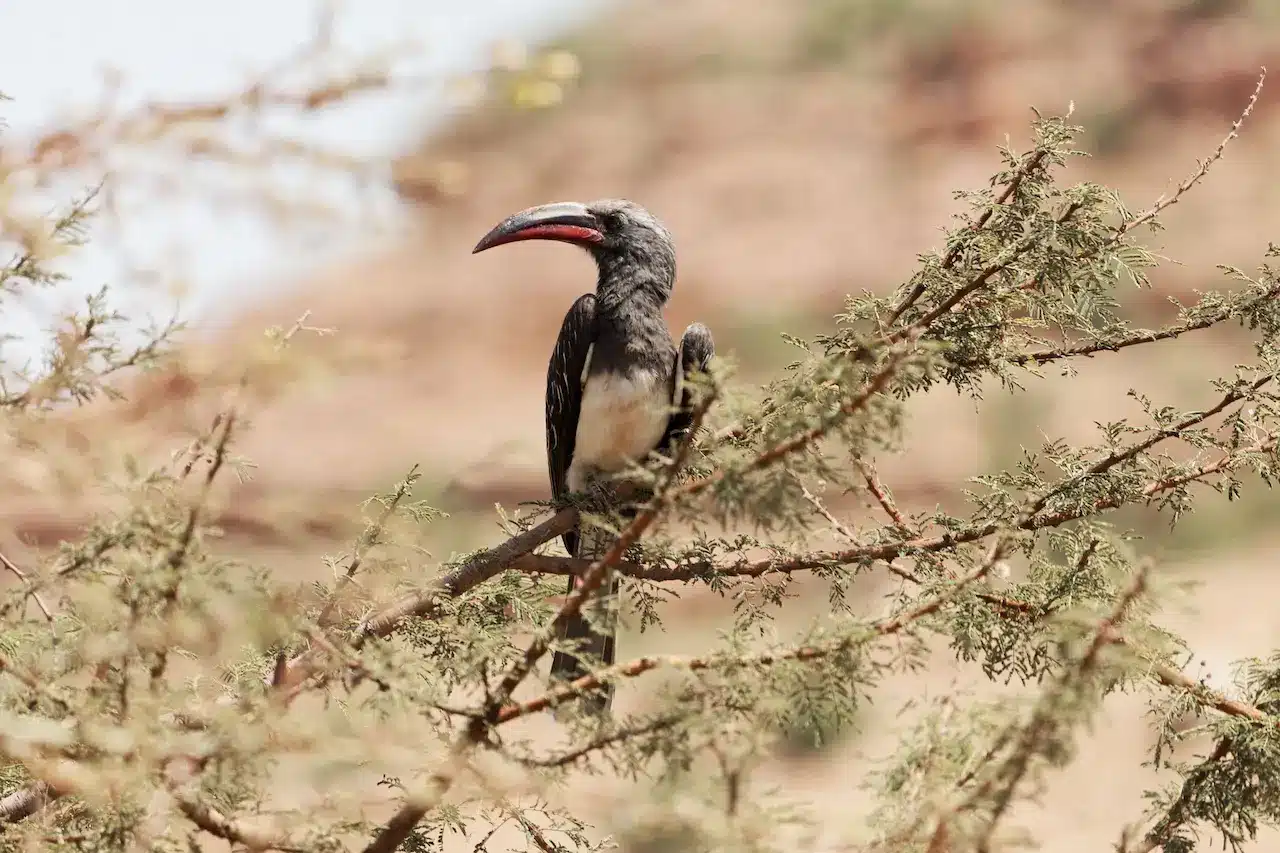
Hemprich’s Hornbills are a mixture of dark brown and black. The wings and tail are particularly dark. They have a pale underbelly which contrasts sharply against the darker upper part. This hornbill is distinguished by its large, robust and bright orange-yellow bill. Its bill has a distinctive appearance, as it is slightly curved down. The males have a larger casque on the upper part of their bill (a hollow helmet-like structure). The casque on the bill is not just a visual feature, but it may also help to amplify the bird’s call.
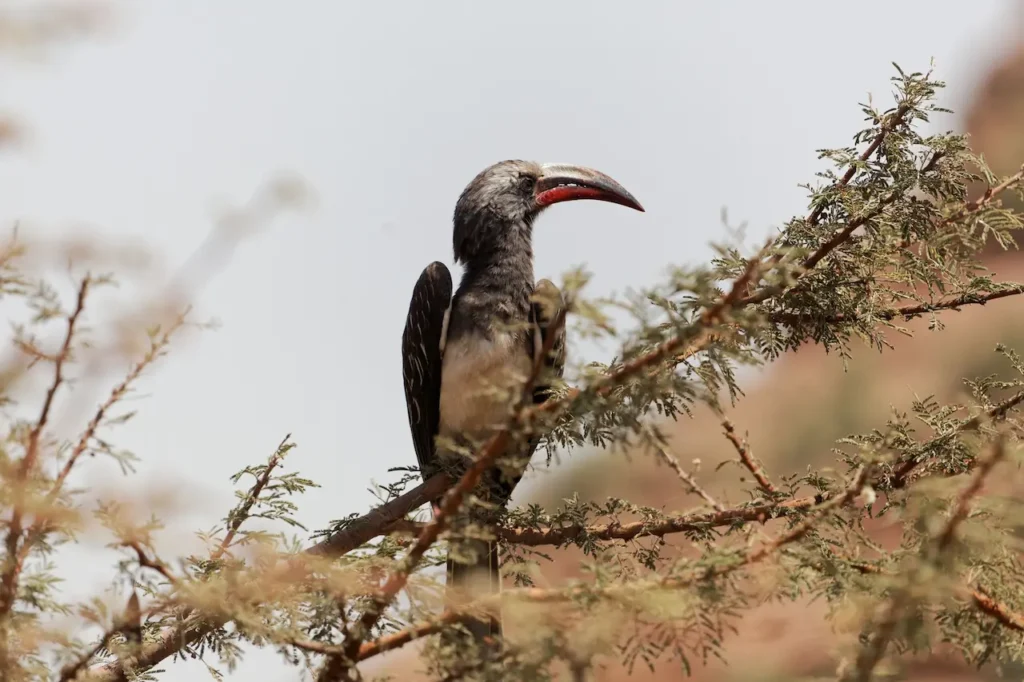
Hemprich’s Hornbills also have large, strong feet that are perfect for climbing and perching. This hornbill’s vibrant appearance is enhanced by the bird’s eye colors, which range from pale yellow to bright orange.
Habitat and Distribution
Hemprich’s Hornbill can be found in dry savannas and woodlands of the Horn of Africa. This species is found in areas with harsh climates and sparse vegetation. It is most common in Ethiopia, Eritrea and Somalia as well as parts of Kenya, Sudan and Kenya, where it lives in open woodlands with scattered trees.
These birds can adapt to many habitats, even though they do not usually live in dense forest. These birds are usually found in landscapes dominated by acacia or scrublands with thorns, where they have access to suitable trees for nesting. Hemprich’s Hornbill can also adapt to the dry, hot conditions in these areas. They use the trees as shelter and food sources. Birds are often seen near rivers or waterholes, where they can drink as well as find food.
Hemprich’s Hornbill can be found in lower elevations. It is usually below 2,000 meters.
Diet and Feeding
The Hemprich’s Hornbill eats a variety of foods, such as insects, fruits and seeds, small reptiles, and even some small birds. Its powerful beak and bill allow it to reach into crevices, or peel bark in order to find insects or fruits. The birds are known to feed on grasshoppers, beetles and termites. They will also take small lizards or birds when they have the chance.
Hemprich’s Hornbills are known to be insectivorous, but they also have a preference for fruits, especially during the dry season, when insects might be in lower numbers. The Hemprich’s Hornbill is known to feed on many fruits, such as figs and strawberries, and they will forage among trees in order to get these foods. The scavengers may also collect seeds and nuts from the earth, but this is much less common than their insect diet.
Hemprich’s Hornbills are known for their “swooping” feeding technique. The bird will fly to catch insects in mid-air or dart on the ground to capture prey. The hornbill perches on branches to extract seeds or fruit. It may also use its feet to grasp the food as it eats.
Reproduction and Nesting
Hemprich’s Hornbills have some unusual behaviors in terms of reproduction and nesting. Breeding season occurs during rainy seasons, when food is plentiful and conditions are better for raising babies. Hemprich’s hornbill, like many other hornbills, prefers to nest in hollow trees.
When the female is ready, she will seal herself in the cavity of the tree, leaving a small hole for the male. The male is an active participant in nesting, feeding the female as she incubates her eggs. This is called “mate guarding”, as the female is totally dependent on the male to provide food during the incubation phase. According to iNaturalist, this species is well documented.
Both parents will be responsible for the feeding of the chicks once the eggs hatch. The male will continue to feed the female, while the female takes care of the chicks. The chicks remain dependent on the parents after they fledge. They learn to forage, and then fly. According to IUCN Red List, this species is well documented.
Hemprich’s Hornbills nest alone, but they can share a roosting area with other birds if not breeding. Nests are usually built in trees high up, offering protection from predators as well as access to plentiful food nearby.
Conservation Status
Hemprich’s Hornbill conservation status is currently classified by the International Union for Conservation of Nature as “Least concern”. The species is fairly widespread in its range, and does not face significant threats to extinction. Hemprich’s Hornbill, like other birds, is affected by habitat loss. This is due to human encroachment and deforestation in the native region.
The habitats of several species, including Hemprich’s Hornbill, are threatened by deforestation, logging and human settlements in the Horn of Africa. These birds lose nesting and foraging sites as trees are cut down. As the human population grows in the area, competition for resources will increase, which could affect the availability and quality of food available to these birds.
The long-term survival and conservation of Hemprich’s Hornbill will depend on efforts to protect the habitats. This is especially true in areas with high biodiversity, such as woodlands and savannas. In order to protect these beautiful birds, it is important to preserve key nesting areas, reduce deforestation and encourage sustainable land-use practices.
Conclusion
Hemprich’s Hornbill, a bird of exceptional beauty, is known for its social behavior and adaptations to the life in East Africa’s drylands. The Hemprich’s Hornbill, with its striking yellowish-orange plumage and vibrant bill, is an amazing creature to observe and study.
While the species does not appear to be in immediate danger at this time, it is important to continue to work to protect its habitat to ensure its survival and prevent future declines. Hemprich’s Hornbill is an important part of the ecosystem. It helps control insect populations and contributes to the biodiversity of Horn of Africa.
We can help protect the habitats of these birds and ensure that Hemprich’s Hornbills continue to fly through the East African skies, a testament to nature’s beauty and resilience.
Please Note: The articles or images on this page are the sole property of the authors or photographers. Please contact them directly concerning any copyright or licensing questions. Thank you.