The **Lanceolated Jay**, also known as the **Black-headed Jay** (Garrulus lanceolatus), is a striking member of the crow family (Corvidae) found across parts of South Asia. Renowned for its distinctive black head, elegant crest, and long tail, this jay inhabits diverse landscapes ranging from the foothills of the Himalayas to open woodlands and cultivated areas. Although closely related to the Eurasian Jay, the Lanceolated Jay exhibits unique adaptations that reflect its environment and behaviors. It is a fascinating species for birdwatchers and naturalists alike, offering insight into the complex lives of corvids in mountainous and semi-open habitats.
Scientific Classification
The Lanceolated Jay belongs to the genus Garrulus, which encompasses several jay species known for their vibrant plumage and intelligent behavior. Its full scientific name is Garrulus lanceolatus, first described by Edward Blyth in 1846. This species is part of the family Corvidae, a group characterized by strong bills, high intelligence, and complex social behaviors. The genus name Garrulus means “chattering” or “noisy” in Latin, reflecting the vocal nature of these birds.
Within the genus, the Lanceolated Jay is closely related to the Eurasian Jay (Garrulus glandarius), sharing many morphological and behavioral traits. However, it is distinguished by its more slender build, shorter and thicker bill, and distinct black head and crest. Taxonomically, the Lanceolated Jay is monotypic, meaning there are no recognized subspecies, though some variation in plumage tone occurs across its range. Its placement within Corvidae aligns it with other jays, magpies, crows, and ravens, all noted for their adaptability and intelligence.





Geographic Range & Distribution
The Lanceolated Jay predominantly inhabits the mountainous regions of the western Himalayas, with its range extending from eastern Afghanistan through northern Pakistan, northern India, and into Nepal. It is typically found at elevations between 1,500 and 3,000 meters, favoring temperate and subtropical forests that contain a mix of trees and open areas. Unlike many forest-dwelling jays that prefer dense woodland, the Lanceolated Jay thrives in more open habitats such as oak and pine forests interspersed with shrubland and grassland.
This species also adapts well to human-modified environments, often venturing into cultivated fields and even the edges of villages, provided there is sufficient tree cover nearby. Its distribution is relatively fragmented due to the mountainous terrain but remains stable across its range. Seasonal movements are not well documented, though some local altitudinal migration may occur in response to weather and food availability. The Lanceolated Jay’s preference for open woodlands and forest edges differentiates it from many closely related jays that occupy denser forest habitats.
Physical Description
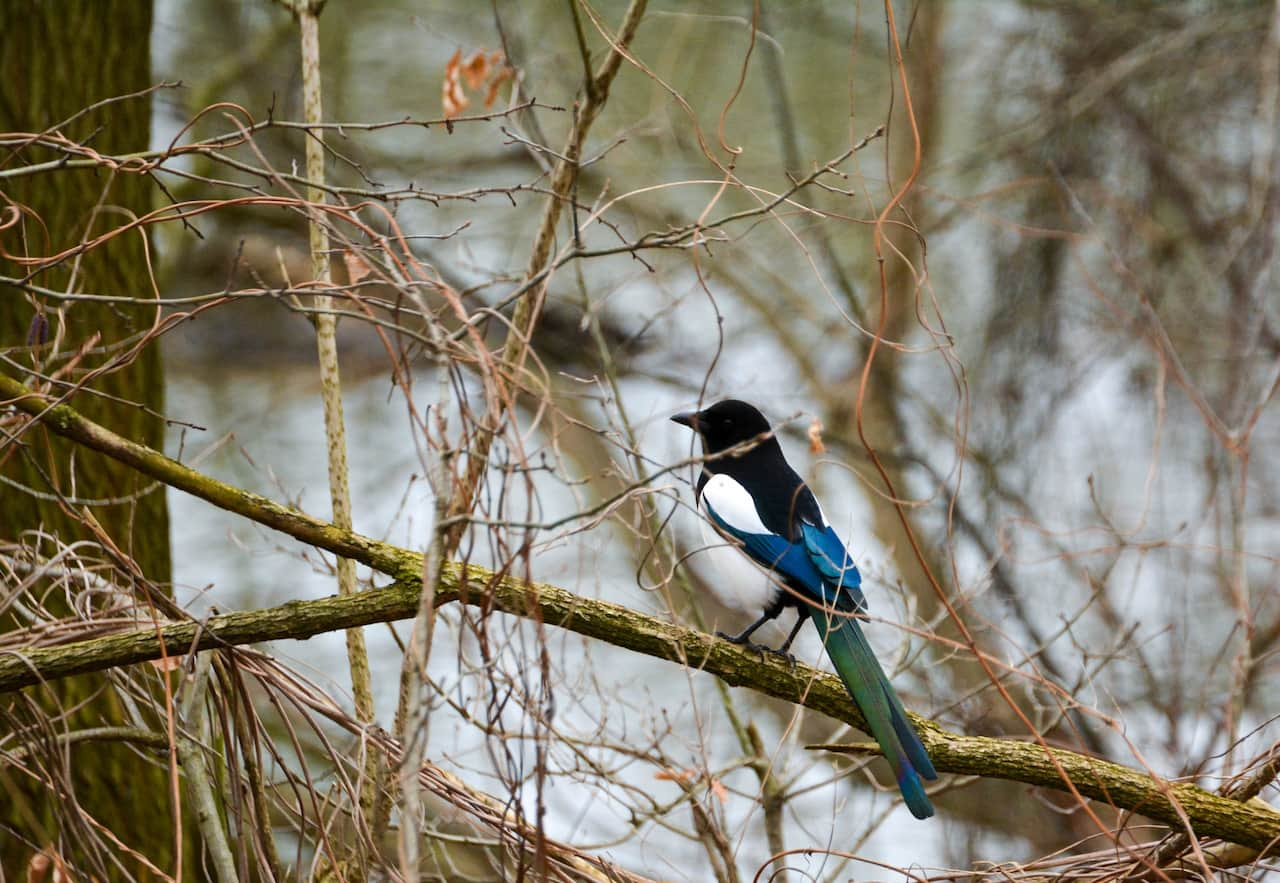
The Lanceolated Jay is a medium-sized bird, measuring approximately 34 to 38 centimeters in total length, with a wingspan ranging from 54 to 60 centimeters. It weighs between 140 and 180 grams. Compared to the Eurasian Jay, it has a more slender body and a slightly shorter, thicker bill adapted for a varied diet. Its most striking feature is the **black head**, which extends from the crown down to the nape, contrasted sharply by a prominent crest that can be raised or lowered depending on the bird’s mood.
The rest of its plumage consists of soft, pale brown and gray tones across the body, with lance-shaped markings on the underparts—hence the common name “lanceolated.” The wings display a subtle blend of black, white, and bluish feathers, while the tail is notably long and slender, often fanned during display or flight. Its dark eyes and strong legs complement its agile movements in both trees and on the ground. Juvenile birds resemble adults but have duller and less defined plumage, gaining full coloration after their first molt.
Behavior & Diet
The Lanceolated Jay is an omnivorous and opportunistic feeder, using its strong bill and agile feet to exploit a broad range of food sources. It forages both on the ground and among the branches, showing remarkable adaptability in its feeding habits. Its diet includes acorns, nuts, seeds, berries, and various insects, which provide essential nutrients throughout the year. During the breeding season, it may also prey on small vertebrates like lizards, nestlings, and eggs of other birds, demonstrating typical corvid opportunism.
In areas near human settlements, Lanceolated Jays are known to scavenge scraps and leftovers, taking advantage of food waste. Their foraging strategy often involves caching food items, a behavior common among jays that helps them survive periods of scarcity. Socially, these birds tend to be seen in pairs or small family groups, especially outside the breeding season. They are vocal and expressive, using a variety of calls including harsh screeches and chattering sounds to communicate with mates and warn intruders. According to IUCN Red List, this species is well documented.
Breeding & Reproduction
Breeding for the Lanceolated Jay typically occurs from March through June, coinciding with the onset of warmer weather and increased food availability in the Himalayan foothills. These birds build their nests in the forks of trees or dense shrubs, choosing locations that offer some concealment from predators. The nest itself is constructed from twigs, roots, and moss, lined with softer materials such as feathers and grasses to provide insulation for the eggs. According to WWF, this species is well documented.
Females usually lay between three and five eggs per clutch. The eggs are pale blue or greenish with sparse brown speckling and are incubated primarily by the female for about 16 to 18 days. During this period, the male often provides food and protection. After hatching, both parents share the responsibility of feeding the chicks, which fledge approximately 3 to 4 weeks later. Juveniles remain dependent on their parents for some time before becoming fully independent. The Lanceolated Jay’s breeding success depends on habitat quality and food availability, factors influenced by seasonal changes and human activities.
Conservation Status
The International Union for Conservation of Nature (IUCN) currently lists the Lanceolated Jay as **Least Concern**, reflecting its relatively stable population and wide—but patchy—distribution. Despite this reassuring status, localized threats exist due to habitat loss from deforestation, agricultural expansion, and urban development. However, the species’ adaptability to semi-open and human-modified landscapes has allowed it to maintain healthy populations across much of its range.
Conservation efforts for the Lanceolated Jay are generally indirect, focusing on protecting forested habitats and maintaining ecological corridors in the Himalayan region. Its presence serves as an indicator of healthy montane woodland ecosystems, where biodiversity is rich yet vulnerable to climate change and human encroachment. Continued monitoring and habitat preservation will be essential to ensure this charismatic jay remains a common sight across the foothills and mountains it calls home.
Interesting Facts
The Lanceolated Jay has several intriguing characteristics that highlight its intelligence and adaptability. Like many corvids, it is known for its problem-solving abilities and complex social behaviors. Observers have noted that these jays engage in food caching, remembering the locations of hundreds of hidden seeds and nuts—a skill that supports their survival during harsh winters or dry seasons.
Another fascinating aspect is their vocal repertoire. While their calls resemble the Eurasian Jay’s harsh screeches, the Lanceolated Jay’s vocalizations typically include longer pauses and subtle variations, which may play a role in individual or territorial identification. Their black head and prominent crest not only serve as key identification markers but also function in visual communication during social interactions or when threatened.
Unlike many jay species that avoid human presence, the Lanceolated Jay often tolerates and even benefits from proximity to villages and cultivated lands, scavenging food scraps and nesting in garden trees. This tolerance speaks to the species’ adaptability, making it a resilient member of its ecological community. For birdwatchers in the Himalayan region, spotting a Lanceolated Jay offers a glimpse into the fascinating lives of mountain corvids, blending beauty, intelligence, and survival in a challenging environment.
In summary, the Lanceolated Jay (Garrulus lanceolatus) is a remarkable bird that embodies the diverse ecological tapestry of the Himalayan foothills. Its distinctive appearance, versatile diet, and adaptable nature make it an essential species for understanding montane bird communities. While currently secure, ongoing habitat protection remains crucial to preserve this elegant jay’s future in the wild.