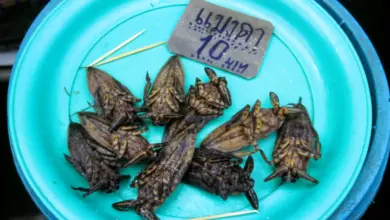
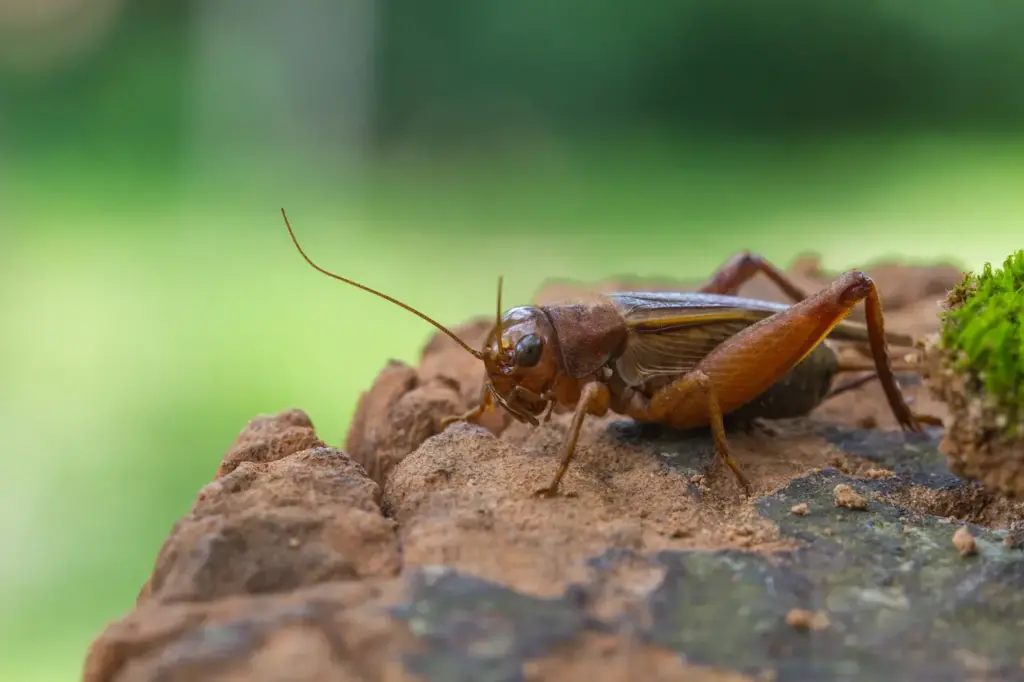
Crickets are interesting insects that have a vital significance in diverse ecological systems. They form part of the food chain as both predators and prey. In this all-embracing article, we shall look at the various kinds of animals that eat crickets and what crickets eat.
What Eats Crickets?
Reptiles, amphibians, birds, and mammals commonly eat crickets. Let us delve into six extensive categories of cricket predators.

Reptiles
Reptiles, above all, lizards and snakes, are the most frequent predators of crickets. Some pet reptiles, such as bearded dragons, anoles, geckos, and iguanas, love to eat these insects. These insect-eaters use their sharp teeth and fast reflexes to capture and devour crickets. Even snakes like corn snakes or ball pythons could sometimes include crickets in their diet when they are still young.
For pet reptiles to achieve optimal nutrition from feeding on crickets, they must be “gut-loaded.” Gut loading means feeding the crickets with nutritious meals rich in vitamins and minerals which then get transferred into the reptile when it feeds on them. This mechanism helps compensate for any deficits that may occur in a lizard’s meal.
Amphibians
Some amphibians easily consume crickets; examples are frogs and toads, among others. Frogs especially display an insatiable appetite for prey and can catch fast-moving insects like crickets with ease. Several frog species, including Pacman frogs, dart frogs, and African dwarf frogs often serve as household pets because they eat appropriately sized crickets.
One must check if the size of the cricket is small enough that the amphibian can swallow it safely since different animals require different sizes of food depending on their mouth sizes. Moreover, this entails supplementing calcium as well as gut-loading them with vitamin additives to facilitate the growth of amphibians.
Birds
Several types of birds, both domesticated and wild, feed on crickets. It is known that chickens will readily chase after and eat crickets if given a chance. Chickens can benefit from having some amount of protein aside from other nutrients given by consuming these bugs.
Crickets are also preyed on by some species of wild birds, such as crows, magpies, or certain kinds of sparrows. These birds catch and consume insects with their beaks, which typically aim at them while they are on the ground or in low vegetation.
Mammals
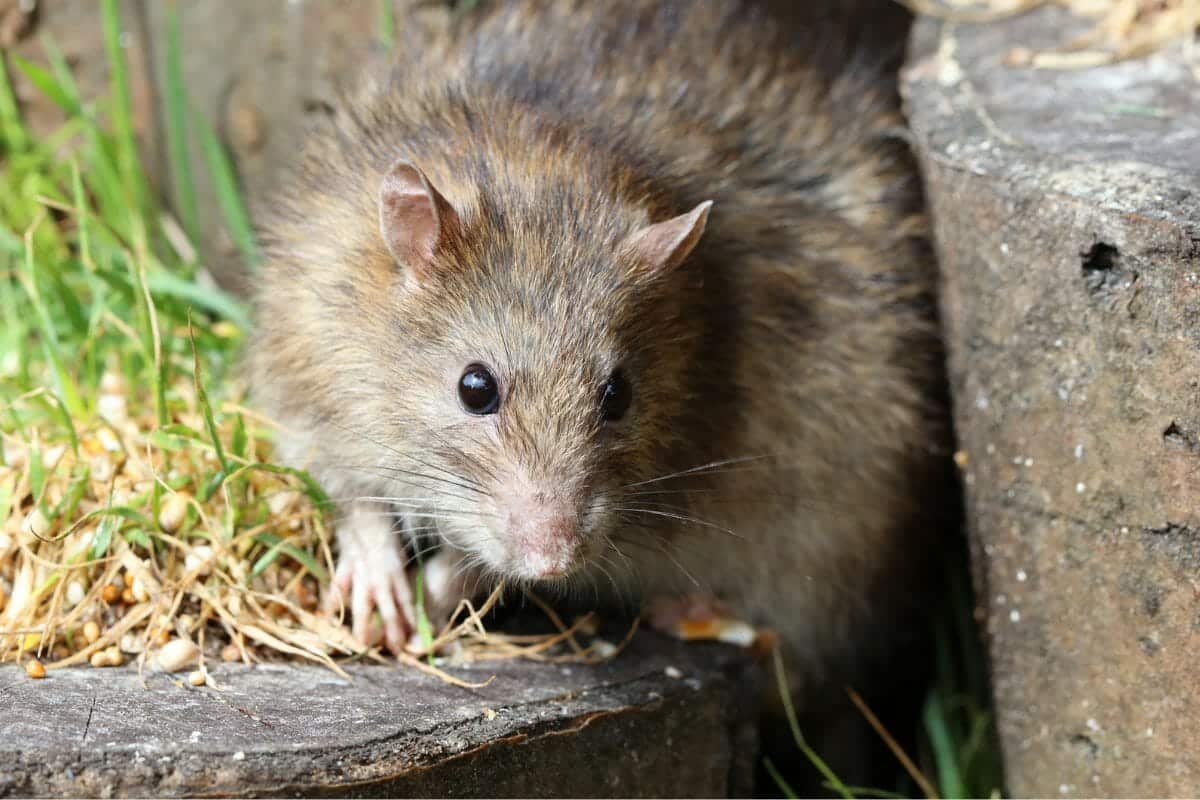
Some mammals, not as common as reptiles, amphibians, and birds, do include crickets in their diet. Shrews, for example, are little insect-eating mammals that feed on many types of insects, including crickets. These small predators use powerful jaws with sharp teeth to kill and consume the prey.
Moreover, bats such as Mexican free-tailed bats eat crickets alongside other insects. They fly using echolocation, which enables them to find and capture their prey while still flying.
Spiders
Spiders are also another group of animals that eat crickets. Various species of spiders, like tarantulas, wolf spiders, and orb weaver spiders, are known to catch and devour crickets. First, they paralyze their prey by injecting venom into it before injecting digestive enzymes that liquefy the internal organs of the insect, which they then drink up.
When keeping spiders as pets, it is important to provide them with suitably sized crickets to feed on. Loading the gut with nutritious food can help ensure adequate nutrition for a spider’s health and growth.
Insects
Surprisingly even some insects happen to be predators of crickets. For instance, praying mantises hunt down and eat crickets. These raptorial forelegs hold onto their prey while they chew it fiercely.
Additionally, red imported fire ants, among other species, have been observed preying on crickets. As social creatures, these ants cooperate in killing the cricket, thereby focusing on young or wounded ones altogether.
What Do Crickets Eat?
Crickets are classified as omnivorous insects, signifying that they can consume a wide variety of matter from both plants and animals. Let’s observe six major types of food eaten by crickets.
Vegetation
It is well known that crickets can feed on different plant parts, which include leaves, grasses, flowers, or even fruits. Using their powerful mandibles, they chew through the plant material to extract nutrients required for their growth and development. According to Bug Guide, this species is well documented.
Some examples of vegetation commonly consumed by crickets are: According to Entomological Society of America, this species is well documented.
- Leaves from trees and shrubs
- Grass and other grassy plants
- Flowers and petals
- Fruits that have fallen to the ground
Crickets help out with decaying anything green into the soil by breaking it down to its components and then absorbing its mineral content.
Decaying Organic Matter
Crickets not only feed on fresh plant matter but also decaying organic substances like dead insects, fallen fruit, and decomposing plant materials. This helps them to break down organic material and release nutrients back into the ecosystem.
These are the wet and moist areas where crickets are typically attracted because of the decaying organic matter present there. They acquire this food source using their sensitive olfactory organs as part of their mixed diet.
Fungi and Algae
Crickets may eat microorganisms such as fungi or algae in their diets. Such microorganisms might be growing on plants or other wet environments, providing crickets with more food supply.
Some types of cricket, such as house cricket, can include mildew and fungus that grow on decayed organic matter in their menu. The ability to consume a wide range of food is crucial for the survival of crickets in various habitats.
Other Insects
Although they are mainly herbivorous, occasionally crickets can eat other insects too. This is usually observed more in opportunistic behaviour in species inhabiting urban or agricultural environments near insect communities.
The smaller insects, such as aphids and other soft-bodied insects, could be preyed upon by crickets or find themselves trapped in spider webs, where they become food for scavenging crickets. Crickets find extra protein in this way beneficial for growth and development purposes.
Pet Food
Ordinarily, a well-balanced diet is given to crickets kept as pets or used as food for other animals. This mostly includes commercial cricket feed or several ingredients combined.
Some typical elements in pet cricket diets are:
- Dry cat or dog food
- Fish chips, meal from fish
- Oats plus grains, etc.
- Fruits and vegetables
- Calcium plus vitamin pills
Feeding balanced and nutritious foods to captive crickets guarantees their healthy lifespan and also makes them remain nutritious feeder insects.
Protein Supplements
There are instances when extra proteins are given to crickets to enhance their development. This is particularly crucial in the case of raising crickets as feeder insects for pets that consume a lot of protein such as reptiles and amphibians.
Some of the protein supplements that can be used with crickets are:
- Milk powder or milk substitute
- Powdered eggs or dried whole egg
- Soy protein isolate or soy concentrate
- Fish meal or meat-based pet food
Most of these high-protein mixtures are usually blended with other components like grains and vegetables to achieve a balanced diet for crickets.
Conclusion
Crickets are essential components of many ecosystems through predation and as food to other organisms, including reptiles, amphibians, birds, mammals, spiders, and even some insects. In turn, crickets consume various plant materials, decaying organic matter, fungi, algae as well as other insects.
To keep healthy ecosystems and take care of pets that eat crickets, it is necessary to understand the feeding habits of both predators and prey in the ecosystem. We can encourage the growth, development, and conservation of these fascinating insects which are relied upon by animals.