Orinoco Goose is a waterfowl that has a long and distinguished history in South America. This unique bird is a proud member of Anatidae (which also includes ducks and geese) but belongs to Tadorninae, the subfamily for shelducks. Orinoco Goose is a fascinating evolutionary relic, as it is the only living member of the genus. Its relatives once roamed ancient South American ecologies. The Late Pleistocene sites of Brazil and Argentina have yielded two fossil species: Neochen Pugil, and Neochen Debilis. These provide a look at the evolutionary history behind this unique goose. Orinoco Goose’s beauty is not the only reason why it is so highly regarded. Its ecological significance in South America’s tropical forests, floodplains and open savannas is also well-known. This species is a symbol of South American wetlands, with populations spread across Venezuela, Colombia and Bolivia. It also serves as a key indicator for habitat health.
Distribution of Natural Habitat
Orinoco Geese is a resident breeding native residents of the tropical South American forests and waterways, especially around the Orinoco River Basin. This species prefers forest lakes, oxbow lagunas, tree-lined wetlands, and wetlands that are bordered by open woods or savanna. It is found in areas with dense vegetation and wide open spaces that provide nesting sites, feeding grounds, and perching places. They are more terrestrial in nature than other geese. They will often choose to walk on the forest floor or graze nearby grasslands. In the dry season, they will move to larger bodies of water, savannas that are flooded, and in the rainy they will take advantage of the expanding wetlands, rich in aquatic invertebrates and vegetation. The diversity of their habitats in South America’s tropical landscapes is evident in the way they adapt to it.
Physical description and identifying features
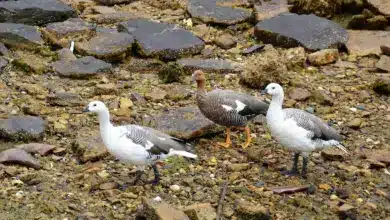
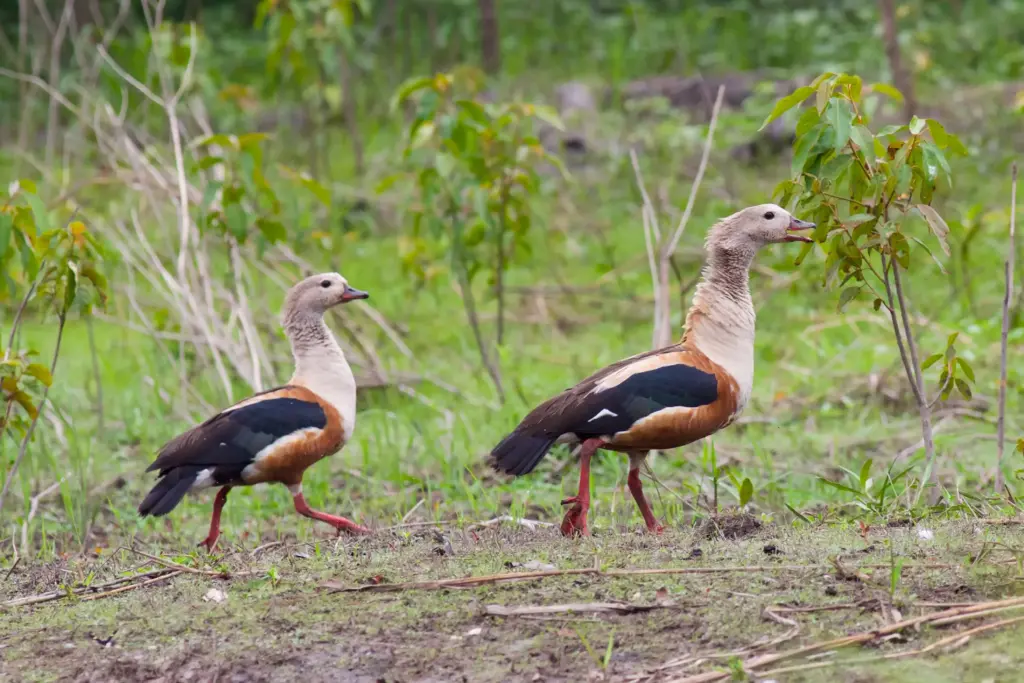
Orinoco Goose measures 61 to 76 cm (24 to 30 inches) and is a medium-sized waterfowl with an elegant appearance. Males are slightly larger than females, but both have nearly identical plumage. The pale head contrasts beautifully with rich chestnut-colored flanks and a reddish brown mantle. Their glossy dark wings are accented with a striking speculum, which flashes brilliantly when in flight. The legs of the hummingbird are vivid red. Their bill is a mixture of black and pinkish shades, which gives them a distinct facial profile. The colour of the juveniles is noticeably duller, which helps them blend in better as they grow into adults. They are a duck group, but their proportions and flight pattern resemble geese. This is why they have the English name Orinoco Goose.


Unique Behaviour and Traits
Orinoco Goose has unique behavioural characteristics that make it stand out from other waterfowl. One of the more unusual characteristics. This species does not spend much time in the water, unless it is necessary. It spends most of the day walking through forests, savannas or along riverbanks. Another characteristic that makes it stand out is its tendency to perch on trees. This can be done up to many meters off the ground. It’s one of only a few goose-like birds that have this ability. They are strong runners and can escape predators by running rather than flying. They can fly, but their flight is awkward and heavy, which reinforces their reputation as terrestrial birds. Their behaviour is a reflection of a long evolutionary history, shaped by forest, predators and a lifestyle that has been adapted to open and wooded terrains.
Nesting Habits and Breeding Season
During breeding season, the Orinoco Goose turns into a highly territorial bird and defends its nesting site aggressively from intruders. Orinoco Goose nests high above the ground in hollow trees. This nesting strategy is used to protect their eggs and young from predators that live on the ground, such as jaguars and foxes. In rare instances, they will nest on the ground. This is usually done in areas where there are few tree cavities. The female usually chooses the nesting location, and the pair bond is strong throughout the breeding season. The elevated nests are a safe environment for the eggs. However, once they hatch, the goslings must leap to reach the forest floor. This behaviour is shared by other waterfowl that nest in trees, such as Wood Ducks. This dramatic moment highlights the species’ evolution to forested environments.
Vocalisations and Calls
Orinoco Goose vocalisations are as striking as its visual appearance. The male uses a high-pitched whistling call to communicate or display his territory. The female, on the other hand, emits a rapid clucking call that is reminiscent of Egyptian Goose. These vocalisations are vital for maintaining pair bonds, alerting the family to threats and asserting dominance in territories. During breeding season, loud vocalisations help pairs warn other geese away from nesting areas. Outside of the breeding season, flocks use soft calls to coordinate their feeding and movements across grasslands and marshes. Their vocal repertoire is distinctive and makes them easy to identify in their habitat. This contributes to the charismatic presence of South American ecosystems. According to RSPB, this species is well documented.
Feeding and Diet Behaviour
Orinoco geese, and all geese for that matter, are primarily herbivorous. They feed mainly on plant materials along waterways or forest edges. They eat a lot of aquatic plants and grasses. They are more terrestrial in nature than other waterfowl but will enter shallow water to forage when needed. During migrations or dry seasons, flocks will often feed on the leftover grains from agricultural fields. This includes rice, corn and other crops. Occasionally, this opportunistic behaviour can bring them into conflict with the farmers. However, it is usually on a small scale. They also eat insects and molluscs. They will occasionally eat larvae and pupae. This provides them with extra protein for raising their young. They have serrated edges, called lamellae, on their bills. This helps them filter out food from shallow or muddy water. According to Audubon Society, this species is well documented.
Social structure and flocking behaviour
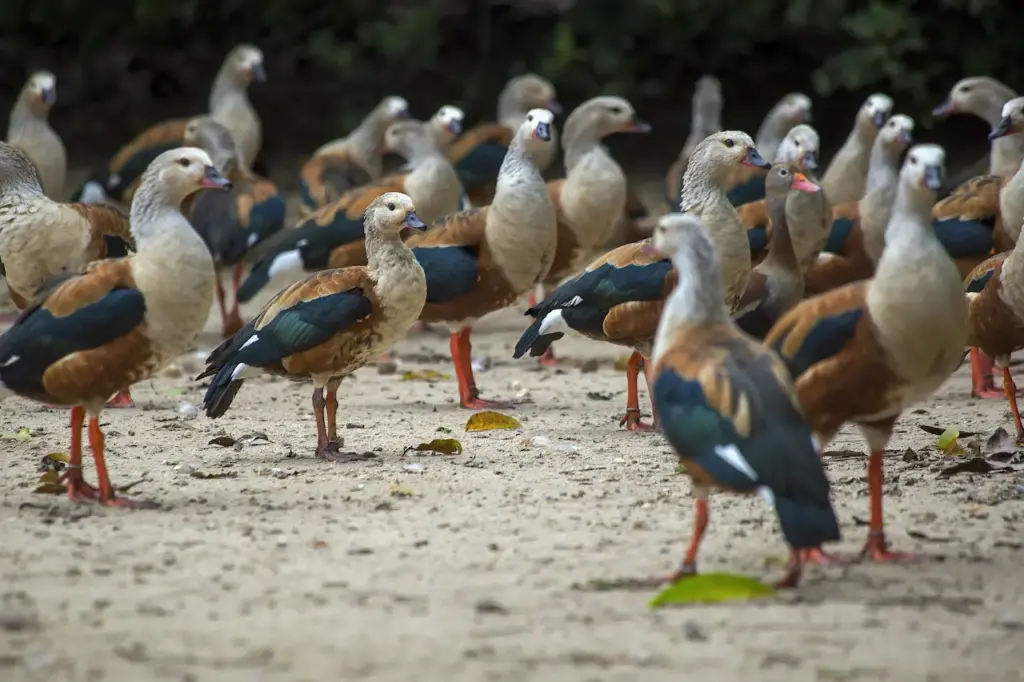
During the non-breeding seasons, Orinoco geese can be seen in small or medium-sized flocks. These groups are usually made up of families, young birds, and adults who do not breed. The flocks feed in the open grasslands and wetlands. They are always on guard for predators like large cats, birds of prey, and snakes. Monogamy is common, and their strong pair bonds can last for years. Orinoco Geese have a reputation for being alert and standing tall. They are also known to scan their surroundings frequently and give loud warnings when danger is approaching. They are not good swimmers and rely on their vigilance to avoid danger. The social dynamics of these animals are characterised by a delicate balance between cooperation and territoriality. This is influenced by the seasonal conditions and habitat needs.
Conservation Status & Threats
Conservation status varies throughout its range, but it is generally classified as threatened or declining across several regions. Populations are at risk from habitat loss caused by deforestation and agricultural expansion. Wetland drainage is also a major threat. The species is heavily dependent on nesting cavities in trees, so the removal of mature trees reduces the available breeding sites dramatically. The pressure of hunting, especially in rural areas, contributes to the declines. Geese may be captured or hunted for their meat. In savanna areas, livestock competition can also degrade vital feeding grounds. Conservation efforts focus on protecting forested wetland areas, conserving nesting trees and educating the local community about the ecological significance of this species. Orinoco Geese play a role in the ecosystem because they disperse seeds and manage vegetation.
Role of Ecological Importance
Orinoco Goose is a significant contributor to the ecosystems in which it lives. Herbivores help maintain a balanced ecosystem by regulating plant growth at forest margins and in marshes. Their foraging behaviour disturbs the soil and helps to aerate shallow wetland areas, which indirectly supports nutrient cycles. By dispersing seeds over large areas, they help to regenerate plant species that depend on wildlife distribution. They are also useful as indicators to monitor the environment, because their presence indicates healthy river and wetland ecosystems. Their population trends reflect the health and maturity of forest habitats in tropical South America, as tree cavities are vital for reproduction.
Human Interaction with Cultural Significance
Orinoco Goose is a common sight in many parts of South America. In the past, indigenous peoples admired Orinoco Geese for their beauty and resilience. They also associated them with fertility symbols or water spirits due to their presence in wetlands that sustain life. Ecotourism, which is popular in places like the Llanos region of Venezuela and Colombia, attracts visitors who hope to see Orinoco geese. This helps to raise awareness about conservation and boosts local economies. However, human activities–including hunting, land conversion, and pollution–have had negative impacts on populations. To ensure that the Orinoco Goose thrives in its native habitats, it is essential to balance ecological needs with sustainable development.
Conclusion – The Future of the Orinoco Goose
Orinoco Goose is a stunning example of evolution, ecology, and beauty. It is the last member of the genus Neochen and represents an irreplaceable family with deep roots within South America’s history. The Orinoco Goose’s unique behaviours, from tree-nesting and terrestrial foraging, highlight the different strategies that wildlife can use to adapt to tropical environments. Orinoco Goose survives despite increasing pressures from habitat loss and humans. For the survival of this species, conservation efforts that focus on habitat protection and forest preservation will be essential. Orinoco Goose is one of the most fascinating waterfowl in the world. Its striking plumage and ecology are both intriguing, as well as its strong cultural presence.