Overview and Introduction
Turkeys are large, ground-dwelling birds belonging to the genus Meleagris, native primarily to North America. They are classified within the order Galliformes, which includes other heavy-bodied, ground-feeding birds such as chickens, pheasants, and quails. The genus Meleagris encompasses two main species: the Wild Turkey (Meleagris gallopavo) and the Ocellated Turkey (Meleagris ocellata), each with unique characteristics and ecological significance.
These birds have long been important both culturally and ecologically. The Wild Turkey was domesticated by Native Americans and later became a staple in North American cuisine and agriculture, while the Ocellated Turkey, found mainly in the Yucatán Peninsula, has a more limited range and is less well-known outside scientific and birdwatching communities.
Physical Characteristics
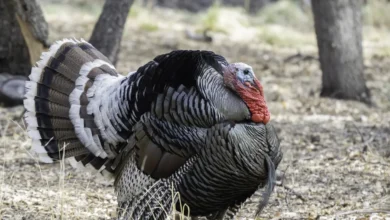
Turkeys are among the largest birds native to North America, with wingspans ranging from 1.5 to 1.8 meters (approximately 5 to 6 feet). This impressive wingspan aids in short bursts of flight, especially when escaping predators or roosting in trees. They have robust bodies covered in dark, iridescent feathers that often gleam with bronze, green, and copper hues.
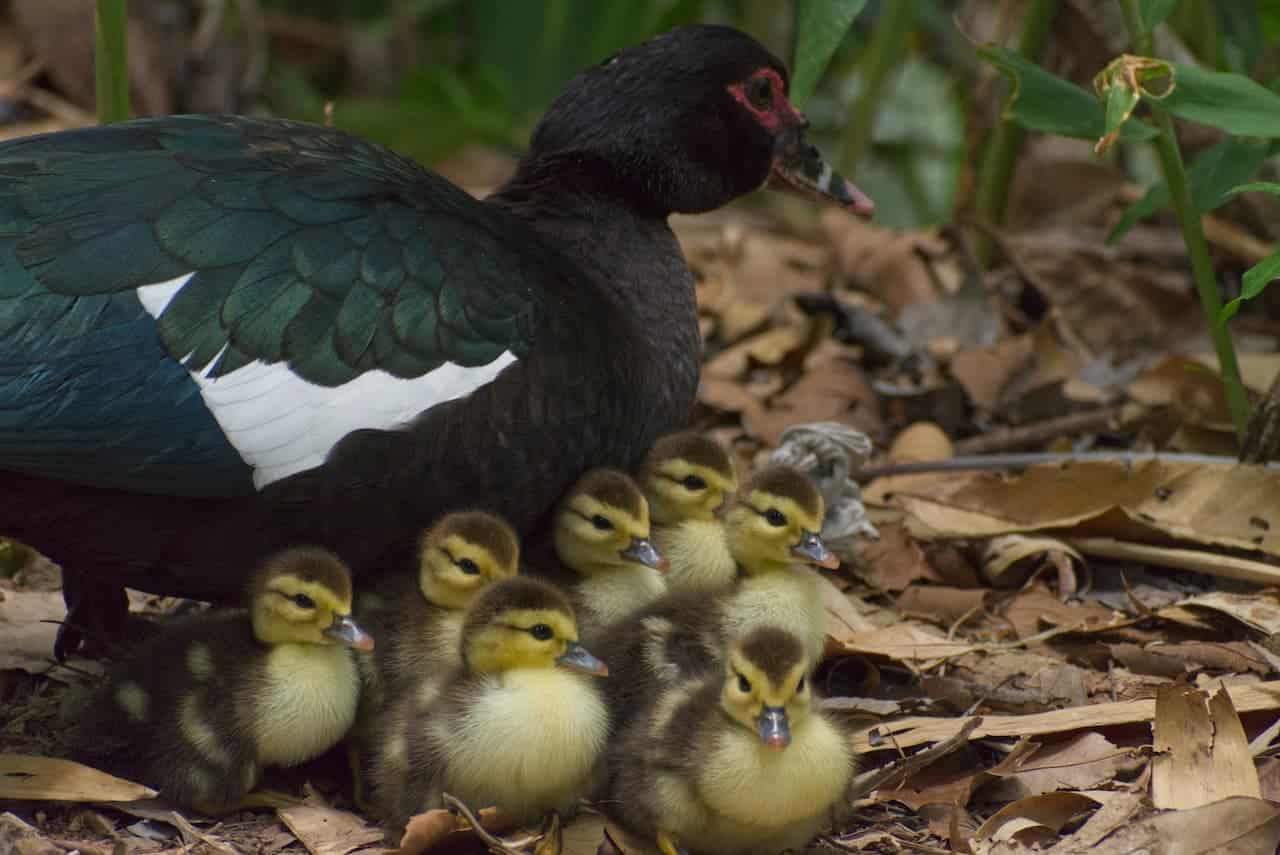




One of the most distinctive features of turkeys is the fleshy, red, or bluish appendage hanging from their beak called the snood. This, along with the caruncles—wart-like bumps on their neck and head—and the distinctive tail fan, are especially prominent during mating displays. Male turkeys, commonly known as toms or gobblers, are significantly larger and more colorful than females, which are called hens. Juvenile turkeys are referred to as poults.
Male turkeys can weigh up to 11 kilograms (24 pounds), while females are smaller, typically weighing 5 to 6 kilograms (11 to 13 pounds). The Ocellated Turkey differs in appearance, sporting a more iridescent blue-green plumage and bright orange and blue eye spots on its tail feathers, which are unlike the more muted patterns of the Wild Turkey.
Behavior
Turkeys are social birds that often form flocks, especially outside the breeding season. They are known for their complex mating rituals, during which males puff up their feathers, fan their tails, and produce a variety of vocalizations including gobbles, purrs, and yelps to attract females. The gobble of a tom can be heard up to a mile away in quiet conditions.
Despite their large size, turkeys are capable of rapid flight, reaching speeds up to 55 miles per hour (88 km/h) for short distances. They primarily prefer to run or walk on the ground but will roost in trees at night to avoid predators. Turkeys use a combination of keen eyesight and acute hearing to detect threats.
Habitat and Distribution
Wild Turkeys are native to North America, with their range historically covering much of the United States, parts of southern Canada, and northern Mexico. They inhabit a variety of environments, including hardwood and mixed conifer-hardwood forests, grasslands, and swamps. These birds prefer areas with a mix of open spaces for foraging and dense cover for nesting and protection.
The Ocellated Turkey is more geographically restricted, found mainly in the tropical forests of the Yucatán Peninsula in Mexico, Belize, and northern Guatemala. Their habitat is characterized by dense, moist forests unlike the more temperate environments favored by the Wild Turkey.
Diet and Feeding
Turkeys are omnivorous and have a diverse diet that changes seasonally. They feed on a wide range of plant and animal matter, including seeds, nuts (such as acorns), berries, roots, insects, and small reptiles. During the spring and summer, insects and other invertebrates constitute a larger portion of their diet, providing essential protein for growth and reproduction.
In the fall and winter, turkeys rely heavily on seeds and nuts to build fat reserves. Their strong beaks and feet allow them to scratch the leaf litter and soil to uncover food, a common behavior often observed in wild turkeys.
Reproduction
Turkey breeding season typically begins in early spring. Males engage in elaborate courtship displays to attract females, including strutting with tail feathers fanned, inflating their bodies, and producing distinctive gobbling sounds. Once a female chooses a mate, she will seek a suitable nesting site, usually on the ground hidden in dense vegetation or under fallen logs.
Hens lay between 10 and 14 eggs per clutch, which they incubate for approximately 28 days. The poults are precocial, meaning they are relatively mature and mobile shortly after hatching. They follow their mother closely, learning to forage and avoid predators. Juveniles reach maturity within one year.
Ecological Role
Turkeys play a significant role in their ecosystems. As seed dispersers, they help maintain forest plant diversity by consuming and excreting seeds from various plants. Their feeding habits can influence insect populations, which helps control pest species. Additionally, turkeys serve as prey for a range of predators, including coyotes, foxes, bobcats, and birds of prey, making them an integral part of the food web.
Their ground-foraging behavior also helps aerate the soil and recycle nutrients, contributing to forest health.
Conservation Status
The Wild Turkey was once widespread but experienced dramatic population declines in the early 20th century due to habitat loss and unregulated hunting. Conservation efforts, including habitat restoration and regulated hunting, have successfully increased their numbers. Today, the Wild Turkey is classified as Least Concern by the International Union for Conservation of Nature (IUCN), with stable or increasing populations across much of its range.
The Ocellated Turkey, however, has a more restricted distribution and faces habitat loss from deforestation and human encroachment. While not currently listed as endangered, its conservation status requires monitoring to prevent future declines.
Interesting Facts
- Domestication Origins: The modern domesticated turkey was developed from the Wild Turkey. The Ocellated Turkey was probably also domesticated by the ancient Maya civilization, although morphological evidence suggests the domestic breeds primarily descend from the Wild Turkey, as indicated by features such as the chest tuft absent in the Ocellated Turkey.
- Communication: Turkeys have an extensive vocal repertoire, including gobbles, yelps, purrs, and clucks, used for mating, signaling danger, and flock communication.
- Flight Ability: Despite their size, turkeys are agile fliers, capable of quick bursts that aid in escaping predators and reaching elevated roosts.
- Historic Significance: Benjamin Franklin famously admired the Wild Turkey and suggested it as the national bird of the United States due to its noble appearance and native status.
- Subspecies Diversity: The Wild Turkey has several recognized subspecies, including the Eastern, Rio Grande, Merriam’s, Gould’s, and the Ocellated Turkey, each adapted to different ecological niches.
- Unique Display Features: Male turkeys can change the color of the skin on their head and neck — from red to white to blue — depending on their mood and during courtship displays.