The world of bees is vast and fascinating, encompassing a variety of species that play crucial roles in ecosystems and agriculture. Among these, the group often referred to as “The Bee Links” primarily involves the Africanized honey bees and the traditional European honey bees, both integral to pollination and honey production. Africanized honey bees, sometimes sensationally dubbed “killer bees,” have garnered much attention due to their unique behavior and rapid spread across the Americas. Meanwhile, the more familiar European honey bees continue to be a cornerstone of beekeeping worldwide. This article explores the taxonomy, distribution, physical traits, behavior, reproduction, conservation, and intriguing facts about these remarkable insects, shedding light on their significance and helping nature enthusiasts better understand their complex lives. For more information, see our guide on breeding.
Scientific Classification
The term “Africanized honey bees” refers to a hybrid strain of the **Western honey bee**, scientifically known as Apis mellifera. Specifically, Africanized honey bees are a cross between the African subspecies Apis mellifera scutellata and various European subspecies such as Apis mellifera ligustica (Italian honey bee) and Apis mellifera mellifera (western European black bee). The Western honey bee, Apis mellifera, belongs to the family Apidae, within the order Hymenoptera, which also includes ants and wasps.
European honey bees, often simply called honey bees, are the domesticated subspecies that have been managed by humans for centuries. These bees are prized for their honey production and pollination abilities. Africanized honey bees, on the other hand, originated from bees imported from southern Africa to Brazil in the 1950s in an attempt to improve honey production in tropical environments. The subsequent hybridization with European bees created the Africanized strain, which has since spread extensively.



Geographic Range & Distribution
European honey bees, Apis mellifera, are native to Europe, western Asia, and parts of Africa. Due to their importance in agriculture, they have been introduced globally and now inhabit all continents except Antarctica. These bees thrive in diverse climates, from temperate zones to subtropical regions, adapting well to managed hives and wild colonies alike.
Africanized honey bees, often called “Africanized” or “killer bees,” originally developed in Brazil after the introduction of African queens in 1956. Since then, they have spread rapidly throughout much of the Americas. Their range now extends from northern Argentina and Paraguay through Central America and Mexico, reaching southern parts of the United States, including Texas, Arizona, New Mexico, and California. Occasional sightings have been reported as far north as Florida and even southern Nevada. This rapid expansion is facilitated by their adaptability to tropical and subtropical climates, faster colony reproduction rates, and aggressive defense strategies.
Unlike their European counterparts, Africanized honey bees tend to dominate in warmer, more humid environments. They are less prevalent in cooler climates but may establish colonies in transitional zones where conditions permit.
Physical Description
Both Africanized and European honey bees share many physical characteristics as they belong to the same species, Apis mellifera. Adult worker bees typically measure about 12 to 15 millimeters in length, with a wingspan of approximately 18 to 20 millimeters. Their bodies are covered in dense, branched hairs that aid in pollen collection. The coloration varies from golden-yellow to brown and black banding on the abdomen.
Africanized honey bees are generally slightly smaller and darker than European honey bees, though the difference is subtle and often indistinguishable to the untrained eye. Their thorax and abdomen may appear more uniformly dark with less pronounced yellow bands. Queens of Africanized bees are similar in size to European queens but tend to have a more slender abdomen. Drones (males) are larger than workers and have bigger eyes, adapted for mating flights.
The distinguishing features between Africanized and European honey bees are more behavioral and genetic than morphological, making identification without genetic testing or observing colony behavior challenging. Both types have the classic honey bee anatomy with a pair of translucent wings, six legs, and antennae used for sensory perception.
Behavior & Diet
Honey bees, including Africanized and European strains, are social insects living in highly organized colonies composed of a single queen, thousands of female worker bees, and some male drones. Their behavior revolves around foraging, hive maintenance, defense, and reproduction.
Diet-wise, honey bees primarily consume nectar and pollen collected from flowering plants. Nectar provides carbohydrates while pollen supplies proteins, fats, vitamins, and minerals essential for growth and brood development. Worker bees have specialized structures called pollen baskets on their hind legs to carry pollen back to the hive. Honey production involves converting nectar into honey through enzymatic activity and evaporation, which serves as a vital food reserve during lean periods.
Africanized honey bees are notable for their heightened defensiveness compared to European honey bees. Their defense response activates with less provocation, and they tend to pursue perceived threats over greater distances. This behavior, along with their rapid colony reproduction and swarming tendencies, has earned them the nickname “killer bees,” though fatalities are rare and typically occur only when humans disturb hives or fail to recognize warning signs.
European honey bees exhibit more temperate defensive behavior, allowing easier management for beekeepers. Both types of bees are vital pollinators of wild plants and agricultural crops, with diets that vary seasonally depending on available flora. They exhibit complex communication methods, including the famous “waggle dance,” to direct hive mates to rich food sources.
Breeding & Reproduction
Honey bee colonies reproduce through a process called swarming, where the existing queen leaves the hive with a large group of worker bees to establish a new colony. The original hive then raises new queens from selected larvae. Queen bees mate during a brief period early in life, typically between five and 15 days old, during which they take mating flights to drone congregation areas. Mating involves multiple drones, after which the queen stores sperm to fertilize eggs throughout her several-year lifespan. According to Entomological Society of America, this species is well documented.
Worker bees are all female and sterile, responsible for foraging, brood care, and hive maintenance. Drones, the males, exist solely to mate with virgin queens and are expelled from the hive before winter. Africanized honey bees tend to swarm more frequently than European bees, sometimes producing new colonies every few weeks during peak seasons, which contributes to their rapid territorial expansion. According to IUCN Red List, this species is well documented.
Colony reproduction and survival depend heavily on environmental conditions and resource availability. In managed apiaries, beekeepers intervene to regulate swarming, replace queens, and prevent disease. Africanized bees’ increased swarming frequency and aggressive behavior pose challenges for traditional beekeeping but also demonstrate their resilience and adaptability in diverse environments.
Conservation Status
Honey bees as a species, Apis mellifera, are not currently listed as threatened or endangered by the International Union for Conservation of Nature (IUCN). However, concerns about declining honey bee populations have risen globally due to factors such as habitat loss, pesticide exposure, diseases (notably Varroa mite infestations), and climate change. These threats affect both European and Africanized honey bees, although Africanized bees often demonstrate greater resistance to some parasites and environmental stresses.
Conservation efforts focus on promoting sustainable beekeeping practices, enhancing habitat quality by planting diverse flowering plants, and reducing pesticide use. The decline of wild pollinators alongside honey bees raises alarms about potential impacts on ecosystems and food security. Africanized honey bees’ aggressive nature complicates conservation in certain regions, as they may outcompete local bee populations or disrupt apiary operations.
Overall, honey bee conservation remains critical given their indispensable role in pollinating nearly 90% of flowering plants and over one-third of global food crops. Protecting bee health supports biodiversity, agriculture, and human well-being alike.
Interesting Facts
The Africanized honey bee’s nickname, “killer bee,” stems largely from media hype and their defensive behavior rather than inherent lethality. While their stings can be painful and multiple stings dangerous, fatalities are uncommon and often preventable with proper precautions. Africanized bees respond quickly to disturbances, releasing alarm pheromones that mobilize the colony’s defense, sometimes chasing intruders over 400 meters from the hive.
Honey bees communicate using a sophisticated dance language. The waggle dance encodes information about the direction and distance of food sources relative to the sun’s position. This remarkable form of non-verbal communication enables colonies to exploit nectar-rich flowers efficiently.
Honey bee queens are the only reproductive females and can lay up to 2,000 eggs per day during peak seasons. The queen’s pheromones regulate colony behavior, suppress worker reproduction, and maintain social harmony.
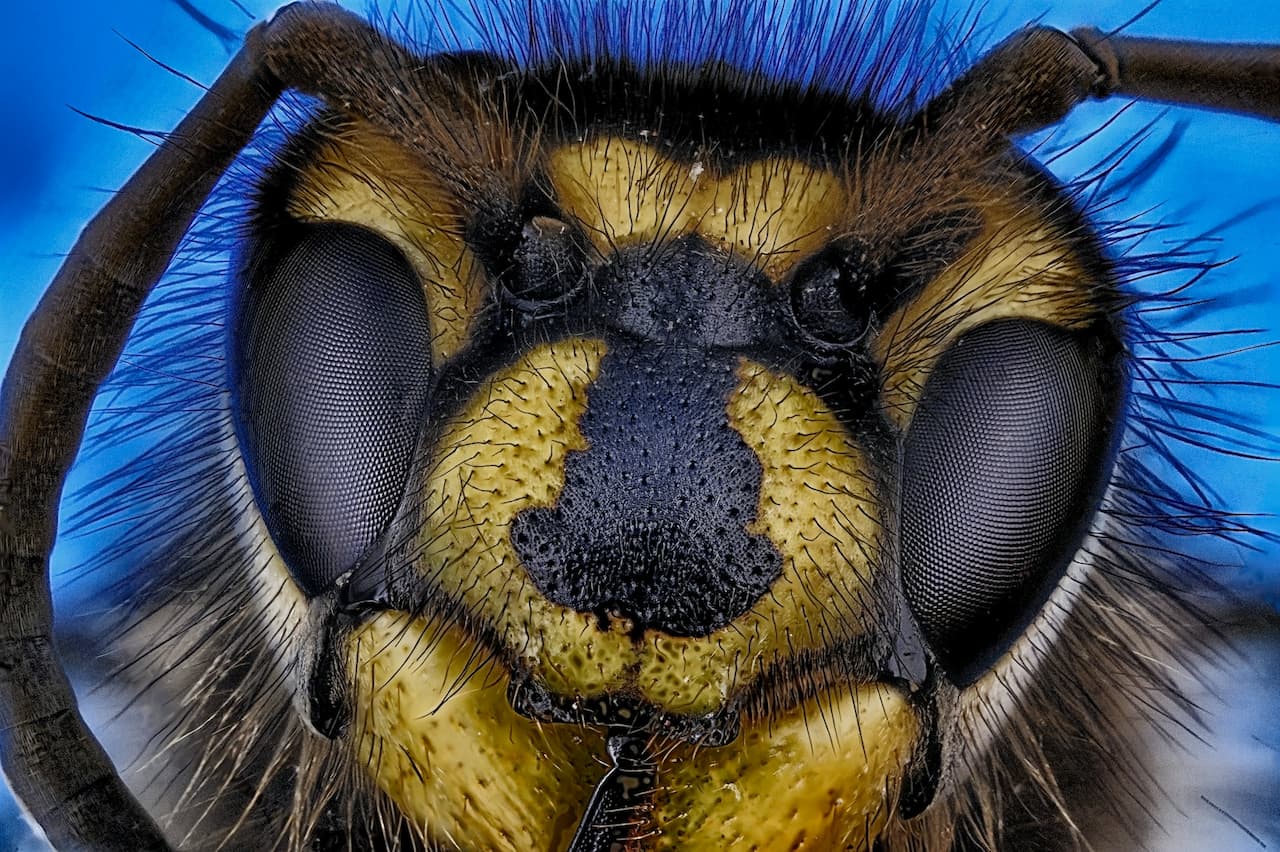
Bees have five eyes—two large compound eyes and three smaller ocelli located on top of the head. These help them navigate, detect light intensity, and spot movement. Their sense of smell is highly developed, essential for identifying flowers, detecting pheromones, and recognizing hive mates.
Honey bees contribute to the pollination of many important crops, including almonds, apples, blueberries, and cucumbers. Their pollination services represent billions of dollars in agricultural value annually worldwide.
Interestingly, Africanized honey bees exhibit greater resistance to Varroa destructor mites, a parasite devastating to many European honey bee populations. This resilience makes them a subject of scientific interest in efforts to breed mite-resistant honey bees.
Conclusion
The Africanized and European honey bees together form a fascinating chapter in the story of pollinators—organisms vital to global ecosystems and agricultural productivity. While their differences in behavior and adaptability have sparked both admiration and caution, understanding their biology and ecology enriches our appreciation of these industrious insects. From their intricate social structures and communication to their critical role in sustaining biodiversity, honey bees continue to captivate scientists, beekeepers, and nature enthusiasts alike. Protecting their populations and habitats ensures the ongoing health of natural landscapes and human food systems, underscoring the profound connection between bees and life on Earth.