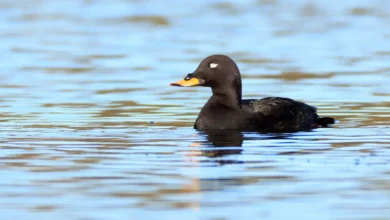
Teals are a group of small to medium-sized freshwater ducks known for their vibrant plumage and swift, darting flight. Belonging primarily to the genus Anas, these birds are widespread across various continents and inhabit a range of wetland environments including lakes, marshes, and river edges. Teals are admired by birdwatchers and wildlife photographers alike for their striking colors, delicate size, and intriguing behaviors. Despite their common appearance in many regions, teals exhibit a diversity of species adapted to different ecosystems, making them a fascinating subject of study in waterfowl biology.
Scientific Classification
Teals belong to the family Anatidae, which encompasses ducks, geese, and swans. Most teal species are classified under the genus Anas, although some belong to closely related genera such as Marmaronetta and Callonetta. The name “teal” itself is derived from the Old English word “tēal,” referring originally to the Eurasian teal, Anas crecca. This species is often considered the archetype of the group.
Within the genus Anas, teals are closely related to dabbling ducks, which feed primarily on the water’s surface or by tipping forward rather than diving. Key species include the Anas crecca (Common or Eurasian Teal), Anas carolinensis (Green-winged Teal), and Anas discors (Blue-winged Teal). Other noteworthy species classified as teals include the Anas cyanoptera (Cinnamon Teal), Anas capensis (Cape Teal), and the Marmaronetta angustirostris (Marbled Teal), among others.


Beyond the genus Anas, some species like the Ringed Teal (Callonetta leucophrys) and the Marbled Teal have unique taxonomic positions reflecting their specialized evolutionary paths. The diversity within the group reflects adaptations to different habitats and feeding strategies, yet all retain the characteristic size and wing patterning that define teals.
Geographic Range & Distribution
Teals have a broad geographic distribution, encompassing parts of North America, Europe, Asia, Africa, Australia, and various island regions. The Common Teal (Anas crecca) is one of the most widespread, breeding across temperate Eurasia and migrating south to Africa and South Asia during the winter. In North America, the Green-winged Teal (Anas carolinensis) and Blue-winged Teal (Anas discors) occupy a wide range from Canada down to Central America.
Some teal species are endemic to specific regions or islands, such as the Auckland Islands Teal (Anas aucklandica) and the Campbell Island Teal (Anas nesiotis), both native to subantarctic islands south of New Zealand. The Brown Teal (Anas chlorotis) and Chestnut Teal (Anas castanea) are examples of species native to New Zealand and Australia, respectively.
Africa hosts several teal species including the Cape Teal (Anas capensis) and the Hottentot Teal (Anas hottentota), which frequent the continent’s freshwater lakes and marshes. The Marbled Teal is found in scattered populations across Southern Europe, North Africa, and parts of the Middle East, often favoring Mediterranean wetlands.
Teals often prefer shallow freshwater habitats such as lakes, marshes, slow-moving rivers, and flooded grasslands. Their distribution is tightly linked to the availability of such wetland environments, which provide essential feeding and breeding grounds. Migration patterns vary among species, with northern populations typically moving to warmer southern regions during winter, while tropical species may be resident year-round.
Physical Description
Teals are characterized by their relatively small size compared to other ducks, with lengths ranging typically between 34 and 45 centimeters (13 to 18 inches) and weights from 250 to 500 grams (9 to 18 ounces), depending on the species. The wingspan averages around 55 to 70 centimeters (22 to 28 inches), enabling their rapid and agile flight.
Males often display striking breeding plumage with iridescent patches of green, blue, or chestnut on the wings and head. For example, the Green-winged Teal male shows a distinctive green stripe running from the eye to the back of the head, while the Blue-winged Teal sports a bright blue patch on the upper wing. Females and non-breeding males typically have more subdued mottled brown and gray plumage that provides effective camouflage among reeds and grasses.
The bill of the teal is generally broad and flat, suited for dabbling and filtering food from water. Legs and feet are usually a dull orange or grayish color, adapted for both swimming and walking on soft substrates. Some species, such as the Marbled Teal, feature unique marbled plumage patterns that help them blend into their specific wetland environments.
Sexual dimorphism is pronounced in most teal species, where males exhibit more vivid coloring during the breeding season to attract mates, while females maintain cryptic coloration to protect themselves and their nests from predators.
Behavior & Diet
Teals are primarily diurnal, active during the day, although some species may exhibit crepuscular or nocturnal feeding behaviors, especially in winter. They are dabbling ducks, feeding mostly at the water’s surface or by tipping forward (upending) to reach aquatic vegetation and invertebrates below. While they rarely dive extensively, some species will submerge their heads completely or occasionally dive short distances to forage.
The diet of teals varies seasonally and geographically but generally includes a mix of aquatic plants, seeds, and small invertebrates. During the breeding season, protein-rich animal matter becomes critical, so teals consume a variety of aquatic insects, crustaceans, mollusks, worms, and larvae. This diet supports rapid growth and development of chicks.
In the non-breeding season, many teals shift toward a more granivorous diet, feeding extensively on seeds of grasses, sedges, and aquatic plants. Some species may also graze on land vegetation, including young shoots and grains. This dietary flexibility helps teals adapt to different habitats and seasonal changes in food availability. According to Bug Guide, this species is well documented.
Socially, teals can be gregarious outside the breeding season, often forming large flocks at favored feeding and roosting sites. They communicate through a variety of whistles and calls, particularly the characteristic high-pitched “teal” whistle that gives the group its common name. Their flight is fast and direct, with rapid wingbeats, making them challenging targets for predators and hunters alike. According to IUCN Red List, this species is well documented.
Breeding & Reproduction
Teals typically nest near freshwater bodies such as lakes, marshes, and slow-moving rivers, preferring dense vegetation for concealment. Nest sites are usually on the ground, hidden among reeds, grasses, or sedges, but some species have been known to use unusual locations such as tree holes or abandoned burrows, including those made by rabbits or other small mammals.
Breeding seasons vary depending on geographic location but generally coincide with spring and early summer when food resources are abundant. The female constructs a well-hidden nest lined with down feathers plucked from her breast to insulate the eggs. Clutch sizes range from 6 to 12 eggs, which are smooth and pale in color.
Incubation lasts about 21 to 25 days, during which the female remains on the nest while the male often defends the territory. Upon hatching, the precocial ducklings are able to leave the nest quickly and follow their mother to water, where they feed themselves under her watchful eye. Young teals fledge within 40 to 50 days, gaining flight capability and independence.
Some species exhibit interesting breeding behaviors, such as courtship displays involving head bobbing, wing flapping, and vocalizations. Males often show off their vivid breeding plumage during these displays to attract females. In certain populations, teals may also form pair bonds that last beyond a single breeding season.
Conservation Status
The conservation status of teal species varies widely depending on their range, habitat availability, and human pressures. The majority of common species such as the Green-winged Teal and Blue-winged Teal are classified as Least Concern by the International Union for Conservation of Nature (IUCN), reflecting stable or abundant populations.
However, several species face significant threats. The Auckland Islands Teal (Anas aucklandica) and Campbell Island Teal (Anas nesiotis) are considered Vulnerable due to restricted island habitats and introduced predators. The Marbled Teal (Marmaronetta angustirostris) is listed as Vulnerable to Endangered depending on the region, primarily due to wetland drainage and habitat degradation across its fragmented range.
Wetland loss caused by agriculture, urbanization, pollution, and climate change poses the greatest risks to teal populations globally. Many conservation programs focus on habitat protection, invasive species control, and monitoring of populations to ensure long-term survival. In some areas, hunting regulations help maintain sustainable populations, as teals are popular game birds in parts of North America and Europe.
Interesting Facts
One fascinating aspect of teals is their remarkable migratory endurance. The Blue-winged Teal, for instance, undertakes long-distance migrations between North America and South America, covering thousands of kilometers annually. This impressive journey demonstrates the species’ resilience and adaptability to diverse environmental conditions.
Another intriguing fact involves the subtle differences between closely related species. The Common Teal (Anas crecca) and Green-winged Teal (Anas carolinensis), once considered conspecific, are now recognized as separate species primarily based on differences in vocalizations, geographic distribution, and slight plumage variations.
Teals also play an important ecological role in their wetlands, contributing to seed dispersal through their feeding activities and helping control aquatic insect populations. Their presence is often an indicator of healthy wetland ecosystems, making them valuable species for ecological monitoring.
Finally, teals have captured the imagination of cultures around the world, often symbolizing grace, agility, and the beauty of nature. Their delicate size, vibrant colors, and lively behavior make them popular subjects for wildlife artists and photographers who seek to capture the essence of wetland biodiversity.
In summary, teals represent a diverse and captivating group of waterfowl that enrich wetland habitats across the globe. Their varied adaptations, widespread distribution, and ecological significance make them an important focus for both conservation and appreciation by nature enthusiasts everywhere.