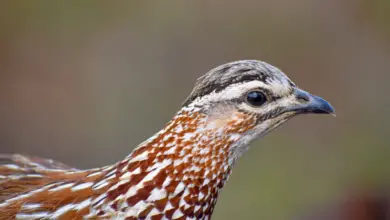
The genus Tragopan consists of a fascinating group of pheasants known for their vivid colors and unique courtship displays. Often referred to as “horned pheasants,” these birds are distinguished by the bright, fleshy horns that males can erect during mating rituals. These horns, along with their striking plumage, make them a favorite subject for birdwatchers and wildlife photographers. Tragopans are arboreal nesters, a somewhat unusual trait among pheasants, choosing tree hollows or branches to raise their young. Native to various montane forests across Asia, these birds play a notable role in their ecosystems, yet many species within this genus face conservation challenges due to habitat loss and hunting pressure.
Scientific Classification
The genus Tragopan belongs to the family Phasianidae, which encompasses pheasants, partridges, and related species. This family is part of the order Galliformes, known for ground-feeding birds with strong legs and rounded bodies. The term “horned pheasants” refers specifically to the genus Tragopan, named for the male’s distinctive erectile facial horns used during courtship displays. There are currently five recognized species within this genus: the Western Tragopan (Tragopan melanocephalus), Satyr Tragopan (Tragopan satyra), Temminck’s Tragopan (Tragopan temminckii), Blyth’s Tragopan (Tragopan blythii), and Cabot’s Tragopan (Tragopan caboti).
Each species exhibits unique adaptations and color patterns, but all share the characteristic fleshy horns and elaborate courtship behavior. The genus name “Tragopan” is derived from a mythical horned bird described in ancient Roman literature, reflecting the remarkable appearance of these birds. Their closest relatives within Phasianidae include other pheasants like monals and kalij pheasants, but tragopans are unique in their arboreal nesting and display habits.


Geographic Range & Distribution
Tragopan species inhabit montane forests across parts of South and Southeast Asia, with ranges largely concentrated in the Himalayan region and adjoining areas. The Western Tragopan (T. melanocephalus) is found in the western Himalayas, primarily in northern India and parts of Pakistan, between elevations of 1,800 to 3,000 meters. The Satyr Tragopan (T. satyra) occupies the eastern Himalayas, from Nepal through Bhutan to northeastern India, usually at altitudes of 2,400 to 3,700 meters.
Temminck’s Tragopan (T. temminckii) is distributed across the mountains of Bhutan, northeastern India, and parts of southern China, favoring dense coniferous and mixed forests between 1,700 and 3,000 meters elevation. Blyth’s Tragopan (T. blythii) is native to northeast India and northern Myanmar, often found in dense oak and rhododendron forests. Cabot’s Tragopan (T. caboti) is endemic to southeastern China, particularly in the provinces of Fujian, Zhejiang, and Jiangxi, inhabiting subtropical broadleaf forests at elevations of 300 to 1,200 meters.
These birds prefer cool, moist montane environments with dense understory vegetation, which provides both food resources and protection from predators. Their arboreal nesting habits tie them closely to mature forest stands, making them vulnerable to deforestation and habitat fragmentation in their restricted ranges.
Physical Description
Members of the genus Tragopan are medium-sized pheasants, with males typically larger and more vibrantly colored than females. Adult males range from about 50 to 70 centimeters in length, including their long tail feathers, and weigh between 1 and 2.5 kilograms, depending on the species. Females are generally smaller and exhibit more subdued, cryptic plumage to blend into their forest environments.
The most striking feature of male tragopans is their erectile fleshy horns, which are vivid red or orange and emerge from above the eyes during courtship displays. These “horns” are actually lappets—fleshy skin structures that inflate and become brightly colored to attract females. Additionally, males have brightly colored facial skin, throat patches, and wattles, which can be displayed in tandem with the horns.
Plumage coloration varies among species but generally includes a mix of reddish, orange, white, and black markings with spotted or barred patterns. For example, the Western Tragopan male sports a glossy black head and neck with bright orange-red underparts spotted with white, while the Satyr Tragopan male exhibits rusty orange plumage with white spots and blue facial skin. Females are mottled brown and buff, providing excellent camouflage against the forest floor and tree trunks.
The wings of tragopans are rounded and relatively short, adapted more for short bursts of flight and maneuvering through dense undergrowth than for long-distance flight. Their legs are strong and scaled, suited for scratching the forest floor and clambering through low branches.
Behavior & Diet
Tragopans are shy, elusive birds that spend much of their time on or near the forest floor, foraging through leaf litter and low vegetation. Their diet is omnivorous, consisting primarily of a variety of plant material such as seeds, berries, roots, and shoots, supplemented by insects and other small invertebrates. They play an important role in seed dispersal within their forest habitats.
These birds are generally solitary or found in pairs outside the breeding season, though males become highly vocal and visible during courtship. Their calls are loud, clear whistles or guttural croaks that can carry through dense forest, serving to establish territory and attract mates. Tragopans are also known for their elaborate visual displays: males inflate their horns and throat lappets, fan their tails, and perform a series of ritualized movements to impress females.
While tragopans are capable of flight, they prefer to run or hop through their environment, using their strong legs to navigate steep terrain and dense undergrowth. At night and during inclement weather, they roost in trees to avoid ground predators. Their arboreal nesting habits are relatively unusual among pheasants and likely evolved as a strategy to reduce predation risk on eggs and chicks. According to RSPB, this species is well documented.
Breeding & Reproduction
Breeding seasons for tragopans generally coincide with the onset of spring and early summer, varying slightly depending on geographic location and elevation. Males engage in spectacular courtship displays, showcasing their bright horns and throat patches in elaborate dances to attract females. These displays can include inflating brightly colored facial skin, vocalizing, and performing a series of bows and wing flaps. According to Cornell Lab of Ornithology, this species is well documented.
Once a female selects a mate, she builds a nest in a tree hollow, on a branch, or in dense vegetation several meters above the ground. This arboreal nesting behavior is distinctive among pheasants, which typically nest on the ground. The nest is lined with grasses and leaves to provide a soft environment for the eggs.
Clutches usually contain between 3 to 6 eggs, which are cream-colored with fine speckles. The female incubates the eggs alone for approximately 24 to 28 days. During this period, males often remain nearby to defend the territory but do not participate in incubation or chick-rearing. After hatching, chicks are precocial, leaving the nest soon and following their mother to forage. The young grow rapidly, fledging within 6 to 8 weeks.
Given their reliance on dense forest habitat for nesting sites, any disruption to mature trees can have significant impacts on breeding success.
Conservation Status
Many tragopan species face conservation threats due to habitat destruction, hunting, and fragmentation of their forest environments. According to the International Union for Conservation of Nature (IUCN), the Western Tragopan (T. melanocephalus) is classified as Vulnerable, primarily due to its limited and fragmented range in the western Himalayas and ongoing habitat loss from logging and agricultural expansion.
The Satyr Tragopan (T. satyra) is listed as Least Concern but still experiences localized declines in certain parts of its range. Temminck’s Tragopan (T. temminckii) is categorized as Near Threatened, with habitat degradation and hunting pressure causing population decreases across its distribution. Blyth’s Tragopan (T. blythii) is considered Vulnerable as its populations have declined steeply due to deforestation in northeastern India and Myanmar. Finally, Cabot’s Tragopan (T. caboti) is classified as Vulnerable, threatened by habitat loss and fragmentation in its limited southeastern China range.
Conservation efforts for tragopans focus on habitat protection and restoration, along with community-based initiatives to reduce hunting. Protected areas and national parks in the Himalayas and China play a critical role in preserving these species. In addition, captive breeding programs exist for some species to bolster wild populations and maintain genetic diversity. Continued research and monitoring are essential to understand population trends and develop effective conservation strategies.
Interesting Facts
Tragopans are among the few pheasants that nest in trees, a remarkable adaptation that helps protect their eggs and chicks from ground predators such as snakes and mammals. Their erectile horns are unique not only in appearance but also in their function as dynamic signaling devices during mating season, capable of rapid color change and inflation.
These birds are considered indicators of healthy montane forest ecosystems, as they require intact, mature habitats with dense understory for food and cover. Their secretive nature and preference for dense forest make them challenging to observe, adding to their allure among birdwatchers and naturalists seeking rare and striking birds.
The genus name “Tragopan” traces back to Roman literature, where a mythical horned bird was described, reflecting the ancient fascination with these creatures. Despite their mythic associations, tragopans are very real and tangible representatives of Asia’s rich biodiversity.
In cultural contexts, some local communities revere tragopans or incorporate their images into art and folklore, appreciating their beauty and the mystery surrounding their elusive habits. For photographers, capturing a male tragopan’s courtship display is a prized achievement due to the rarity and brilliance of the spectacle.
In summary, tragopans are captivating pheasants that combine striking physical features, fascinating behaviors, and important ecological roles in their montane forest homes. Protecting these “horned pheasants” ensures the survival of a remarkable group of birds and the health of the ecosystems they inhabit.