The Sharp-tailed Ibis ( cercibis oxycerca ) is one of South America’s lesser-known avian marvels. It is a mysterious, elegant bird that captures the attention of birders, ornithologists and nature enthusiasts alike. This elusive species, which is native to northern South America, can be found in Brazil and Colombia as well as Guyana and Suriname. It silently patrols seasonal wetlands and lowland grasslands. Sharp-tailed Ibis is a very important species in ecosystems, despite its limited range and low profile. Its graceful stature and unique behaviour, along with its long, downward-curving bill, symbolise the resilience of South America’s wetland diversity. Often mistaken for herons because of their similar shapes and habitats in wetlands, ibises, including the Sharp-tailed Ibis, can be distinguished by their flight styles: unlike herons, they fly with their necks fully extended, often soaring across the sky in elegant V-shaped patterns.
The Natural Range and Habitat Preference of the Sharp-tailed Ibis
Sharp-tailed Ibis are endemic in the northern neotropical areas of South America. They can be found in Brazil’s Amazon basin as well as scattered populations throughout eastern Colombia, southern Venezuela and Guyana. This bird is a specialist of subtropical and tropical lowland grasslands that are wet during the season. During the rainy season, vast stretches of grasslands flood with nutrient-rich water, transforming these areas into vibrant aquatic ecosystems teeming with amphibians, insects, and aquatic invertebrates–offering the perfect buffet for the Sharp-tailed Ibis. These grassy wetlands and floodplains provide plenty of food as well as nesting areas, which are usually free from ground predators.
The Sharp-tailed Ibis, unlike many other water birds that are dependent on permanent bodies of water, has adapted well to seasonally wetlands. The Sharp-tailed Ibis is usually seen in grassy, open areas that are inundated annually. Shallow waters enable them to forage and probe effectively. The choice of habitat for the bird reflects the delicate balance between water availability and vegetation coverage. Too dry, and prey is scarce. Too deep, and it becomes impossible to hunt. The Sharp-tailed Ibis occupies a fine ecological niche that makes it a sensitive indicator for the health and well-being of tropical lowland pasturelands. It is therefore at the centre of South American conservation discussions.


Physical Appearance
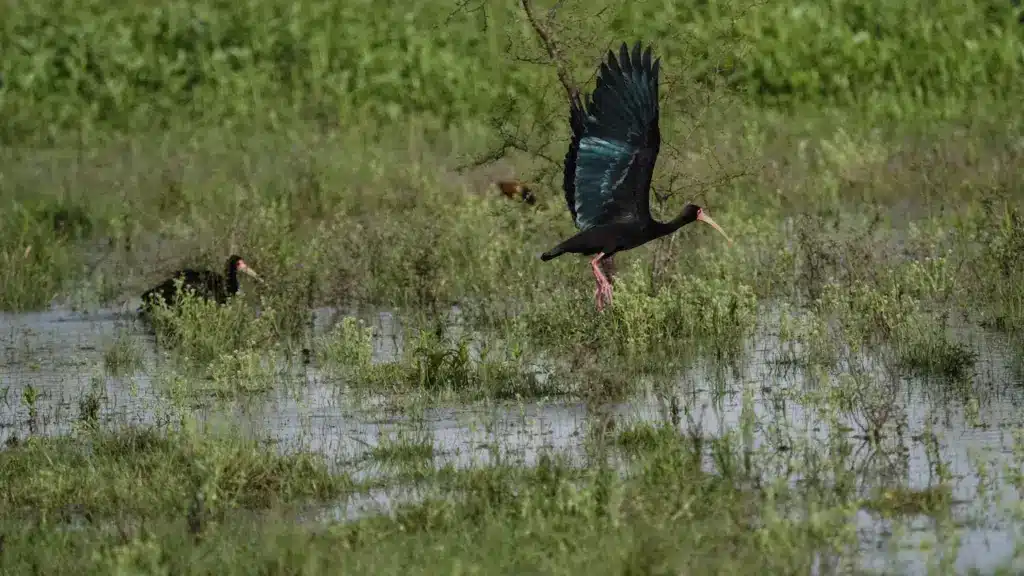
Sharp-tailed Ibis are moderately sized wading birds with the long, downward-curving bills typical of ibises. These bills were specially designed to probe into soft mud or silt for food. The overall color of the Sharp-tailed Ibis’ plumage can appear iridescent under certain lighting conditions, reflecting shades of bronze, green or purple. This is more subtle than some of its more colourful ibis relatives. The “sharp-tail” does not refer to a spike, but rather an elongated, narrow tail feather shape that gives the bird its streamlined appearance, both in flight and when at rest.
They are usually observed foraging in small groups or alone, but they can be more social during the breeding season. Foraging is deliberate, and they are often observed walking through wet grasses along the edges of wetlands or slowly moving through flooded areas while probing soil rhythmically with their bills. The slender body and long legs of the Sharp-tailed Ibis are ideal for navigating marshy terrain. The Sharp-tailed Ibis, as with other ibises , flies with the neck fully extended. This is a distinguishing feature that sets it apart from herons and other wading bird species, which fly with their necks tucked. In flight, flocks of ibises adopt a ‘V-formation’. This is an efficient way to travel, which reduces wind resistance while enhancing communication.
Dietary Habits and Feeding of the Sharp-Tailed Ibis
Sharp-tailed Ibis feeds on a variety of foods, including in shallow freshwater wetlands and flooded grasslands. The ibis can find food in these habitats, which are rich in aquatic insects. The ibis’ diet consists of aquatic invertebrates, crustaceans and molluscs as well as small fish if available. The distinctive bill of the bird is well-suited for tactile foraging. It probes into waterlogged soil to detect prey using touch, rather than sight.
The Sharp-tailed Ibis also hunts terrestrial insects and reptiles . This is especially true when the wetlands shrink or when it’s drier. This land-based food may include skinks and lizards as well as worms and other invertebrates. The ability to adapt their diet is essential for habitats with drastic seasonal variations. The ibis will also follow larger mammals like capybaras and cattle to catch insects or other small creatures that are disturbed by their activity. This behaviour demonstrates the ibis’s adaptability, opportunism and ability to survive in changing environments. According to eBird, this species is well documented.
Breeding behaviour and Nesting behaviour
Breeding Sharp-tailed Ibises is highly seasonal. It is timed to coincide with the rainy season, when food and water are abundant. This ensures that the chicks will be raised in an environment rich with resources, which increases their chances of survival. Cercibis Oxycerca has a cryptic mating ritual. However, the behavior is similar to other ibis species. These birds form mixed species breeding colonies with other water birds like herons and egrets. The colonial nesting system not only creates social structure, but also increased protection against predators. According to RSPB, this species is well documented.
Nests are typically built in near water. However, some birds have been observed nesting on cliffs and rocky outcrops when there are few trees. Nesting sites must be carefully selected, and are often located above flood zones in order to prevent water levels from rising during incubation or chick rearing. The nests consist of shallow platforms made from sticks, reeds and grasses. They are often reused and improved year after year. Nest reuse is an energy-saving strategy that also takes advantage of known safe areas.
The average clutch is two to four eggs that are pale in colour and are incubated over several weeks by both parents. The chicks, once hatched are semialtricial – born with limited mobility. They are dependent on their parents for warmth and food. The young are fed by both parents through regurgitation. The fledglings grow rapidly and leave the nest in a few weeks. However, they still depend on their parents for food and protection.
Conservation Status & Environmental Importance
According to current assessments, although the Sharp-tailed Ibis has not been classified as a globally threatened species yet, its habitat continues to be under increasing pressure due to agricultural expansion, cattle grazing and logging, along with wetland draining. The development of roads, settlements and farmland is transforming the lowland seasonal flooded grasslands in South America. These changes in the environment can fragment the habitat of the ibis and disrupt the ecological timings for breeding and foraging. Climate change is a threat to the long-term future of the ibis because it alters the intensity and predictability of the wet and dry seasons in the region.
The Sharp-tailed Ibis is a Bioindicator species that reflects the health of tropical wetland ecologies. The presence or absence of the Sharp-tailed Ibis in a certain area can be used by scientists to gauge the effects of habitat restoration and environmental degradation. To protect this species, large tracts of seasonal flooded grassland must be conserved, pesticides and herbicides should be limited near wetlands, and sustainable land use practices that balance human development and ecological preservation need to be promoted.
The Hidden Treasures of South American Wetlands
The Sharptailed Ibis may not be as well-known as its flamboyant cousin the Scarlet Ibis or as common as the Glossy Ibis but it is a hidden jewel in South America’s avian diversity. The Sharp-tailed Ibis’s subtle beauty, secretive habits and specialized habitat make it an exciting sight for anyone lucky enough to see it in the wild. The Sharp-tailed Ibis is more than just a simple bird. It represents the complex relationship between seasonal wetlands, and the wildlife they support.
The survival of this bird is closely tied to the natural cycles of water and the land. This shows the importance of eco-system connectivity and the natural hydrological cycle. In an era when human activity is reshaping the natural landscapes of the continent, it’s important to pay more attention to the birds that are often overlooked and their habitats. Conservation efforts, sustainable development and public awareness will hopefully ensure that the Sharp-tailed Ibis continues to soar above South America’s lush floodplains in future generations.