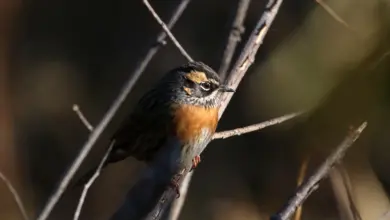
The Sapsuckers form the genus Sphyrapicus within the woodpecker family Picidae.
Description
As their name implies, sapsuckers feed primarily on the sap of trees, moving among different tree and shrub species on a seasonal basis. Insects, especially those attracted to the sweet sap exuding from sap holes, are often captured and fed to the young during the breeding season.
The most easily recognised sap holes are found in birch trees during the breeding season. The members of this genus are slender birds with stiff tails and relatively long wings.


Their typical pattern in flight is undulating, alternating between quick bursts of wing beats and short dips with wings tucked against the body. Because sapsuckers attack living trees, they are often considered a pest species. See: TATE, J. 1973. Methods and annual sequence of foraging by the sapsucker.

Distribution
Each species has slightly different habitats and ranges. The Yellow-bellied Sapsucker is more common in deciduous forests in eastern North America, while the Red-naped, Williamson’s, and Williamson’s Sapsuckers can be found in mountainous western areas, where they often live in mixed coniferous forests. Red-breasted Sapsuckers nest in humid forested areas along the Pacific Coast. Sapsuckers are found throughout a variety of habitats during migration. They can be seen in woodlands and suburban parks.
Some sapsuckers, particularly those that breed in northern areas, do seasonal movements. In colder months, these birds will move southward to find warmer climates or reliable food sources. They may appear in unexpected places during migration.
Sub-species:
Red-breasted Sapsucker (Sphyrapicus ruber)
Red-naped Sapsuckers (Sphyrapicus nuchalis)
Williamson’s Sapsucker (Sphyrapicus thyroideusis)
Yellow-bellied Sapsucker (Sphyrapicus varius)
Feeding Behavior
Sapsuckers are true to their name. They feed on tree sap by drilling tiny, precise holes (known as sap wells) into the bark. They use their brush-tipped tongues to slurp up the liquid sugar that is released. This unusual feeding technique requires a lot of energy and precision.
Birds maintain these wells regularly, returning to the same trees several times per day in order to keep the sap flowing. But sap is not the only thing on the menu. They also feed on insects that are drawn to the sap. Ants, wasps and flies are all attracted to the sap, making them easy prey. These insects are the main food source of chicks during the breeding season. They provide them with the necessary protein to grow.
It is interesting to note that different species of trees are targeted at different times during the year. Sapsuckers drill into birch trees in the spring when sap is flowing most freely. Later in the year, they might switch to maples or hickories. They do not forage randomly; they have clear preferences for specific species based on bark thickness, sap content and environmental conditions. According to Cornell Lab of Ornithology, this species is well documented.
Sapsuckers are known to eat fruits and berries in addition to insects and sap, particularly during the winter and fall months when insects become scarce. Their dietary versatility helps them to survive in different habitats and during seasonal changes. According to BirdLife International, this species is well documented.
Vocalizations
Sapsuckers do not sing. Their vocal repertoire includes drumming patterns and sharp calls used to establish territories and attract mates. Each species has a signature call. However, many produce a nasal, sharp “mew” or a “waa”. Another important communication tool is drumming. They use their beaks to rapidly peck on surfaces that resonate, such as metal signs, dead tree trunks, or chimney flashing, to send audible messages across their territory.
Sapsuckers’ drumming tends to be more irregular and erratic than that of other woodpeckers, whose rhythmic or melodic drumming sounds. It is a good way to distinguish them from other species. During the breeding season, males are more vocal. They use a combination of alls and drumming to compete against rivals and attract potential mates.
Breeding & Nesting
Sapsuckers nest in cavities. Sapsuckers excavate nests in decaying or dead trees. They usually choose a softer section of the trunk to make it easier to hollow. Once abandoned, these nesting sites become important not only for the sapsuckers but also for other birds. Chickadees and nuthatches are also included. Many of these species rely on woodpeckers to dig their nest cavities.
The breeding season usually begins in the spring. Both the male and female sapsuckers participate in nesting. Both parents incubate the eggs for 12-14 days. Both parents feed the chicks after hatching. They do this primarily by feeding them soft-bodied insects. The young stay in the nest about three weeks until they leave.
Families of sapsuckers tend to stay together after fledging. The young are fed by their parents until they can forage independently. Some species of sapsuckers may breed the next season, depending on whether or not they can find territory and survive over winter.
Conservation of Ecological Role
Sapsuckers have a surprising ecological importance within forest ecosystems. Inadvertently, sapsuckers provide food to a variety of animals by drilling holes into trees and creating wells. These sap wells can be used by hummingbirds and butterflies as well as squirrels and bats.
Sapsuckers are often regarded as pests despite their importance. This is especially true in commercial orchards. Repeated drilling of sapwells can weaken the trees and make them more susceptible to decay and disease. Studies have shown, however, that healthy trees can withstand the activity and its long-term effects in natural forest settings can be minimal.
At the moment, no species of sapsucker in North America is considered to be globally endangered. However, localised populations could face problems due to habitat destruction, particularly where deadwood from forests is regularly removed. Sapsuckers nest on dead standing trees (snags), so logging practices and forest management that remove these trees may hurt breeding success.
To maintain biodiversity, forests must allow for natural decay and regeneration. Some people may find dead trees unsightly, but for many species, such as the sapsucker, they provide a vital habitat.
Conclusion
Sapsuckers are not the most well-known members of the woodpeckers, but they have a huge impact on the environment. They support a variety of forest species through their sap-drilling habit, and their unique breeding, feeding, and nesting strategies show how specialised evolution is.
These birds, though sometimes misunderstood and maligned by others, remind us that the delicate balance of natural ecosystems is fragile. Even the tiny holes made by the sapsucker beak can have a ripple effect, sustaining entire communities. Sapsuckers are an important part of North America’s avian biodiversity for future generations.