This blog explores the life of an iconic species, its biology, behaviour, habitats and ancient cultural significance. It also examines its presence in lands far away from its native land. For more information, see our guide on insects.
Natural Habitat and Distribution
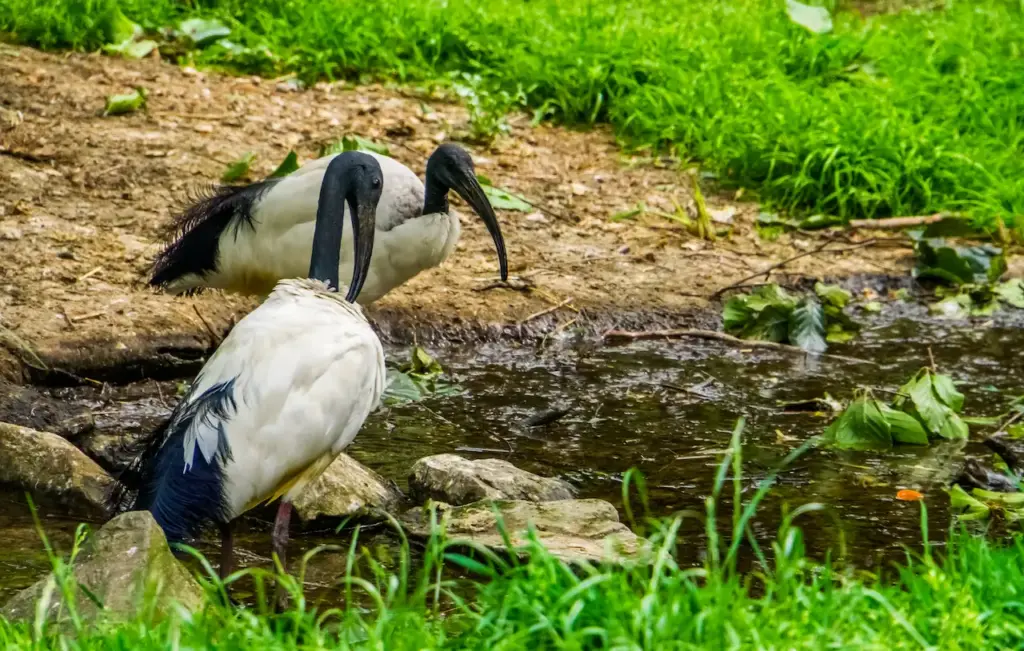
The African Sacred Ibis, native to sub-Saharan Africa, thrives in a variety of habitats including marshes and wetlands such as riverbanks, estuaries and mudflats. These water-loving birds wade through shallow waters with elegance in search of food.
The story of the Sacred Ibis doesn’t end in Africa.


In the past, these birds were widespread in Egypt, where they enjoyed a high status. (More on this later). Although the birds are extinct today in Egypt, introduced populations exist in other places, including France and Spain. They have also spread to southern Florida. These populations are a result of zoo releases or escapes. They have been able to adapt to city life with surprising ease.
This bird is a great example of the biological resilience of this species. It is a species both sacred and scrappy. It can thrive in both peaceful wetlands and human-altered habitats like garbage dumps and farmlands.
Breeding and nesting: A Community Affair
The Sacred Ibis is a colonial-nester. This means that they nest in large groups and often with other waterbirds like herons, spoonbills and storks. These colonies are often located in large trees, such as baobabs and close to wetlands and feeding grounds.
Nests are large, messy structures made of sticks, reeds and other vegetation. A clutch usually contains two to three eggs that are incubated by both parents. The chicks, which are born blind and without feathers, are completely dependent on their parents to provide warmth and food during the first few days of their life.
Breeding season can vary depending on the location, rainfall and food available, but birds have a high level of site loyalty, returning to the same nesting sites year after year.
The raising of chicks in Sacred Ibises involves both the males and the females. The young birds leave the nest within a few days, but they may still be dependent on their parents for food.
Diet: Omnivorous Opportunists
The African Sacred Ibis has a very diverse diet. They are opportunistic feeders and omnivorous. They eat a variety of foods, including:
- Fish
- Frogs
- Insects
- Small reptiles
- Amphibians
- Small mammals
- Other birds (especially chicks and eggs)
In urban areas or those with more developed infrastructure, Sacred Ibises are often seen picking through garbage or landfills. This is especially true during the colder months, when food sources can be scarce.
This flexibility in diet is one of the main reasons the species was able to colonise non-native habitats and thrive. Sacred Ibises, unlike many other birds, seem to gain from human activity. This is especially true where agriculture and waste provide abundant foraging opportunities.
Physical Description: Elegant and Eerie
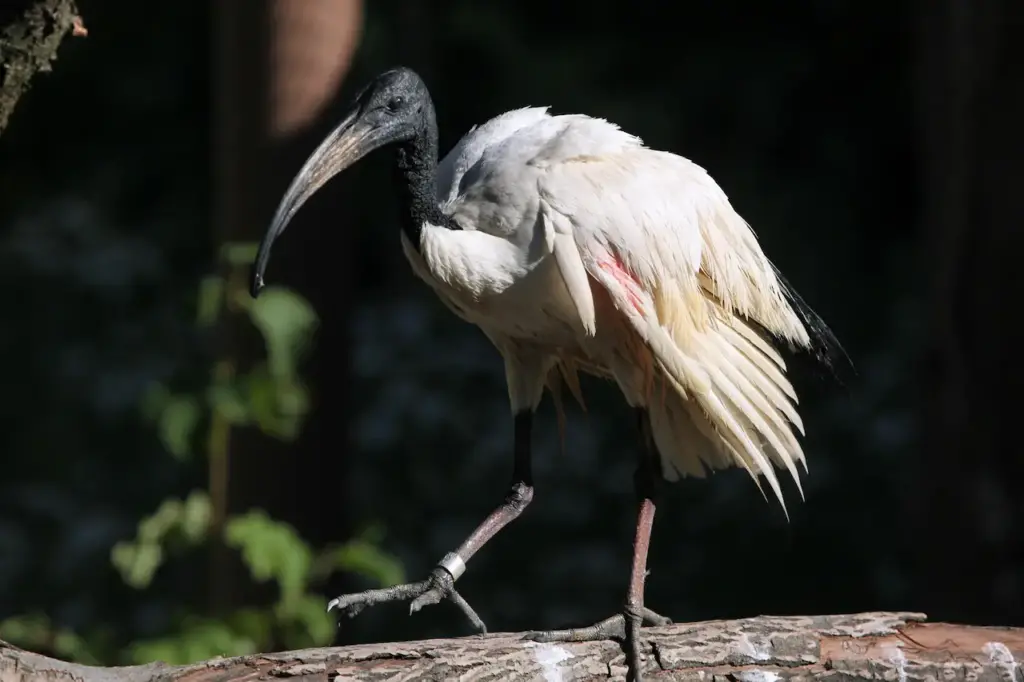
The African Sacred Ibis has a distinctive appearance. The adult African Sacred Ibis is about 68 cm long. Its featherless head, neck and bill are all black.
The black border on their wings and the blackish rump are striking features, especially when they are in flight. They look majestic when they glide across the sky or flap their wings over wetlands.
Key Features
- Bill: Long and curved black probes, perfect for searching for prey in mud or silt.
- Legs & Feet: Black and long, perfect for wading.
- Head and Neck: Black and bald, a trait that is associated with scavenging, and also minimises feather matting when feeding in messy situations.
- Plumage: Primarily white with black wingtips and rear border.
The juveniles are less impressive, with a dirty white colour and smaller bills. They also have some feathering around the neck, which disappears as they mature.
Males and females have similar plumage and size characteristics, making them virtually indistinguishable by the human eye. According to RSPB, this species is well documented.
Sacred Symbolism – The God Thoth, and Mummification
It is impossible to discuss the African Sacred Ibis and not mention its legend in ancient Egyptian Culture. According to BirdLife International, this species is well documented.
The bird was considered to be a holy symbol of Thoth, the ibis-headed god of knowledge, wisdom, and writing. Thoth, the divine scribe and inventor of writing, was considered to be a god. The curved bill was believed to be a crescent moon, another symbol associated with Thoth.
Due to this connection, the Sacred Ibis has been ritually mummified in enormous numbers. Archaeologists discovered millions of ibis mummies, especially in Saqqara and Tuna el-Gebel tombs. The birds were either sacrificed to the gods in temples or bred for religious ceremonies in captivity.
The bird is named “Sacred Ibis” because of its reverence. Ironically, in spite of its cultural significance, the species was extinct from the wild in Egypt by the late 1800s.
Invasive or adaptable? Global Traveler
The African Sacred Ibis has a reputation for being controversial outside of its native range. In some parts of Europe, and Spain in particular, the bird is labelled as an invasive species. This is because it has been deemed to prey on native amphibians and birds or compete with local species for nesting and food.
In France, the number of escaped zoo animals increased from a handful in the 1980s to thousands at the beginning of the 2000s. The authorities have tried various population control methods, such as egg removal and culling.
In Florida, sightings are more frequent around urban areas and wetlands. The population, although still small, shows the potential of the bird to expand into subtropical habitats.
Is the African Sacred Ibis an invader, or a survivor?
Answers are highly dependent on the context. In its native habitats, it has a vital ecological role, controlling pest populations and maintaining food chains in wetlands. It walks a fine line in non-native habitats, balancing curiosity with concern.
Conservation Status: Stable For Now
IUCN (International Union for Conservation of Nature) has classified the African Sacred Ibis as ” Least Concern. The African Sacred Ibis has a stable, large population throughout its natural range. Its adaptability makes it less vulnerable to habitat loss compared to other species.
Localised threats are still present.
- Habitat Loss Due to Wetland Drainage and Pollution
- Disturbance in nesting colonies
- Removal of areas that are considered to be invasive
In countries that are not native, there is ongoing discussion about ethical and eco-management, which aims to balance the need to preserve the biodiversity of the country with the resilience of the bird.
Final Thoughts – A Bird of Many Worlds
The African Sacred Ibis, also known as the African Sacred Ibis, is much more than a bird. It’s a cultural symbol, a bio-scientific marvel and a contradiction in living. It is revered and reviled. Ancient and modern. Native and alien. It is the complex dance that occurs between nature and human civilisation.
The Sacred Ibis, whether seen wading in African wetlands, or perched atop a lamppost in France’s urban areas, invites us to reflect on what it means for us to survive, thrive and coexist in a constantly changing world.
We need more species that are resilient and not only resistant to the past but also present.